
African media professionals and public analysts have expressed deep disappointment over the failure of continental leaders to solve long-standing economic and social problems.
The experts argue that these governance failures drive mass migration, leaving citizens vulnerable to abuse.
They noted that countries with relatively stronger economies, particularly South Africa, consistently violate the fundamental rights of fellow African migrants.
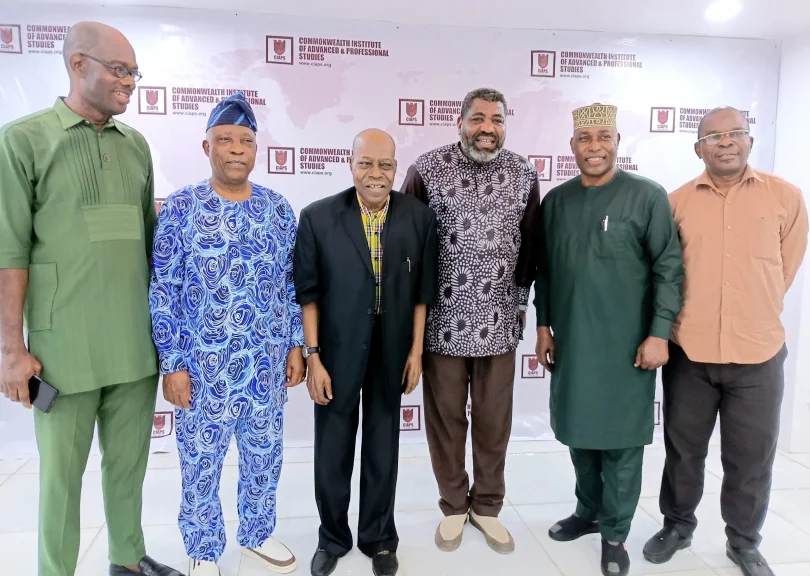
These assertions were made on Thursday, August 7, in Lagos at a Pan-African roundtable organised by the League of Nigerian Columnists (LNC) in conjunction with the Commonwealth Institute of Advanced and Professional Studies (CIAPS).
The hybrid event, themed “From Mayibuye iAfrica to Abahambe! South Africa and Other African Countries: Reflections on the Trajectory of a Relationship,” brought together scholars, diplomats, media professionals, and policy analysts from across the continent.
Participating countries included Ghana, Tanzania, Malawi, Gambia, Senegal, Sierra Leone, Namibia, South Africa, Botswana, Eswatini, Zimbabwe, Uganda, and Nigeria.
Speakers urged African leaders to rethink regional integration and economic policy.
They emphasised that tackling the root causes of xenophobia in South Africa — such as economic frustration and weak governance — is essential for continental development.
They added that while the historical role played by African countries, especially Nigeria, in dismantling South Africa’s apartheid regime remains indelible, leaders must now look beyond the past in managing modern bilateral relations.
The chairman of the occasion, Nigerian media icon and co-founder of Newswatch Magazine, Mr Ray Ekpu, underscored the vital link between good governance and national development.
He lamented that despite vast human and material resources, Nigeria remains economically poor.
Addressing the recurring xenophobic attacks in South Africa, Ekpu, who was also honoured at the event for turning 78, advocated for intensified diplomatic engagement rather than retaliation against South African-owned businesses in Nigeria.
Targeting the over 120 South African companies, he argued, would hurt Nigerians more since local citizens make up the majority of their workforce.
“I do not believe in an eye-for-an-eye approach. If we go that route, Africa will only destroy itself. We should pursue coexistence and continue building Pan-Africanism,” Ekpu said.
He criticised the South African government for failing to decisively condemn the violence and enforce laws to protect immigrants.
“The South African government has not come out categorically to condemn what is going on, and the police appear to be looking the other way while these crimes are taking place. Those who violate the law should be dealt with according to the rule of law,” he stated.
Ekpu called on Pretoria to prosecute perpetrators and compensate victims.
He also urged respective governments, including Nigeria, to provide resettlement support for returnees, while fixing the domestic economy to reduce the desperate push for emigration.
Sharing these sentiments, Anthony Kila, a Jean Monnet Professor of Strategy and Development, described the attacks as “Afrophobia” since black African migrants are the primary targets.
He warned that failure by the African Union (AU) and regional governments to act firmly could yield severe socioeconomic consequences for the continent.
Kila suggested tactical diplomatic measures, including boycotting selected South African events, and called for “soft diplomacy” to reorient South African citizens against taking laws into their own hands.
“Governments must ask themselves why their citizens are so desperate to leave their countries to seek better lives elsewhere, only to become vulnerable to exploitation and attacks,” Kila noted.
Other prominent speakers, including Dare Babarinsa, Martins Oloja, Bravious Kahyoza (Tanzania), Wanza Kioko (Kenya), Coetzee Bester (South Africa), Ms Fatou Jagne Senghore (Senegal) and Prof Chris Jacob, agreed that the crisis reflects broader African governance failures. They criticised institutions like the AU and ECOWAS for failing to implement integration treaties, pointing out that regional transport links remain far behind Europe’s seamless models.
They emphasised that nations investing heavily in quality education and economic strength see fewer citizens fleeing across borders.
While South African media scholar, Professor Shepherd Mpofu, noted the importance of valid residency permits, the panel maintained that no migrant deserves violent attacks or extrajudicial killings.
Further contributing to the discussion, Ikechukwu Amaechi noted that migration is historic and driven by multiple factors, but human dignity must always be protected under the law.
Amaechi also faulted the African press for weak reportage on continental issues, criticising the reliance on foreign news agencies.
“African media practitioners are not doing enough to bring pressing issues, including the real reasons for migration and xenophobic attacks, to the front burner,” Amaechi said. “Most African newsrooms do not have vibrant, dedicated foreign desks; they rely on newsrooms from outside the continent to tell African stories.”
He urged media houses to prioritise foreign desks to properly document and drive solutions for the continent’s challenges.