
*Challenges Tinubu To Cut Government Waste, Convoys As Nigerians Battle Hardship
A former Chairman of the Nigerian Economic Summit Group (NESG), Mazi Sam Ohuabunwa, has backed allegations that political appointments in Nigeria are sometimes secured through financial inducements, declaring that some individuals obtain government positions because they have the money to purchase them.
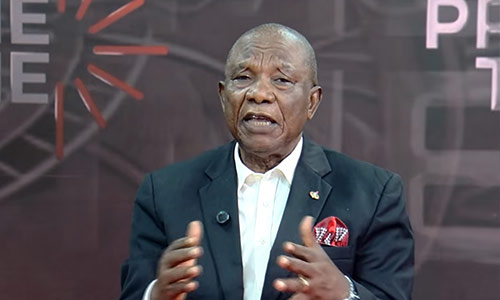
Ohuabunwa, a business executive, former presidential aspirant and convener of the New Nigeria Group, made the assertion during an interview on Arise News while reacting to claims by Alwan Hassan, a spokesman for the All Progressives Congress (APC) presidential campaign council, that some ministers pay billions of naira to secure appointments.
He described the allegation as a painful admission, particularly because it came from someone associated with the ruling party rather than the opposition.
According to him, although the amounts involved might not necessarily run into billions of naira, the practice of individuals allegedly paying to obtain political appointments is a reality that should concern Nigerians.
“The truth actually is that that is the truth,” Ohuabunwa said, adding that the amounts involved “may not be billions.”
He maintained that some individuals secure appointments through payments made either directly to those responsible for appointing them or through intermediaries.
The controversy followed Hassan’s statement during an earlier television appearance that many ministers allegedly pay billions of naira to obtain appointments and subsequently prioritise recovering the money after assuming office.
Hassan claimed that the practice was not peculiar to the APC administration but had existed under previous governments.
His comments prompted former Vice President Atiku Abubakar to challenge President Bola Tinubu to identify the ministers allegedly involved and disclose who received the payments.
The allegations have not been established through judicial proceedings, and no specific minister was identified in the account of the controversy.
Reacting, Ohuabunwa described Hassan’s remarks as “one of the very painful admissions” he had heard.
He said he would ordinarily have dismissed the allegation as an unverified social media claim if it had not been made publicly on television by a person associated with the ruling party.
Ohuabunwa questioned why such an allegation had not attracted an official rebuttal and wondered whether Hassan had spoken independently or with the knowledge of others.
He also referred to a recent controversy involving a purported government agency, which was said to be the subject of ongoing court proceedings, as an illustration of concerns about the integrity of public appointments.
Describing the alleged sale of appointments as shameful, he argued that the problem was widespread and reflected deeper weaknesses in Nigeria’s political system.
Ohuabunwa maintained that corruption in government often begins long before individuals assume public office.
According to him, political participation in Nigeria has become an expensive undertaking, forcing aspirants to rely on personal wealth, loans or financial support from influential individuals.
He explained that contesting for the presidency, governorship or National Assembly requires enormous financial resources, making it difficult for competent individuals without substantial funding to compete.
Drawing from his experience as a former presidential aspirant, Ohuabunwa said his political ambition did not progress as far as he had hoped because the resources he could raise personally and through friends were insufficient to compete with politicians who had access to greater financial backing.
He argued that the financial pressures associated with securing political office create incentives for corruption even before elections are conducted.
“Corruption starts at that level,” he said.
According to him, the problem begins when party delegates and political actors select candidates based on financial considerations rather than competence, character and capacity.
The former NESG chairman also criticised claims that President Tinubu was addressing alleged corruption among ministers by withholding funds from them instead of investigating the allegations and strengthening accountability mechanisms.
The claim concerning the withholding of funds was attributed to Hassan during the earlier interview.
Ohuabunwa described the suggestion as “scandalous,” questioning why a president would attempt to personally control the activities of ministers rather than address the alleged wrongdoing through established institutions.
He argued that such an approach, if true, would raise questions about the administration’s management capacity and could help explain why improvements in macroeconomic indicators had not translated into better living conditions for ordinary Nigerians.
However, he acknowledged that several ministers had appeared publicly to explain their activities and said he did not know the basis of the allegation that their funds were being withheld.
Turning to the effectiveness of anti-corruption institutions, Ohuabunwa attributed weaknesses in enforcement to a combination of institutional limitations and political interference.
Asked whether anti-corruption agencies and procurement regulations were unable or unwilling to act against politically connected individuals, he responded that the problem was “a combination of both, but largely because of political interference.”
He referred to political statements suggesting that individuals accused of wrongdoing could escape consequences by defecting to certain political parties.
According to him, Nigeria’s anti-corruption efforts often concentrate on the symptoms of wrongdoing rather than addressing the institutional failures that allow corruption to persist.
He cited the removal of fuel subsidy as an example, questioning why the government could not eliminate abuses within the subsidy system instead of removing the policy altogether.
Ohuabunwa argued that the country frequently responds to institutional failures by creating new structures rather than strengthening existing ones.
“If the police is not functioning, we create another institution instead of fixing the police,” he said, describing the tendency as “a national malady.”
He urged President Tinubu to demonstrate the same determination in fighting corruption that his administration had shown in implementing difficult economic reforms.
Responding to suggestions that the President might prioritise anti-corruption efforts during a second term, Ohuabunwa maintained that every elected president should make the best use of the constitutional four-year mandate already available.
He argued that Nigerians should not have to wait for another term before witnessing decisive action against corruption and wasteful public expenditure.
Ohuabunwa also responded to Tinubu’s criticism of previous administrations and opposition political parties over the country’s economic difficulties.
The President had blamed earlier governments and political opponents for contributing to the hunger and poverty his administration was attempting to address.
Asked what responsibility the Peoples Democratic Party (PDP) should accept for structural economic weaknesses that existed before the APC came to power, Ohuabunwa urged Nigerians to examine historical economic indicators objectively.
He called for comparisons between the administrations of former Presidents Umaru Musa Yar’Adua and Goodluck Jonathan and the present government, using indicators such as per capita gross domestic product, economic growth, poverty levels, inflation and interest rates.
Although he acknowledged that poverty existed before Tinubu assumed office, Ohuabunwa argued that the administration’s economic decisions had worsened the financial difficulties facing many households.
He illustrated the impact of rising living costs by comparing a situation in which a person previously purchased fuel for ₦200 with the current reality of paying approximately ₦1,000.
He also cited increases in rent, transportation and food prices without corresponding improvements in household incomes.
“He will be naturally poorer,” Ohuabunwa said, explaining that higher living costs reduce purchasing power when earnings remain unchanged.
He maintained that available economic indicators, including assessments by international development institutions, showed that more Nigerians had been pushed into poverty.
Ohuabunwa argued that the administration should have conducted comprehensive impact assessments and introduced adequate safeguards before implementing major economic reforms.
“We recommend those kinds of reforms in a liberal economy, but not the way it was done,” he stated.
His comments followed the conclusion of the Nigerian Economic Summit Group’s annual summit in Abuja, where participants warned that Nigeria’s recent macroeconomic improvements could be reversed without stronger institutions, fiscal discipline and policies capable of creating employment and reducing poverty.
The summit emphasised the need for economic growth that translates into improved productivity, employment opportunities and shared prosperity.
Asked how Nigerians should assess the government’s reforms, Ohuabunwa said economic growth should not be measured solely through macroeconomic statistics but also through its impact on ordinary citizens.
He explained that the summit’s focus on “growth that works” reflected the need for policies that create jobs, increase productivity and improve living standards.
According to him, although some economic growth was being recorded, the benefits would remain limited unless the government addressed unemployment, poverty and the challenges facing productive sectors.
He urged the administration to prioritise domestic agricultural and industrial production as a means of strengthening the economy.
For the manufacturing sector, Ohuabunwa recommended addressing Nigeria’s electricity challenges, reducing multiple taxation and lowering borrowing costs.
He argued that manufacturers could not compete effectively while facing unreliable power supply, high financing costs and multiple tax obligations.
In agriculture, he called for improved access to quality seeds, mechanisation and policies capable of increasing productivity.
He maintained that Nigeria could not achieve substantial agricultural transformation by relying primarily on traditional farming methods.
Ohuabunwa also identified insecurity as a major obstacle to agricultural development, noting that attacks and threats in farming communities had forced many farmers away from their land.
He urged the government to address these security challenges to improve food production and reduce the pressure on food prices.
Responding to the administration’s insistence that it had undertaken extensive reforms, Ohuabunwa acknowledged that efforts were being made but argued that the results had not sufficiently improved the lives of Nigerians.
He maintained that the scale of the country’s economic challenges remained greater than the solutions implemented so far.
According to him, the government’s repeated appeal for patience raised serious questions about how long struggling citizens could endure the hardship associated with the reforms.
“The question is, will the patient be alive to wait for more time?” he asked.
He explained that while some economists believed the reforms could produce positive results in the long term, the government needed to ensure that citizens survived the immediate economic pressures.
Ohuabunwa also urged political leaders to demonstrate personal sacrifices comparable to those being demanded of ordinary Nigerians.
“We need to see belt tightening,” he said.
He criticised what he considered wasteful public expenditure and misplaced priorities, arguing that government spending decisions were not sufficiently aligned with the sacrifices being made by citizens.
He cited the Lagos-Calabar Coastal Highway project, questioning aspects of its route and planning.
According to him, the highway’s changing alignment raised concerns about the level of planning undertaken before implementation.
“Those reforms are good, but we did not plan appropriately,” he maintained.
Ohuabunwa further argued that the government must demonstrate greater transparency in the use of public funds, including savings generated from economic reforms and money obtained through borrowing.
He said Nigerians needed to see evidence that public resources were being directed towards priorities capable of improving their welfare.
Turning to the 2027 presidential election, Ohuabunwa disclosed that he remained a member of the PDP but had not decided which presidential candidate to support.
He acknowledged the internal divisions within the opposition party, saying its members held different political preferences, including support for the APC, African Democratic Congress (ADC) and National Democratic Congress (NDC).
According to him, he was still evaluating the available political options and would make his decision after examining the candidates’ manifestos.
Post Title: “Will The Patient Be Alive To Wait For More Time?” — Ohuabunwa Questions Tinubu’s Plea For Patience On Economic Reforms By Naijaonpoint.