
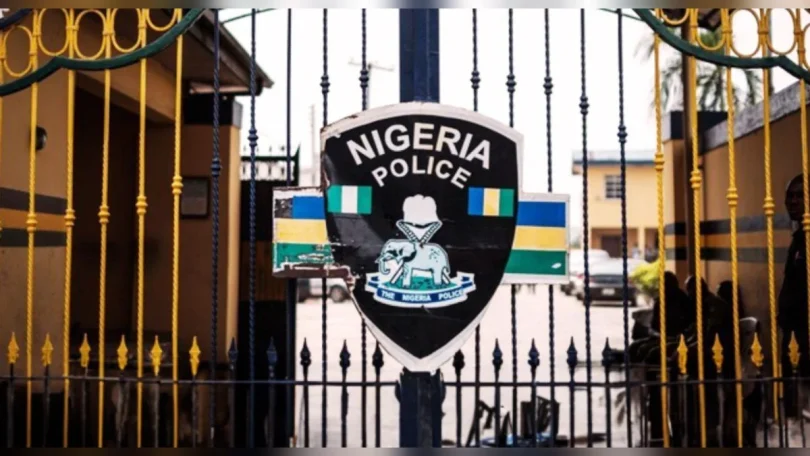
The proposed establishment of state police in Nigeria has gained further momentum, with 30 State Houses of Assembly approving the constitutional amendment.
Four additional states — Lagos, Ebonyi, Kogi and Niger — approved the amendment on Tuesday, October 27, bringing the total number of approving states to 30 out of 36.
The development means the proposed amendment has surpassed the constitutional requirement of approval by at least 24 State Houses of Assembly, representing two-thirds of the 36 states.
The remaining steps include the collation of state endorsements and the transmission of the constitutional amendment by the National Assembly to President Bola Tinubu for assent.
However, the proposed state police system is expected to face further scrutiny over funding, accountability, operational independence and safeguards against possible political interference by state governors.
Amid the progress, the Presidency has urged the Organised Private Sector (OPS) to develop practical proposals for financing and implementing state police, arguing that businesses have a significant stake in improving security across the country.
Chief of Staff to the President and Chairman of the Presidential Working Group on the National Policing Bill, Femi Gbajabiamila, made the appeal during a plenary session on security, stability and economic resilience at the 32nd Nigerian Economic Summit in Abuja.
Gbajabiamila said insecurity had continued to affect businesses through abandoned investments, delayed expansion plans, disrupted supply chains and reduced employment opportunities.
He argued that companies could not protect their investments by relying solely on security arrangements within their premises because their employees, suppliers and customers also needed safe communities and transportation routes.
“A company can reinforce its perimeter. Its workers still have to travel home, and its suppliers still have to move through the surrounding communities,” he said.
“Your long-term security depends on the strength of public institutions beyond your gates,” he added.
The President’s chief of staff urged the Nigerian Economic Summit Group, chambers of commerce and business associations to work with the government on practical arrangements for financing and managing the proposed state police system.
He said the private sector should contribute expertise in institutional management, expenditure control, risk assessment and the identification of security challenges affecting businesses.
“I therefore ask the NESG to carry this engagement beyond our meeting. Bring forward a considered private sector contribution on financing and implementing state police, with practical proposals for accountable partnerships,” Gbajabiamila said.
“Take that work into the legislative process and into your engagement with state governments,” he added.
Gbajabiamila maintained that private sector participation must be transparent and must not undermine the independence of the police.
He warned against allowing financial contributions from businesses to influence investigations or secure preferential treatment from law enforcement agencies.
“Where businesses provide resources, those contributions need published accounts and independent scrutiny,” he said.
“Public funding must remain dependable, and a donation must never purchase influence over an investigation or preferential treatment,” he cautioned.
He also stressed that state governments seeking to establish their own police services must demonstrate the financial capacity to sustain them beyond the initial purchase of vehicles, uniforms and equipment.
According to him, state police authorities must be able to pay salaries, provide professional training, maintain operational equipment and meet other recurring expenses.
He warned that failure to provide reliable funding could expose state police institutions to private influence and create opportunities for unlawful demands on citizens.
Gbajabiamila, however, assured Nigerians that the existing federal police structure would remain available to states that were not financially or institutionally prepared to establish their own police services.
The latest approvals follow an earlier announcement by the Presidency that 24 State Houses of Assembly had endorsed the constitutional amendment as of October 23.
At the time, Gbajabiamila said the approval had satisfied the constitutional requirement for the Constitution (Sixth Alteration) Bill, 2026, which seeks to establish a dual policing system comprising the Federal Police Service and state police services.
The constitutional amendment was transmitted to the 36 State Houses of Assembly by the National Assembly on September 16 for consideration and approval.
The Presidential Working Group on the National Policing Bill had also submitted the draft National Policing Bill and 29 consequential amendment bills to the Federal Ministry of Justice on October 19 for legislative drafting review and validation.
Following the review, the proposals are expected to undergo final consideration before being presented to Tinubu for approval and transmission to the National Assembly.