
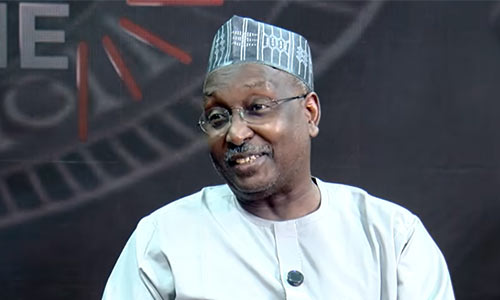
Former National Vice-Chairman of the All Progressives Congress (APC) and political organiser, Salihu Lukman, has announced that six opposition political parties will formally sign a national covenant on November 30, 2026, as part of efforts to strengthen political cooperation ahead of the 2027 general election.
Lukman, who is the convenor of the G100 political pressure group, disclosed that although the participating parties had reached an agreement on the proposed coalition framework, discussions on presenting a common presidential candidate remained unresolved.
The parties involved in the initiative, known as the Coalition for Democracy, include the African Democratic Congress (ADC), African People’s Movement (APM), Nigeria Democratic Congress (NDC), the Tanimu Turaki-led faction of the Peoples Democratic Party (PDP), People’s Redemption Party (PRP) and Social Democratic Party (SDP).
Speaking during a television interview, Lukman explained that the signing ceremony, originally scheduled for November 23, had been postponed to Monday, November 30, following consultations with the leadership of the participating political parties.
He said the postponement was intended to allow party leaders, presidential candidates and their running mates to adjust their campaign schedules and attend the event.
According to him, the coalition had made considerable progress in bringing the opposition parties together, despite differences in their political interests and presidential ambitions.
Lukman, who described himself as “not a key coordinator, but a key servant”, said he had spent considerable time engaging party leaders to secure their participation.
He explained that the parties had already agreed on the principles contained in the proposed covenant and would formally endorse the document during the public ceremony.
The agreement will be signed by the national chairmen of the participating political parties, whom he identified as the officials constitutionally authorised to commit their respective parties.
Lukman disclosed that the coalition had developed three major documents to guide its activities, including a national covenant for democratic renewal, a framework for opposition unity and a national reform programme.
He explained that the covenant would outline the principles guiding cooperation among the parties, while the framework for opposition unity would establish procedures for collaboration and resolving disagreements.
According to him, the national reform programme would contain a minimum set of policy commitments to be pursued by any government emerging from the coalition.
The programme, which he described as a form of collective manifesto, was developed by reviewing the participating parties’ policy documents and identifying areas of agreement.
He said education and other national development priorities would form part of the common reform agenda.
Lukman added that the documents would be made available to journalists and members of the public during the November 30 event.
He also explained that the coalition would outline the nature of its cooperation, which could include joint political campaigns and coordinated electoral activities.
However, he acknowledged that the precise arrangements would require further negotiations between November 30 and the general election.
On the controversial issue of adopting a common presidential candidate, Lukman admitted that the coalition had not reached an agreement or established a mechanism for selecting a single candidate.
He explained that the initiative involved political parties with already recognised presidential candidates and that any arrangement concerning a common ticket would require the consent of the candidates and their respective parties.
According to him, the coalition was not intended to dissolve existing opposition parties or force them to surrender their identities.
He maintained that the participating parties would retain their structures while negotiating areas of political cooperation.
Lukman said the organisers deliberately avoided making the selection of a common presidential candidate a precondition for discussions because doing so could have prevented the coalition from taking shape.
He explained that introducing the question of which candidate should step down at the beginning of the negotiations would have made it difficult to bring the parties together.
“If we put that question, we are not going to make any headway,” he said, adding that such an approach could “scatter the table”.
According to him, the coalition had concentrated its efforts since August on establishing communication and building sufficient confidence among the participating parties.
He disclosed that the parties had been encouraged to indicate how far they were willing to go in cooperating with one another.
Some parties, he explained, might agree to cooperate on protecting votes and electoral integrity without necessarily supporting a common presidential candidate.
Lukman acknowledged that these differences remained important issues requiring negotiation.
He maintained that the positions of the participating parties would become clearer during the November 30 meeting.
Asked whether the coalition currently had a mechanism for choosing a common presidential candidate, he said no such arrangement could be announced without securing the agreement of the candidates themselves.
The discussion also addressed the position of the NDC, whose Director-General had reportedly insisted that any arrangement involving a common presidential ticket should favour Peter Obi.
Lukman did not directly respond to that position but expressed concern over increasing disagreements among supporters of different opposition candidates.
He criticised the public exchanges between supporters of the ADC and NDC, warning that continued hostility could undermine cooperation among the opposition parties.
According to him, attacks exchanged by opposition supporters ultimately benefit the ruling APC rather than advance the political objectives of their respective candidates.
Lukman said one of the coalition’s priorities after the November 30 signing would be to encourage party leaders and candidates to restrain their supporters and reduce internal political hostility.
He maintained that opposition political figures needed to place their shared objectives above individual ambitions if they intended to work together effectively.
Reflecting on the 2023 presidential election, Lukman argued that divisions among opposition parties contributed to their inability to defeat the APC.
“The opposition defeated itself,” he declared.
He maintained that opposition political figures needed to examine whether their priority was merely to contest the presidency individually or to build a coordinated electoral challenge.
Lukman consequently urged presidential candidates and political leaders to demonstrate greater willingness to compromise.
He called on them to “step up and become statesmen, patriots, people who place Nigeria first and foremost before their personal interests”.
According to him, opposition leaders who expressed dissatisfaction with the country’s political and economic situation should be prepared to negotiate arrangements capable of advancing their stated objectives.
Addressing questions concerning the PDP’s participation, Lukman explained that the coalition was working with the faction led by Tanimu Turaki.
He said the participating parties had also begun discussions with other opposition political organisations interested in joining the initiative.
According to him, any party willing to subscribe to the coalition’s principles and documents could become part of the arrangement.
Lukman maintained that the coalition’s objective extended beyond removing the APC from power, as it also sought to promote reforms in political party administration and governance.
He criticised what he described as excessive concentration of authority within political parties, arguing that party leaders frequently disregarded their constitutions and internal democratic procedures.
He warned that producing a new government without addressing these problems could merely reproduce the governance practices the opposition claimed to oppose.
According to him, the coalition’s reform discussions would consider questions surrounding presidential tenure, zoning, rotation and the relationship between the executive and legislative branches of government.
He argued that political arrangements should promote accountability rather than merely allocate offices among competing political interests.
Lukman also expressed concern about presidents exercising excessive influence over the leadership and activities of the National Assembly.
He said the coalition wanted a governance arrangement that would respect institutional independence and prevent the legislature from becoming subordinate to the executive.
On electoral integrity, Lukman disclosed that the participating parties were negotiating arrangements for the joint training and deployment of polling agents during the 2027 election.
He explained that protecting votes at polling units was one of the coalition’s most immediate areas of agreement.
According to him, some parties possessed the resources to deploy agents across the country, while others lacked sufficient organisational capacity.
He said the coalition could address these differences by identifying areas where individual parties had stronger structures and coordinating their resources accordingly.
Lukman explained that the parties would need to map the country, establish areas of political strength and agree on the deployment of agents to monitor voting and the electoral process.
He maintained that such cooperation could strengthen public confidence in elections and encourage greater voter participation.
According to him, voter apathy had become a serious challenge because many Nigerians had lost confidence in the electoral process.
He argued that visible cooperation among opposition parties, particularly on protecting votes, could encourage citizens to participate in the election.
Lukman acknowledged that the coalition still faced considerable challenges, including the limited time available to negotiate agreements before the election.
However, he expressed satisfaction that the G100 initiative had developed into a broader political arrangement involving several opposition parties.
He said some political observers had initially dismissed the initiative as unlikely to succeed, but the participating parties had now assumed responsibility for advancing the process.
“We are making headway,” he stated.
Lukman maintained that the next stage would be determined by the participating parties and their willingness to implement the agreements being negotiated.
He expressed optimism that continued dialogue could produce a stronger opposition alliance and a reform programme addressing the country’s political and governance challenges.
“Something has to give,” he said, adding that the necessary political changes could be negotiated to produce leadership that would address Nigeria’s challenges.
The November 30 signing ceremony is therefore expected to formalise the coalition’s common principles and framework for cooperation, while negotiations over joint campaigns, electoral coordination and a possible common presidential candidate continue.
Although the participating parties have agreed to pursue the coalition initiative, the question of whether any presidential candidate will step down for another remains unresolved.
Post Title: “We Are Not Asking Any Party To Dissolve Itself” — Lukman Explains NDC, ADC, PDP, SDP And Three Other Parties’ Coalition Ahead Of 2027 By Naijaonpoint.