
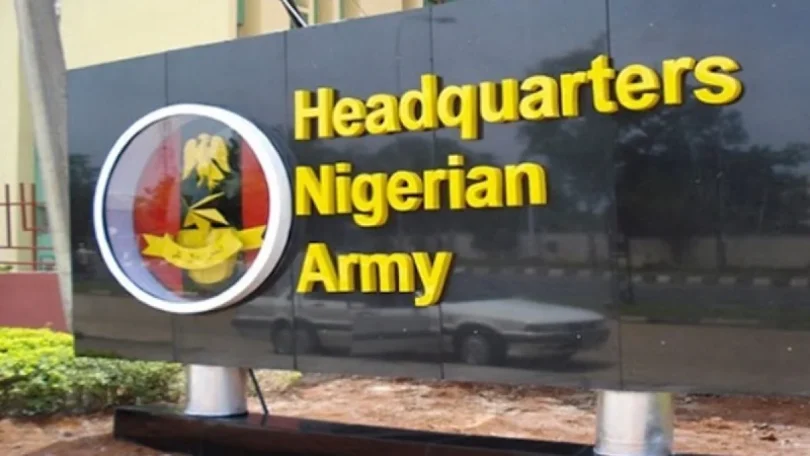
The Defence Headquarters (DHQ) has reacted to a viral video showing suspected bandits in possession of several military camouflage uniforms, denying allegations that the clothing was supplied by the Nigerian military.
The footage, which has attracted attention on social media, showed a group of suspected bandits displaying different sets of military clothing.
Several uniforms were seen spread on the ground, while others appeared to have been kept inside sacks.
The clothing included woodland and desert camouflage patterns commonly associated with military operations in Nigeria.
The video has raised questions about how armed groups operating in the country gained access to uniforms meant for members of the Armed Forces.
However, the military has dismissed suggestions that the items originated from its supply system.
The Director of Defence Media Operations, Major General Michael Onoja, addressed the issue when asked whether the uniforms seen in the footage belonged to the Nigerian military.
“That is not possible,” he said.
Onoja also rejected suggestions that the clothing might have been recovered from military supply vehicles previously attacked by armed groups.
According to him, the Defence Headquarters had not received any report of such an incident that could explain how the uniforms got into the possession of the suspected criminals.
“No such report has been made. It is not from the Nigerian military,” he added.
Although the video showed the suspected bandits handling several military-style uniforms, the circumstances surrounding how the clothing was obtained remain unclear.
The military’s response, however, makes its position clear that the items were not supplied by the Nigerian Armed Forces.
Moreover, the use of such uniforms by criminals has remained a security concern because it can make it difficult for members of the public to distinguish genuine security personnel from impostors.
Military camouflage is designed to identify personnel operating under authorised security formations.
However, when criminal groups gain access to similar clothing, they can potentially exploit public trust in security personnel.
In communities affected by banditry, the possibility of criminals disguising themselves as soldiers presents additional security challenges.
Residents may find it difficult to establish whether individuals wearing military clothing are genuine personnel, particularly in remote areas where security presence is limited.
The Federal Government had previously taken steps to address the proliferation of military camouflage among individuals and organisations not authorised to wear it.
In February 2024, the then Minister of State for Defence, Bello Matawalle, reaffirmed the government’s restriction on the unauthorised use of military camouflage across the country.
Matawalle explained that the decision was informed by security concerns, particularly reports of criminals disguising themselves as military and paramilitary personnel to carry out attacks and other criminal activities.
He maintained that the restriction was necessary to ensure that only authorised personnel could wear the military uniform.
The directive also affected several paramilitary organisations, including the Nigeria Immigration Service, Nigeria Security and Civil Defence Corps and Federal Fire Service, among others.
The government explained that the measure was intended to reduce confusion over the identity of security personnel and prevent criminals from taking advantage of uniforms associated with government security agencies.
The Nigeria Police Force was given an exception to use military camouflage while participating in joint operations with the Armed Forces.
The National Security Adviser, Nuhu Ribadu, had also issued a directive addressing the proliferation of camouflage uniforms among security agencies.
The directive was aimed at streamlining the use of military clothing and ensuring that personnel operating under different security formations complied with the established regulations.
The latest incident also raises questions about the possible sources of military clothing found outside authorised formations.
However, the Defence Headquarters has not established any connection between the uniforms in the viral footage and military supply operations.
The Defence Headquarters has not indicated that the uniforms were traced to any particular supplier or source.
Its position remains that the Nigerian military was not responsible for providing the clothing seen in the viral footage.