
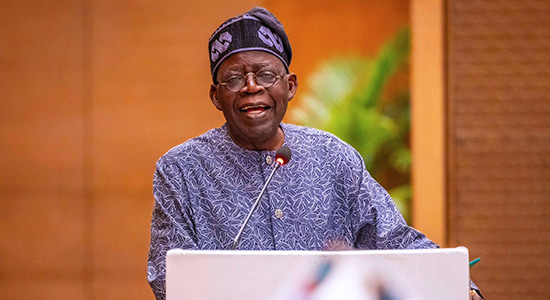
President Bola Ahmed Tinubu has renewed his administration’s commitment to reducing transportation costs for Nigerians, announcing plans to introduce additional Compressed Natural Gas (CNG) buses and establish a local bus assembly plant as part of efforts to make public transportation more affordable.
The President disclosed that Chinese automotive manufacturer Yutong would establish a CNG bus assembly operation in Nigeria and supply an initial 300 CNG-powered buses under an agreement designed to expand affordable mass transportation across the country.
The initiative is expected to support the National Affordable CNG Transit Programme (NACTP), which aims to reduce transport fares by approximately 40 per cent on participating routes in collaboration with state governments.
The announcement comes after an earlier commitment by the Tinubu administration to reduce transportation fares nationwide before October 1, 2026.
The latest development was disclosed in a statement issued on Thursday, November 19, 2026, by the Special Adviser to the President on Information and Strategy, Bayo Onanuga.
According to the statement, Tinubu invited Yutong, a Chinese manufacturer of electric and CNG-powered buses, to invest in Nigeria and “support the expansion of affordable mass transportation across the country”.
The President explained that the proposed investment would provide additional buses for public transportation while strengthening the country’s capacity to assemble commercial vehicles locally.
Under the agreement with the Presidential Initiative on Compressed Natural Gas and Electric Vehicles (Pi-CNG & EV), Yutong will supply an initial 300 CNG-powered buses, with the first batch of 100 expected to arrive in Lagos by the end of December 2026.
The remaining buses are expected to be assembled in Nigeria through YP Automobiles Bus Assembly at the former Leyland Automotive plant in Ibadan, Oyo State.
The arrangement is intended to revive existing industrial capacity, reduce dependence on imported vehicles and create employment opportunities for Nigerian engineers, technicians and other workers.
The Presidency explained that the project would also facilitate technology transfer and strengthen the country’s automotive manufacturing industry.
According to the statement, the collaboration forms part of the government’s efforts to establish a sustainable supply of affordable commercial buses while supporting local production and industrial development.
The President said the programme would be implemented in collaboration with state governments to ensure that the benefits of lower-cost transportation reach Nigerians across participating routes.
The Presidency stated that the initiative “targets transport fare reductions of approximately 40 per cent on participating routes, in line with the President’s Renewed Hope Agenda 2.0 for 2027–2031”.
Tinubu maintained that the success of the CNG programme should not be judged merely by the number of buses introduced or investments attracted but by the actual reduction in transportation expenses experienced by ordinary Nigerians.
He stressed that the programme’s success must be “measured by how much Nigerians save on transportation”.
According to the President, millions of Nigerians depend on commercial transportation every day to travel to work, take their children to school, visit markets and move goods between communities.
He observed that transportation expenses consume a substantial portion of the daily earnings of many households, placing additional financial pressure on workers, traders and families.
Tinubu consequently insisted that the lower operating costs associated with CNG-powered vehicles must translate into reduced fares for passengers.
He maintained that the anticipated savings should allow Nigerians to retain more of their earnings for food, education and other essential household needs.
The President explained that expanding access to affordable public transportation remained a central objective of his administration’s investments in alternative-fuel vehicles.
He also emphasised the importance of developing local manufacturing capacity to sustain the availability of commercial buses and reduce Nigeria’s dependence on imported vehicles.
According to the Presidency, establishing the assembly operation in Ibadan would create opportunities for skilled employment while supporting the development of domestic automotive expertise.
The arrangement is also expected to provide a platform for technology transfer as Nigerian engineers and technicians participate in the assembly and maintenance of CNG-powered buses.
Tinubu reaffirmed that his administration would continue investing in infrastructure, manufacturing and affordable mass transit to address the rising cost of living.
The President maintained that reducing the daily financial burden of transportation on Nigerians remained a priority.
The proposed 40 per cent fare reduction, however, is a target under the programme and not an announcement that fares have already been reduced by that amount.
Similarly, while the first 100 buses are expected to arrive in Lagos by the end of December 2026, the statement did not specify when the reduced fares would take effect or identify all the routes that would benefit from the arrangement.
Post Title: “Transport Fares To Drop By 40%” — Tinubu Announces 300 CNG Buses, Chinese Firm To Establish Assembly Plant In Nigeria By Naijaonpoint.