
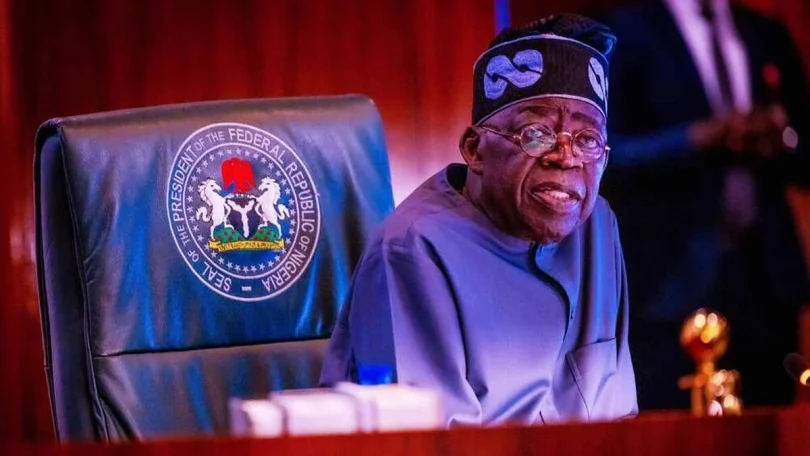
President Bola Tinubu has nominated six executive directors for the Nigerian Midstream and Downstream Petroleum Regulatory Authority (NMDPRA), including three serving officials seeking reappointment.
According to a statement by his special adviser on information and strategy, Bayo Onanuga, the nominations were conveyed to the Senate in a letter dated October 30, 2026. The nominees will serve five-year terms if confirmed by the lawmakers.
Politics Nigeria reports that the three officials renominated are Abiodun Adeniji, Executive Director of Finance and Accounts; Ogbugo Kalu Ukoha, Executive Director of Distribution Systems, Storage and Retailing Infrastructure; and Mustapha Lamorde, Executive Director of Health, Safety, Environment and Community.
The three new nominees are Mobolaji Tajudeen Musa, Executive Director of Hydrocarbon Processing Plants, Installations and Transportation Infrastructure; Ogechukwu Modie, Executive Director of Economic Regulations and Strategic Planning; and Said Abutalib, Executive Director of Corporate Services and Administration.
Tinubu urged the Senate to expedite consideration of the nominations to ensure institutional continuity and strengthen the authority’s regulatory and oversight capacity.
The president also approved the appointment of Jumoke Gafar as Secretary to the Board/Authority and Legal Adviser, subject to the completion of statutory procedures under Section 46 of the Petroleum Industry Act (PIA).
Politics Nigeria reports that the latest nominations come months after Tinubu appointed Rabiu Abdullahi Umar as the NMDPRA chief executive in April.
Umar has recently announced stricter requirements for petrol import licences, insisting that approvals would be based on published merit-based criteria and verifiable domestic supply shortfalls.
Speaking at the 2026 OTL Africa Downstream Energy Week in Lagos, the NMDPRA chief executive said importers would continue to have access to licences but must demonstrate the need for imported petroleum products.
“For our importers, the door stays open. Import licences will be issued only based on published merit-based criteria and also a transparent shortfall determination that everybody can audit,” he said.
Umar disclosed that domestic refineries now account for approximately 75 per cent of Nigeria’s petrol supply, representing a significant increase in local production.
“A year ago, more than half of the petrol in Nigerian tanks was imported. Last month, three litres in every four were refined here. I think that is a significant achievement,” he added.
He attributed the development to increased domestic refining capacity, noting that local production would reduce Nigeria’s exposure to international supply disruptions and retain more economic value within the country.
However, Umar warned against excessive dependence on a single domestic supplier, stressing the need to diversify Nigeria’s petroleum supply sources.
He called for support for modular refineries, efforts to revive government-owned refineries and continued access to imported petroleum products whenever local production falls short of national demand.
“Energy security also means diversity of supply,” he said.
On petroleum pricing, Umar clarified that the PIA does not empower the NMDPRA to determine the prices of petroleum products.
He explained that the authority’s responsibility was to promote fair competition and ensure transparency in the downstream petroleum market.
“I generally believe the market will set prices, and I think it’s a controversial element, but by the PIA, NMDPRA does not set prices. What NMDPRA does is to ensure fair market competition in the market, and to ensure that practices are done transparently, sustainably, and at arm’s length,” he said.