
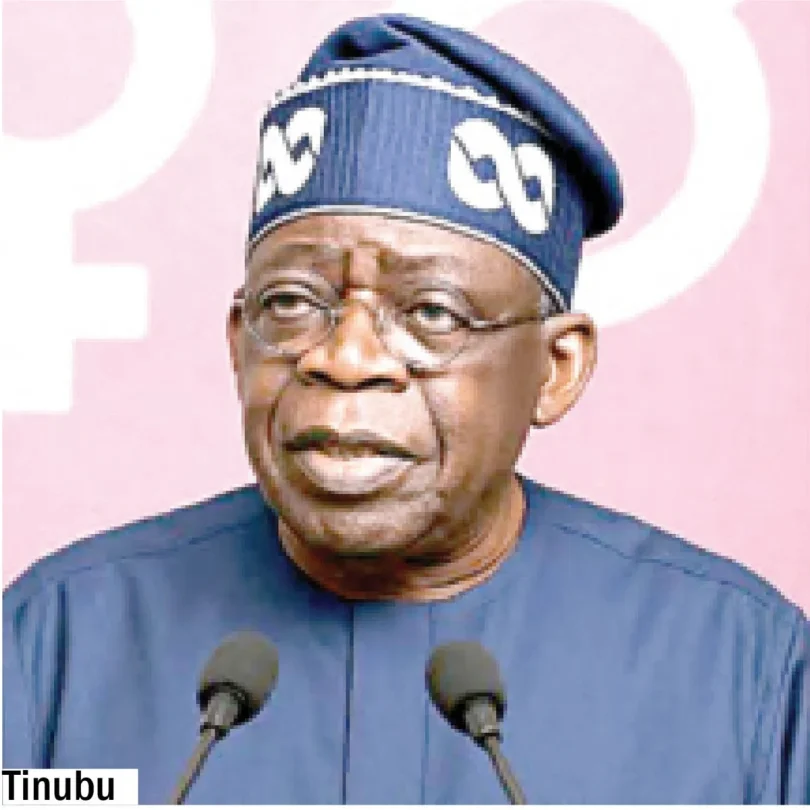
President Bola Ahmed Tinubu has declined assent to the Chartered Institute of Purchasing and Supply Management of Nigeria (Establishment) Amendment Bill, 2026, and the Raw Materials Research and Development Council (Amendment) Bill, 2026, citing legal, structural and drafting defects.
The Speaker of the House of Representatives, Rt. Hon. Tajudeen Abbas, read the two letters conveying the President’s decisions to the House during plenary on Wednesday.
In the first letter, dated July 7, 2026, President Tinubu declined assent to the Chartered Institute of Purchasing and Supply Management of Nigeria (Establishment) Amendment Bill, 2026.
The President said the decision was taken pursuant to Section 58(4) of the Constitution of the Federal Republic of Nigeria, 1999 (as amended).
According to him, “Pursuant to Section 58(4) of the Constitution of the Federal Republic of Nigeria, 1999 (as amended), I hereby convey to the House of Representatives my decision to decline assent to the Chartered Institute of Purchasing and Supply Management of Nigeria (Establishment) Act, 2007, as presently drafted.
“Following a careful consideration of the Bill in line with extant laws, drafting requirements and standards, it is observed that the proposed amendments are laudable and in order, except for the proposed amendments in Clause 8 seeking to insert subclauses (10) to (15) after Section 11(9) of the Principal Act.”
He explained that the proposed subclauses were objectionable on several grounds.
On subclause (10), the President stated that it “gives incorporated entities or organisations one month after the employment of their head of procurement to forward the name and particulars of the person appointed to head their procurement and supply chain to the Institute.
“The Institute, not being the regulator, cannot compel incorporated entities or organisations that are independent and perhaps not registered members of the Institute to furnish such particulars.”
On subclause (11), the President said it “makes an incorporated entity or organisation that employs a non-registered member of the Institute as head of its procurement and supply chain management liable to pay a fine of N2,000 per day, with a 10 per cent interest rate, until such a person appointed to head the procurement and supply chain management is removed.
“This would amount to forcing incorporated entities or organisations to recruit members of the Institute as heads of procurement and would constitute an unreasonable restraint of trade.”
Regarding subclause (12), Tinubu said it “mandates an incorporated entity or organisation to officially write to the Institute, attaching the removal letter of the person within one month.”
He maintained that “the Institute is not the regulator of the procurement sector and therefore cannot direct or compel participants on matters relating to their internal affairs.”
On subclause (13), the President said it “gives the Institute the right to institute legal action against any incorporated entity or organisation in order to enforce this Act.
“The Institute can enforce compliance against its members, not against non-members. Against non-members, it can only enforce contractual claims, as it is a body corporate with the power to sue and be sued.”
On subclause (14), Tinubu said it “authorises the Institute to set up a committee that will, from time to time, visit incorporated entities or organisations to ensure that the Act is fully complied with.”
According to him, “the Institute cannot act as a compliance officer for incorporated entities or organisations as defined under the Companies and Allied Matters Act (CAMA) 2020.”
On subclause (15), the President said it “empowers the committee to submit a collective report to the Institute after the inspection.”
He added: “The Institute cannot arrogate such powers to itself in matters concerning incorporated entities or organisations as defined under CAMA.”
The President, however, indicated that the legislation could still receive presidential assent after the identified issues have been addressed.
“Subject to the correction of the above issues, the Bill may be suitable for retransmission for assent,” he wrote.
In a separate letter, also dated July 7, 2026, President Tinubu declined assent to the Raw Materials Research and Development Council (Amendment) Bill, 2026.
According to him, “Pursuant to Section 58(4) of the Constitution of the Federal Republic of Nigeria, 1999 (as amended), I hereby convey to the House of Representatives my decision to decline assent to the Raw Materials Research and Development Council (Amendment) Bill, 2026 because the Bill contains structural errors and drafting defects.”
The President identified what he described as defects in the long title of the Bill.
According to him, “The long title of the Bill does not reflect the key policy objectives of the Principal Act, which relate specifically to the development, protection and processing of raw materials in Nigeria.”
He said it was imperative that the central theme of the amendment be reflected in the long title in the following terms:
“A Bill for an Act to amend the Raw Materials Research and Development Council Act, No. 28, 2022, and to provide for the development and protection of Nigeria’s raw materials, local manufacturing and processing industries; and for related matters.”
Tinubu also pointed to defects in Section 2 of the Bill, which seeks to substitute Section 2 of the extant Act.
According to the President, Section 2 “provides for the ‘Objectives of the Council’ instead of the ‘Objectives of the Bill’. This is an error which the Bill retained from the extant Act.”
He explained that objective provisions in legislation communicate the purpose and policy intent of an Act and are generally not directly enforceable because they do not create actionable legal obligations.
The President further stated that Section 2 of the Bill “is drafted as the functions of the RMRDC under the Bill rather than the objectives of the Bill.”
He added that “the section confuses the Bill’s objectives, which usually declare the policy intent of a Bill, with the substantive functional provisions that provide for enforceable obligations.”
Tinubu also objected to what he described as the incorrect insertion of operational provisions under the financial provisions of the Principal Act.
He noted that Section 3 of the Bill introduced new sections, namely Sections 12C, 12D, 12E, 12F and 12G, relating to value addition to raw materials, but said they were “wrongly inserted between the financial provisions of the Principal Act.”
According to the President, the new provisions were unrelated to Sections 12 and 13 of the Principal Act, which deal with the funds of the Council and its annual estimates and accounts, respectively.
“These erroneous insertions make the Bill incoherent and difficult to comprehend within the context of the Principal Act. Accordingly, the Bill, as currently proposed, is disjointed.”