
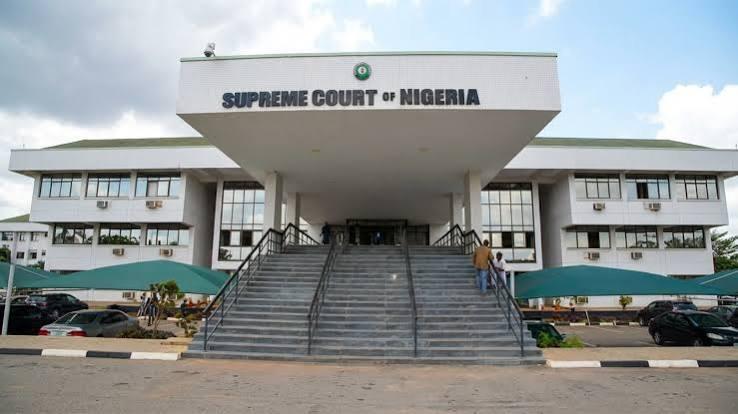
A sweeping government financial review has exposed a staggering ₦11.72 billion in questionable transactions within the Supreme Court of Nigeria. The audit, which scrutinizes financial activities between January 2017 and December 2020, highlights a massive ₦10.22 billion in payment vouchers that lack supporting documentation, alongside the unauthorized retention of government-owned vehicles worth ₦515.86 million by retired Justices and a documented ₦11.43 million in contract overbilling.
These findings cut through the veneer of the nation’s highest judicial institution, covering the tenures of former Chief Justices Walter Onnoghen and Ibrahim Tanko Muhammad. The audit identified that 18 official vehicles were kept by seven retired Justices without any legal auction process, while an additional contract awarded in 2019 was flagged for significant financial inflation. Despite the gravity of these discrepancies, the Supreme Court’s administrative management has offered little more than vague defenses, leaving massive gaps in public accountability.
When an institution tasked with interpreting the law and upholding the constitution fails to account for ₦10.22 billion in public funds, the term “financial irregularity” is a polite understatement. It is a systematic betrayal of public trust. The sheer lack of documentation for such a massive sum suggests either profound administrative incompetence or a deliberate effort to mask the pilfering of the national treasury. That this occurred within the hallowed halls of the Supreme Court—an institution that demands absolute integrity from every other sector of Nigerian society—is not just an embarrassment; it is a moral bankruptcy.
The arrogance displayed in the retention of government vehicles by retired Justices is equally grating. Officials who spend their careers lecturing citizens on the rule of law apparently feel exempt from the very regulations governing the disposal of state assets. Claiming these vehicles as “entitlements” without a shred of auction documentation or proof of payment into the federal coffers is a transparent attempt to normalize the privatization of public property. It is the classic Nigerian syndrome: rules are for the masses, but assets are for the elite.
Furthermore, the silence from the Supreme Court regarding the ₦11.43 million contract inflation speaks volumes. When confronted with hard data regarding overbilling, the refusal to respond is a tacit admission that there is no honest explanation to be found. The Chief Registrar’s office, as the primary accounting authority, can no longer hide behind bureaucratic wall-building. The public is tired of press releases that dance around the truth while billions in taxpayer funds vanish into thin air.
We are constantly told that the judiciary is the last hope of the common man, yet this report reveals an institution that struggles to manage its own books with the most basic transparency. If the Supreme Court cannot justify its own expenditures, how can it maintain the moral authority to adjudicate the affairs of the nation? The Nigerian public deserves more than internal audits that collect dust; they deserve full accountability, the recovery of stolen assets, and the prosecution of those who treated the public purse as a private slush fund.
Source: NaijaProbe