
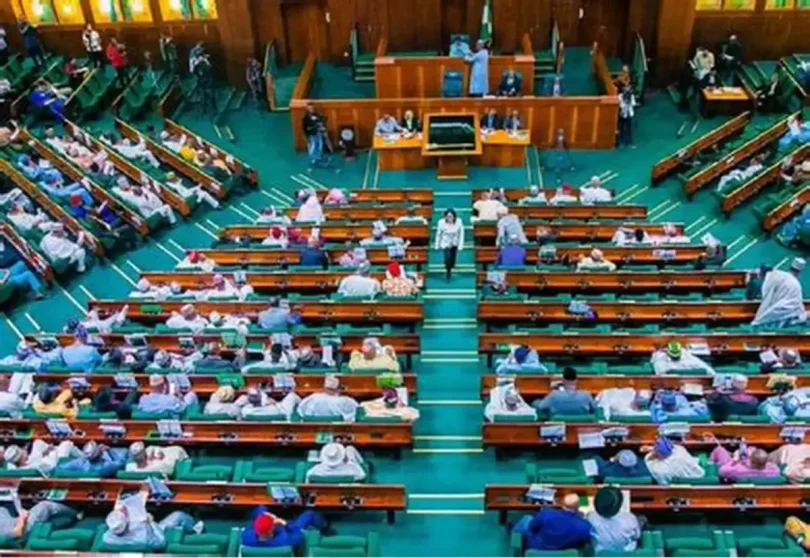
House of Representatives Committee on the South-South Development Commission on Wednesday intensified consultations with key stakeholders on a proposed amendment to the South-South Development Commission (Establishment) Act, 2025, aimed at strengthening the Commission’s funding framework to accelerate development across the region.
At the resumed public hearing held in Abuja, the committee brought together government agencies, petroleum regulators, oil industry operators and other stakeholders to examine the proposed amendment and ensure that the legislation reflects broad-based input before its consideration by the House.
Speaking at. the commencement of the Public hearing, the Chairman of the Committee, Rep. Julius Pondi, said that the hearing was reconvened after several critical stakeholders were unable to attend the initial session held on July 8 due to their participation in the Nigerian Oil and Gas (NOG) Conference.
ALSO READ: Tension rises in Ondo community over controversial approval of new monarch
He explained that, given the strategic importance of the oil and gas sector to the proposed legislation, the committee considered it imperative to provide every relevant stakeholder with an opportunity to make meaningful contributions to the legislative process.
He reaffirmed the House of Representatives’ commitment to a transparent, inclusive and consultative lawmaking process, stressing that public hearings remain an essential component of democratic governance by allowing government institutions, industry operators, professional bodies, civil society organisations and host communities to shape legislation through constructive engagement.
According to him, the proposed amendment seeks to expand the funding sources of the South-South Development Commission to enable it to more effectively discharge its statutory responsibility of promoting sustainable development across the region.
He pointed out that despite serving as Nigeria’s economic backbone through petroleum production, maritime commerce, industrial activities and other strategic sectors, the South-South continues to face severe developmental challenges, including infrastructural deficits, environmental degradation and socio-economic concerns that require sustained institutional intervention and adequate financial support.
The Lawmaker assured participants that every memorandum and presentation would be carefully reviewed before the committee makes its recommendations to the House, emphasizing that the objective is to produce legislation that is balanced, equitable, practicable and capable of advancing the developmental aspirations of the South-South while safeguarding the broader national interest.
According to him, “we are particularly interested in receiving constructive contributions on the proposed funding framework, its sustainability, its implications for government and industry, as well as alternative proposals that can further strengthen the objectives of the legislation.
While presenting the position of the Nigerian Upstream Petroleum Regulatory Commission (NUPRC), the Commission Chief Executive, Mrs. Oritsemeyiwa Eyesan, represented by the Head of Regulations and Statutory Compliance, Kingsley Chikwendu, expressed support for establishing a predictable, transparent and sustainable funding framework for the South-South Development Commission.
The Commission, however, raised significant concerns over the provision requiring oil and gas producing companies operating within the South-South region to contribute three per cent of their total annual budgets to the Commission.
According to the NUPRC, the phrase “total annual budget” is not defined in the proposed amendment, creating uncertainty regarding the basis for assessment, determination of liability, deductibility of the contribution, payment timelines, enforcement mechanisms and the treatment of joint venture operations as well as companies with assets spread across multiple regions.
Chikwendu cautioned that, if implemented in its current form, the proposal could effectively introduce another expenditure-based levy payable irrespective of profitability, production levels or the prevailing financial condition of affected companies.
He further observed that upstream petroleum operators are already subject to numerous fiscal and statutory obligations, including royalties, petroleum taxes, the Niger Delta Development Commission (NDDC) levy, Host Community Development Trust Fund contributions under the Petroleum Industry Act (PIA), the Nigerian Content Development Fund, environmental remediation obligations and abandonment fund contributions.
The Commission therefore urged lawmakers to undertake a comprehensive assessment of the potential impact of the proposed levy on production costs, investment decisions and the overall competitiveness of Nigeria’s upstream petroleum sector before arriving at a final position.
Also presenting the position of the Nigerian Midstream and Downstream Petroleum Regulatory Authority (NMDPRA), Senior Manager, Ahmed Laido, called on the committee to ensure that any additional funding mechanism aligns with the fiscal philosophy and investment objectives of the Petroleum Industry Act (PIA) 2021.
Laido stressed that any new financial obligation should promote regulatory certainty, encourage long-term investment, strengthen investor confidence and support the Federal Government’s ease-of-doing-business reforms within the petroleum industry.
He urged lawmakers to carefully weigh the broader economic implications of the proposed levy, noting that the funding framework should support the developmental objectives of the South-South Development Commission without undermining the sustainability, affordability and global competitiveness of Nigeria’s petroleum sector.
Similarly, the Oil Producers Trade Section (OPTS) of the Lagos Chamber of Commerce and Industry cautioned against imposing another statutory levy on oil and gas operators.
Speaking on behalf of the association, its Chairman, Bala Wudiri, argued that operators are already making substantial statutory contributions under existing laws, including payments to the Niger Delta Development Commission and the Host Community Development Trust Fund established under the Petroleum Industry Act.
He warned that introducing an additional three per cent contribution could significantly increase the financial burden on operators, create duplication of existing obligations and diminish Nigeria’s attractiveness as a preferred destination for oil and gas investment.
Wudiri therefore called for greater clarity on the proposed funding mechanism and urged the committee to adopt a balanced approach that would strengthen the financial capacity of the South-South Development Commission without discouraging investment or imposing overlapping statutory obligations on industry players.
The resumed public hearing underscored broad stakeholder support for the socio-economic development of the South-South region while highlighting divergent views on the most sustainable funding model for the Commission.
Participants generally agreed on the need to strengthen the Commission’s capacity to deliver critical infrastructure and development projects but urged lawmakers to carefully balance developmental aspirations with the need to preserve a stable, competitive and investment-friendly operating environment for Nigeria’s petroleum industry.
The committee is expected to review all submissions before presenting its recommendations to the House of Representatives for further legislative consideration.