
The Independent National Electoral Commission (INEC) has reaffirmed its commitment to conducting a more transparent, credible and technology-driven electoral process ahead of the 2027 general elections, assuring Nigerians that every legitimate vote will count.
The commission said it remains focused on strengthening public confidence in the country’s electoral system by improving its processes, deploying advanced technology and ensuring that no eligible voter is disenfranchised.
INEC made the assurance on Wednesday during the 2026 News Agency of Nigeria (NAN) and Nigeria Union of Journalists (NUJ) Democracy Roundtable held in Abuja. The event, themed “Making Nigerians’ Vote Count in 2027: The Role of INEC,” brought together election stakeholders, media practitioners, civil society organisations and democracy advocates to discuss preparations for the next general elections.
Representing the electoral commission, Assistant Director of Voter Education and Planning, Magdalyn Aku, said protecting the sanctity of every vote remains the foundation of Nigeria’s democracy and the guiding principle behind INEC’s reforms.
According to her, ensuring that votes count is not merely a campaign message but a constitutional responsibility the commission is determined to fulfil.
“For INEC, making your vote count is not just a slogan; it is the bedrock of our democracy. We continue to improve our processes and deploy the right tools to ensure that every valid vote counts,” she said.
Aku stressed that the commission has no political interest in determining election winners, insisting that its sole responsibility is to provide a level playing field for all contestants while safeguarding the rights of Nigerian voters.
She noted that the commission’s loyalty lies with the electorate rather than political parties or candidates.
“Our focus is on the Nigerian voter. We are not concerned about who wins or loses an election. Our responsibility is to ensure Nigerians freely choose their leaders because they are the true kingmakers,” she stated.
The INEC official said the commission has consistently modernised Nigeria’s electoral process by embracing technology to improve transparency, accountability and efficiency.
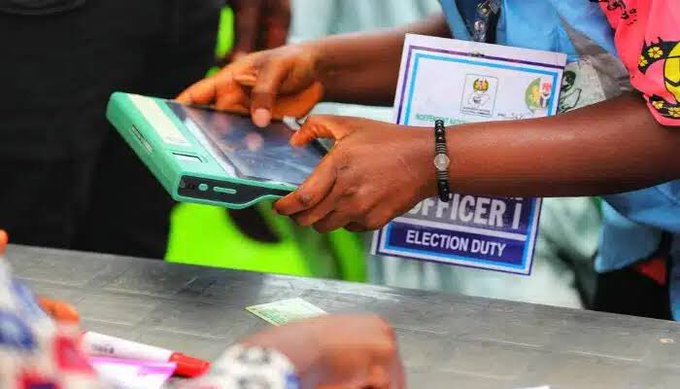
She recalled the transition from the Smart Card Reader to the Bimodal Voter Accreditation System (BVAS), describing it as one of the commission’s major technological milestones.
Aku also highlighted the introduction of the INEC Result Viewing Portal (IReV), which enables election results to be uploaded electronically from polling units for public viewing, reducing opportunities for manipulation.
She explained that election results are first displayed publicly at polling units before being transmitted electronically, allowing citizens and stakeholders to independently verify the outcome.
According to her, these innovations demonstrate INEC’s commitment to continuously improving the integrity of elections.
Aku also reaffirmed INEC’s commitment to ensuring that every eligible Nigerian, including persons with disabilities and other vulnerable groups, has equal opportunity to participate in elections.
She said the commission has introduced policies and operational measures designed to make voting more inclusive and accessible across the country.
She further urged Nigerians to reject vote-buying, describing the practice as a major threat to democracy.
Questioning why politicians spend huge sums trying to purchase votes, Aku reminded citizens that their ballot remains their most powerful democratic tool.
“If your vote does not matter, why is someone trying to buy it? And why should you sell it? Your vote is your voice. Nigerians must protect it.”
She added that conducting credible elections requires collective responsibility, urging citizens, political parties, security agencies, civil society groups and the media to work together in protecting Nigeria’s democracy.
NUJ calls for responsible election coverage
Speaking at the event, Chairman of the NUJ FCT Council, Grace Ike, said credible elections cannot be achieved by INEC alone, stressing that all stakeholders have important roles to play.
She challenged journalists to remain professional, factual and courageous in reporting electoral activities before, during and after the elections.
Also Read: BREAKING: Tinubu admin surpasses borrowing limit as fresh debt hits N12.62tn
According to her, accurate journalism remains essential in protecting democratic values and exposing electoral malpractice.
“Credibility is not the responsibility of INEC alone. Journalists, civil society organisations, security agencies and citizens all have responsibilities. If journalists see something, they should report it.”
Legal practitioner Frank Tietie also urged INEC to protect its institutional independence, insisting that election outcomes should be determined by voters at polling units rather than prolonged court battles.
Similarly, Regional Advocacy Officer of the West Africa Democracy Network, Austin Aigbe, endorsed plans to establish an Election Situation Room ahead of the 2027 elections.
He also called for greater emphasis on the effective deployment of the BVAS technology to further strengthen the credibility of the electoral process.
Meanwhile, Chairman of the NAN NUJ Chapel, Collins Yakubu-Hammer, urged all political actors, security agencies and citizens to support efforts aimed at delivering peaceful, transparent and credible elections.
As part of preparations for the 2027 polls, the NUJ FCT Council announced plans to establish a dedicated Election Situation Room that will monitor electoral developments nationwide, verify reports, support journalists covering elections and coordinate rapid responses to threats against voters and media personnel.