
•Seek amendment of Mining Act to formalise artisanal miners, establish six mineral processing zones
•Charge security operatives to arrest illegal mining funding banditry in N’West
•Ask FG, security agencies to intensify effort on release of 116 schoolchildren, others in Borno
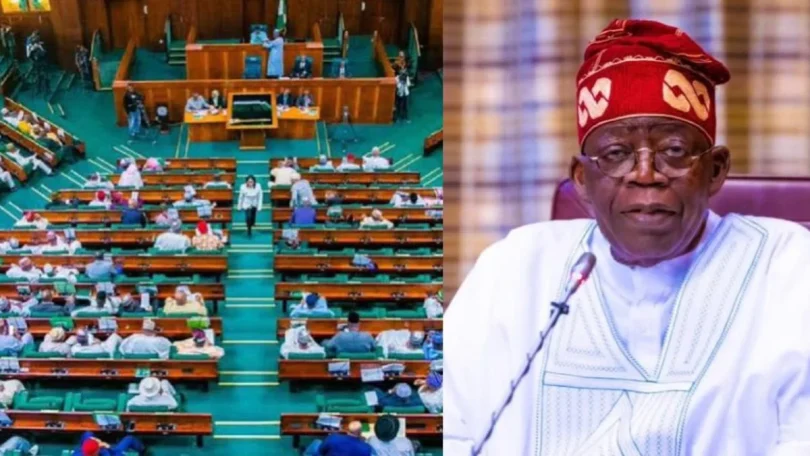
MEMBERS of the 10th House of Representatives, during Tuesday plenary, called on President Bola Tinubu, to address rising insecurity, as well as youth restiveness by revitalising some dying economic sectors across the country.
The lawmakers made the call, following the adoption of a motion on matter of urgent public importance, sponsored by Honourable Billy Osawaru, who observed that government owes the people the responsibility of providing for their welfare and security as enshrined In Section 14{2)(b) of the 1999 Constitution (as amended).
Noting that it is binding on the government to fulfill its obligation to the people in this regard, Osawaru, in his lead debate, expressed concern that “banditry, killing, kidnapping, cultism and youth restiveness have worsened due to mass unemployment, with SBM (SB Morgen Intelligence) reporting over 10,000 people killed and 7,500 kidnapped in over 1,700 security incidents as at 2024, while the figure stood at 2,683 deaths, 1,107 kidnapped and 245 kidnap incidents in Q1 of 2025 alone.
He said the House is also concerned that Nigeria’s general unemployment rate stood at 3.06 percent and youth unemployment rate stood at 5.34 percent as of 2025 per National Bureau of Statistics (NBS), and over 13.5 million out of school children which is the highest globally, and this creates rooms for them to be recruited by different criminal sets.
According to Osawaru, the House observed with great worry that “several sectors in Nigeria with high youth employment potential have collapsed or are underperforming: like Agriculture; where post-harvest losses have exceeded 40 percent due to lack of storage/processing and Nigeria spends billions annually on food imports while 70 percent of farmland is uncultivated largely due to insecurity also manufacturing/textiles; where we have over 800 factories closed In the last five years due to FX, power, and insecurity, thereby killing thousands of semi skilled jobs.
“Some of these factories include Unilever Nigeria, Procter & Gamble, GlaxoSmithKline, PZ Cussons, etc. Also, in the mix are over 160 textile mills we had in the country around 70s-90s, with Kaduna State being known as the Textile City because it warehoused one of the largest stable manufacturing mills in Nigeria with over 10 other textile companies in the state as at then,” he stated.
He lamented that solid minerals, where Nigeria reportedly has over 44 mineral types worth about $700 billion, contributes only about 0.5 percent to GDP compared to other countries like South Africa that contributes about 10 percent, adding that illegal mining had become a funding source for bandits in the North-West, according to reports from Nigerian Extractive Industries Transparency Initiative (NEITI), the Global Initiative Against Transnational Organized Crime (GI-TOC).
He observed that that Amnesty International earlier reported over 1,100 schoolchildren abducted in Northern Nigeria in just three months, and SERAP noted repeated mass abductions of schoolchildren, commuters, women and rural residents as evidence of “rapidly deteriorating” security, an action that calls for an all-inclusive approach to tackle.
The lawmakers urged the government to declare a “National Youth Jobs Emergency” and prioritise revamping of key dying sectors.
They also called on the government, through Federal Ministry of Trade and Investment, to urgently revive the textile industries in Kaduna and other states of the federation, as this will create many job opportunities for the unemployed and in turn address the youth restiveness and to also look into banning importation of used clothing and enforce patronizing of Made-in-Nigeria cloths, uniforms for schools, security agencies, NYSC, among others.
The House also advocated for appropriation of funds for many modern storage facilities and agro-processing clusters in each geopolitical zone within 12-24 months, as this will cut over 30 percent post-harvest loss and create about one million direct jobs or even more.
The House urged the administration to work with BOI and CBN to create a ‘Manufacturing Revival Fund’ with very low interest for SMEs that are tied to local sourcing and youth employment targets.
The lawmakers underscored the need to amend the Mining Act to formalise artisanal miners, establish six Mineral Processing Zones, and deploy security to stop illegal mining funding banditry in North-West.
To this end, the House urged relevant committees to liaise with the executive and the ministries on the issues raised and report back within four weeks for further legislative action.
In another debate, the House tasked the government and security agencies to secure the safe rescue of the 116 schoolchildren and other persons abducted in Lassa, Mussa and along the Buratai-Maiduguri road in Borno State.
The resolution was passed sequel to the adoption of a motion under urgent public importance sponsored by Honourable Midala Balami.
Balami said: “The continued captivity of the victims poses a serious threat to their lives, safety, education and fundamental rights, while placing an enormous emotional and psychological burden on their families and the affected communities.”
The lawmakers called for enhanced intelligence gathering, information sharing and interagency coordination among the Armed Forces, Nigeria Police Force, Intelligence Services and other relevant security agencies to locate the victims and apprehend those responsible for the abductions.
The House further tasked security agencies to strengthen security along the Buratai-Maiduguri road, Mussa, Lassa and other identified vulnerable communities and routes, including through increased patrols, intelligence led operations and appropriate security checkpoints.
Meanwhile, the House on resumption from annual recess, repealed and extended the capital component of the 2025 Appropriation Act from September 30 to December 31.
The Executive bill was considered and passed after the consideration of the 2025 Appropriation Act at the Committee of Supply chaired by the Deputy Speaker, Hon. Benjamin Kalu.
Leading debate on the motion, Majority Leader, Honourable Julius Ihonvbere solicited the support of members to amend the Appropriation (Repeal and Enactment) Act, 2025 to extend the implementation of the Capital aspect of the Appropriation (Repeal and Enactment) Act. 2025 from 30th September 2026 to 31st December 2026 and for related matters.
After the passage of the 2025 Appropriation Act, the House adjourned plenary to Tuesday, October 13.