
… as asylum seekers hit 140,927
The Federal Government has disclosed that 3,679,757 internally displaced persons (IDPs) were living in various camps and host communities across the country as of 1 September 2026.
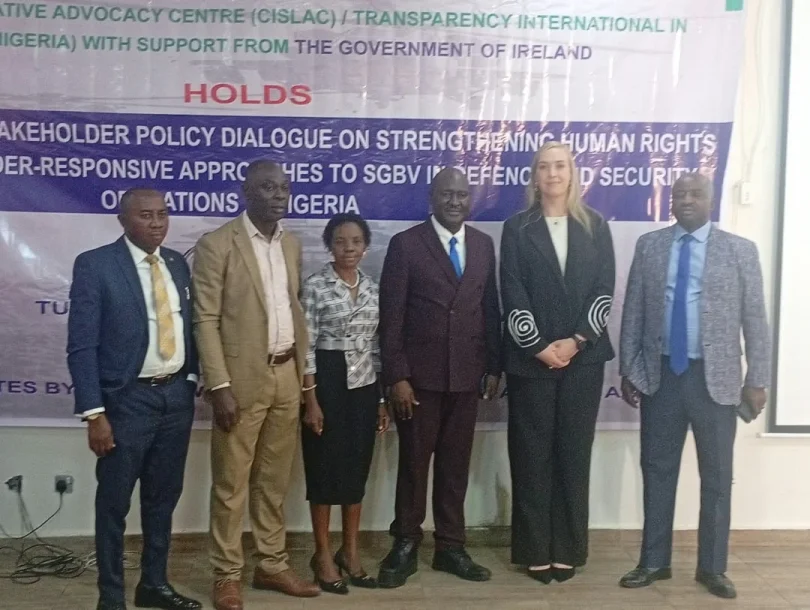
Federal Commissioner/CEO of the National Commission for Refugees, Migrants and Internally Displaced Persons (NCRMIDP), Aliyu Ahmed, disclosed this at the just-concluded National Multi-Stakeholder Policy Dialogue in Abuja, organised by the Civil Society Legislative Advocacy Centre (CISLAC)/Transparency International Nigeria, with the support of the Government of Ireland.
The dialogue was themed “Strengthening Human Rights-Centred and Gender-Responsive Approaches to SGBV in Defence and Security Operations in Nigeria”.
Aliyu, who was represented by his Special Adviser, Dahiru Sajo Bobbo, also disclosed that Nigeria was hosting 140,927 refugees and asylum seekers from Chad, Niger, Cameroon, Libya, Syria, Afghanistan, Lebanon, Congo and Sudan. He reiterated the government’s commitment to protecting all vulnerable groups within its jurisdiction.
Other stakeholders who spoke during the dialogue, including representatives of the Independent Corrupt Practices and Other Related Offences Commission (ICPC), Transparency International Defence and Security (TI-DS) and various security agencies, called for stronger institutional safeguards, reporting mechanisms and accountability systems to combat sexual and gender-based violence (SGBV) within Nigeria’s defence and security architecture.
In his keynote address, CISLAC Executive Director, Auwal Ibrahim Rafsanjani, said defence and security institutions must be judged not only by their operational capacity but also by their ability to protect human rights, dignity, safety and equality, warning that SGBV affected security personnel, civilians, detainees and conflict-affected communities.
Rafsanjani called for safe, confidential and trusted reporting mechanisms, stronger institutional accountability, gender-responsive security operations and improved coordination among security agencies, oversight bodies, civil society and development partners. He stressed that survivors and affected communities must remain at the centre of prevention and accountability efforts.
While acknowledging that Nigeria had made important commitments to human rights, gender equality and the prevention of violence, he observed that defence and security institutions also had policies, structures and mechanisms that could contribute to preventing and responding to SGBV.
He, however, noted that the critical questions were: How effectively do these commitments and mechanisms function in practice? How accessible are existing complaint and reporting channels? Are survivors and complainants adequately protected from retaliation and further harm? Are reporting mechanisms sufficiently confidential and survivor-centred? Do institutional procedures provide clear pathways from reporting to investigation, referral, disciplinary action and, where appropriate, prosecution? Are gender considerations adequately integrated into security operations, recruitment, deployment, leadership, training and internal accountability?
“And, importantly, how can oversight institutions, civil society and development partners contribute constructively to strengthening these systems without undermining the legitimate operational responsibilities of security institutions? These are not questions any single institution can answer alone.”
On his part, ICPC Chairman, Dr Musa Aliyu, represented by Mrs Peace Arocha, pledged the commission’s resolve to enforce extant laws and policies against SGBV, expressing concern that widespread underreporting continued to undermine efforts to identify perpetrators and secure justice for survivors.
Dr Aliyu described SGBV as not merely a social problem but a human rights, justice, public accountability and institutional integrity issue, particularly where public office, official influence or positions of trust were exploited for improper personal advantage.
“We have the preventive mandate, we also have the enforcement mandate. In the past couple of years, the ICPC has carved a niche for itself as one of the prominent anti-corruption agencies in the fight against sexual and gender-based violence,” he said.
He disclosed that the ICPC had secured convictions in two sexual harassment cases involving Federal Government v. Professor Iyiola and Federal Government v. Professor Cyril Ndifon, while also establishing a Sexual Harassment Abuse and Response Team to strengthen prevention, sensitisation and enforcement.
On his part, Programme Manager, Transparency International Defence & Security (TI-DS UK), Yi Kang Choo, said the global picture underscored the urgency of strengthening Nigeria’s response, revealing that the United Nations had verified more than 9,000 cases of conflict-related sexual violence in 2025, representing about a doubling from the previous year, while noting that the actual figure was believed to be much higher.
“For every case that reaches a clinic, an estimated 10 to 20 go unreported,” Choo said, adding that women and girls were disproportionately affected, while men and boys, particularly detainees, and persons of diverse sexual orientations and gender identities also faced SGBV and barriers to justice.
Mr Choo linked corruption directly to sexual violence, citing TI-DS research which found that bribery, intimidation, abuse of power and other forms of corruption could facilitate sexual abuse or prevent survivors from reporting and accessing justice. He said the 2025 Government Defence Integrity Index (GDI), which assessed 17 sub-Saharan African countries, found all of them facing high to critical corruption risks in the defence sector.
He said Nigeria recorded an overall GDI score of 28, placing it in the “very high” corruption-risk band, although this was an improvement from 22 in 2020. While Nigeria scored 83 out of 100 for compliance and ethics units and 88 for disciplinary measures for personnel, its whistleblowing score was only 17, exposing a major gap between formal safeguards and people’s confidence in reporting abuses.
Mr Choo further disclosed that women constituted less than 11 per cent of the Nigeria Police Force, arguing that while increased female representation alone would not eliminate abuse, institutions where women could serve, lead and influence decisions at every level would be better positioned to recognise and respond to SGBV.
He said Nigeria’s Third National Action Plan on Women, Peace and Security, launched in December 2025, provided an important policy framework, urging stakeholders to strengthen gender mainstreaming, safe and independent complaint systems, annual public reporting of complaints and meaningful participation of women in security institutions.
Also speaking, First Secretary, Security and ECOWAS Relations at the Embassy of the Kingdom of the Netherlands in Abuja, Ms Dineke Traore, applauded CISLAC for convening the dialogue, stressing that the Netherlands viewed security, human rights, integrity and accountability as mutually reinforcing principles.
“The Netherlands believes that security, human rights, integrity and accountability go hand in hand. Effective security institutions protect the people they serve. They act professionally and transparently. And they earn public trust,” Ms Traore said.
She said the Netherlands was proud to partner with CISLAC on programmes addressing integrity risks in finance, personnel, operations and procurement, with gender inclusion and access to information also forming important components. According to her, the partnership demonstrated what sustained engagement between civil society and security institutions could achieve, including promoting greater participation of women in recruitment, appointment, promotion and deployment.
The Netherlands envoy stressed that the new focus on SGBV was critical because the issue was not only a human rights concern but also a security and accountability matter, insisting that security institutions had a responsibility to prevent abuse and respond effectively whenever violations occurred.
“People must be protected, must also be able to report violations safely, and have the confidence that complaints will be taken seriously. This is essential for building professional and social security,” Ms Traore said.
In his presentation, Executive Secretary of the National Human Rights Commission (NHRC), Dr Tony Ojukwu, said the commission had documented a disturbing pattern of SGBV through its field monitors, Human Rights Situation Room, IDP camp interventions, detention facilities and conflict-affected communities, warning that sexual violence was both a consequence of insecurity and, in some instances, a feature of security responses.
“Even one case of SGBV by a state actor undermines the legitimacy of the entire operation, destroys trust with the communities we are mandated to protect,” Ojukwu said, adding that Nigeria’s constitutional, statutory and international obligations required state institutions to protect citizens from such violations.