
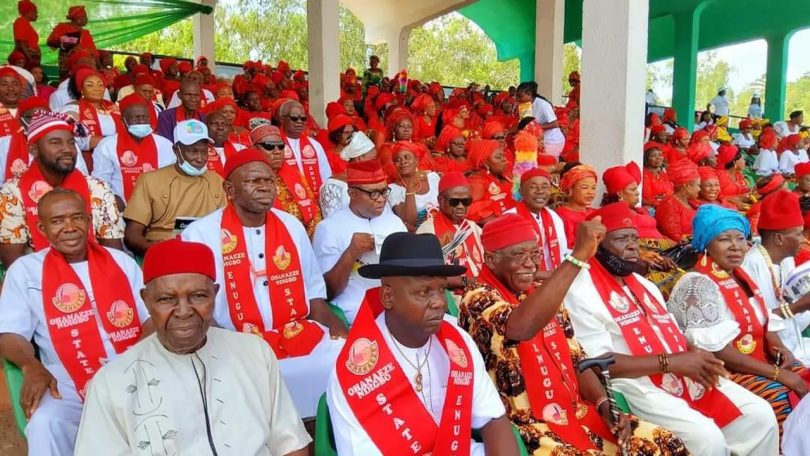
The apex Igbo socio-cultural organisation, Ohanaeze Ndigbo Worldwide, has called for the immediate convening of a Sovereign National Conference (SNC) to produce a new constitution that it says truly reflects the aspirations, diversity, and democratic will of Nigerians.
In a statement signed by its factional President-General, Chief Omenazu Jackson, the organisation argued that none of Nigeria’s past or current constitutions were created through the direct sovereign will of the people. It maintained that the country’s constitutional evolution has largely been shaped by colonial authorities and successive military governments.
Ohanaeze contended that colonial-era constitutions—including the Clifford (1922), Richards (1946), Macpherson (1951), and Lyttleton (1954) Constitutions—primarily served British colonial interests. It also argued that the 1960 Independence Constitution, the 1963 Republican Constitution, the 1979 Constitution, the aborted 1989 constitutional framework, and the current 1999 Constitution did not emerge from a people-driven constituent process or a national referendum.
According to the organisation, the absence of a constitution made and endorsed by Nigerians has contributed to long-standing national debates over issues such as federalism, resource control, devolution of powers, state policing, electoral reforms, fiscal federalism, and national unity.
To address these concerns, Ohanaeze proposed that every ethnic nationality should independently nominate and sponsor its own delegates without government funding or interference. It also advocated equal representation for all ethnic nationalities, regardless of their population or geographical size, and insisted that the conference should independently determine its procedures and that its resolutions should not be altered by any arm of government.
The organisation urged the Federal Government, the National Assembly, traditional rulers, civil society groups, and other stakeholders to support the proposal, arguing that a genuinely people-made constitution is essential for lasting peace, justice, and national development.
The statement reflects the position of Ohanaeze Ndigbo on constitutional reform. As of the time of the report, there had been no official response from the Federal Government to the proposal.