
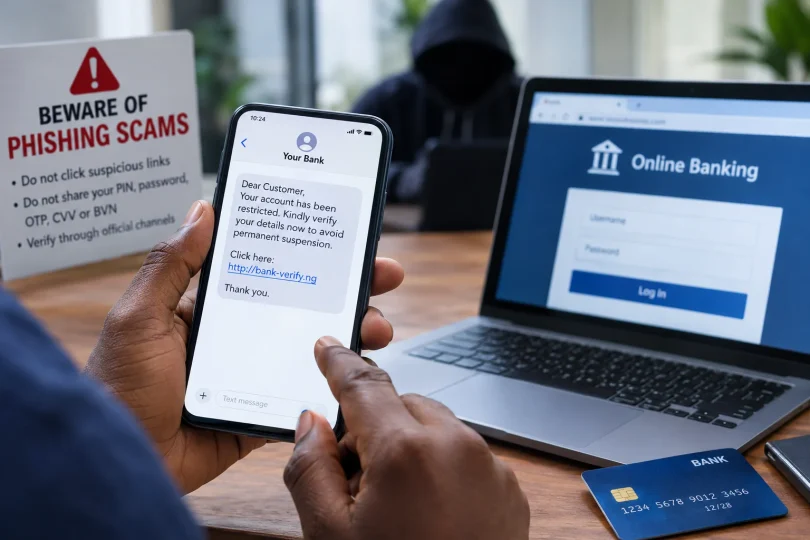
The Association of Corporate Communication and Marketing Professionals in Banks (ACAMB) has Issues a caution to bank customers to remain vigilant against phishing scams and other forms of cyber fraud, warning that criminals are increasingly using fake bank alerts, cloned websites and impersonation accounts to steal sensitive financial information.
The Call for vigilance came against the backdrop of a fraudulent text message impersonating various banks.
The incident highlights the risks associated with digital banking fraud in Nigeria. In June, Wema Bank suspended its engagements on X, (formerly known as Twitter) amid reports of more than 70 fake accounts impersonating the bank and its ALAT platform.
In August, Zenith Bank Plc disclosed that it was investigating unauthorised access to customer data linked to a global cyberattack.
ACAMB President, Jide Sipe in a statement warned that fraudsters were increasingly adopting sophisticated methods to impersonate trusted banking brands and steal customers’ personal information, making their schemes difficult to distinguish from legitimate communications.
“When a scam message carries your name, your phone number or your bank’s logo, it looks real. That is exactly why customers must slow down. No bank in Nigeria will ask you to confirm your PIN, password, OTP or BVN through a link,” Sipe explained.
Sipe acknowledged the efforts of banks to strengthen fraud detection and customer protection, alongside regulatory measures introduced by the Central Bank of Nigeria’s mandatory cybersecurity self assessment guide.
He mentioned, however, that these efforts must be complemented by customer awareness and vigilance, particularly when handling requests for sensitive banking information.
“Banks can strengthen their security systems, but fraudsters continue to find ways to exploit unsuspecting customers. We must all remain vigilant. Always pause, verify requests through official channels and report anything suspicious before taking action,” he added.
Sipe urged customers to stop clicking links in unsolicited messages asking them to verify, reactivate or secure their bank accounts. He also warned against sharing personal identification numbers (PINs), passwords, one-time passwords (OTPs), card verification values (CVVs) or BVNs in response to suspicious requests.
Customers should verify such requests directly with their banks through official mobile applications, verified social media accounts or published customer service numbers. Anyone who has entered banking details on a suspicious website should contact their bank immediately to secure their account and block affected cards where necessary.
ACAMB reaffirmed its commitment to working with member banks, regulators and the media to raise awareness of cyber fraud and promote safer digital banking practices as the use of online financial services continues to expand across Nigeria.
Post Views: 0