
Constitution amendment to insulate service from govs — Bamidele
Reps Speaker calls for phased creation
Pledges House resolve to strengthen Tinubu’s police decentralisation move
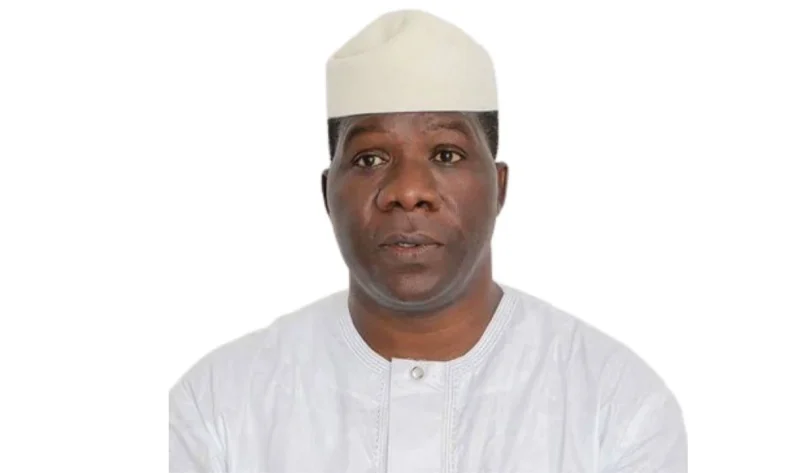
LIKE the Judiciary, the National Assembly plans to place the proposed State Police Service on First-Line Charge in order to insulate its operations from undue influence by state governors.
The Leader of the Senate, Senator Opeyemi Bamidele, who made the disclosure on Wednesday, explained that the fresh amendments proposed to the 1999 Constitution would incorporate direct funding of the state police service by placing it on first-line charge like the judicial arm of government.
His Directorate on Media and Public Affairs quoted him as saying that the Legislature had thought out a plan for a strong state police service that would not be controlled by political actors or other influential groups due to funding challenges.
To address any financial challenges, he said the solution was to insulate the service through direct funding.
Bamidele explained that the funding of the judiciary “is provided for in the 1999 Constitution. The Chief Justice of Nigeria, for instance, does not have to take her file to the President for approval on every procurement unlike a minister or any member of the Federal Executive Council that must secure presidential approval to spend any money.”
He added: “That is why we called it a first line charge. In other words, the Commissioner of Police and State Police Service Commission must have a guaranteed source of funds provided for in the 1999 Constitution in a way that the police chief will not be subject to the whims and caprices of a state governor.
“Part of the critical issue we must resolve, even in amending the 1999 Constitution, is to guarantee the financial independence of state police services. In other words, it should not be at the discretion of a governor of a state entirely whether he wants to fund state police service or not.
“If a state police service is not responding well to the directives of a governor, he may choose not to fund it. We must prevent such a situation.
“We are, therefore, under the obligation to make provision for a certain percentage of a state budget specifically for the operations of state police services. Access to funds must be clearly spelt out.”
The Senate leader further assured Nigerians that the National Assembly would establish a state police service that would be accountable to the people and that all issues raised by stakeholders would be addressed in the new law.
Bamidele stressed the need to address the issue of funding with pragmatism, noting that if the federation created a state police service that was not well funded, it would be difficult for them to perform their constitutional mandates effectively.
The leader said what the National Assembly was trying to achieve with the ongoing constitutional review, which according to him, was to move the Exclusive Legislative List in which policing powers are domiciled in the federal government to the Concurrent Legislative List, where state governments could also establish their own police.
According to him, those who expressed concerns “only talked of political abuse. But it is more than political abuse. If a state police service is not well funded, it is not only political actors that can abuse state police services.” He added: “Business class can also abuse it. Some other organisations, even criminals or cabals, can abuse state police service because it is a question of ’he who pays the piper dictates the tune.
“If a state police service is not well funded by any means, we have a situation where it may as well be a highway to nowhere. That is one thing all of us must prevent.”
However, Speaker of the House of Representatives, Hon. Abbas Tajudeen, on Wednesday suggested measures to be put in place for the actualisation of a better decentralised police structure in Nigeria, with specific call for phased creation of State Police across the 36 states of the federation.
He made the suggestions on Wednesday in his address at the National Security Roundtable session as part of the NASS Open Week 2026.
While commending President Bola Tinubu for leading the move to decentralise the current Nigeria Police Force and create state police, Speaker Tajudeen listed out the proposed measures to curtail abuse of state police, as contained in the executive bill forwarded to the National Assembly by President Tinubu, stressing that “our security is much larger than any single law.”
On how best to operationalise the proposed state policing system, Speaker Tajudeen offered three thoughts.
He said: “First, the National Minimum Standards Act must come before the first State Police issue a single directive. Standards first, structures after. Second, we should move step-by-step, state-by-state, learning as Germany and Canada learnt, rather than switching on 36 new forces on the same day.
“Third, we must settle the question of money from the very beginning, whether through a dedicated policing fund, through shared services, or through federal support that is tied firmly to standards, so that no state creates a police force it cannot pay, and no unpaid officer becomes a threat to the citizen he has sworn to protect.”
He commended Tinubu for initiating the process, saying “for the first time in our history, a sitting president has made State Police a central part of national reform,” noting that President Tinubu has done so not with words alone, but with a bill that now sits before the National Assembly.
He said: “Let me begin with a word of appreciation, because it is deserved. President Bola Tinubu has done what many leaders talked about for 30 years, but few dared to attempt. He has sent this Parliament an Executive Bill to amend the Constitution and to allow for state police services.
“It takes conviction to bring the most sensitive question in our federation before the whole country, and it takes humility to place that question in the hands of the legislature and the people. For that, this House thanks him.
“I also thank the men and women who keep us safe while we debate: our Armed Forces, our Police, and other security and intelligence services. Many of them have lost their lives doing this work. We owe them our gratitude, and we owe them a system that serves them better than the one they have now.”
While reaffirming the National Assembly’s commitment to continue to fund security agencies, the Speaker stated that “money by itself is not a strategy.”
“We must legislate for a modern, shared criminal and biometric database so that a suspect known in one state is not a stranger in the next.
“We must connect our agencies into one network of intelligence so that they work together instead of apart.
“We must build, in law, the architecture for inter-agency coordination and intelligence-sharing. We must legislate for technology, safe schools, border security, and the welfare and equipment of the officer at the checkpoint.
“And we must use our oversight to ensure accountability at all times,” he added.
Speaker Tajudeen observed that local security problems need local knowledge, local presence, and local accountability, stressing that policing works best when the people who protect a community actually belong to it.
He said he understands the “reasonable” concerns of many people in the state police discourse, especially the fears that police could become the private army of a governor or a political godfather.
“The people who drafted this bill had the same fears, and they answered it. A state appoints its Commissioner of Police on the recommendation of the National Police Council.
“The State Assembly must confirm that appointment, and only a two-thirds majority of the state assembly can remove the officer, and, even then, only for good cause.
“If a state police breaks down, or falls into the wrong hands, or turns against the very people it should protect, the Constitution allows the federal police to step in. But it allows this only in defined situations, only in writing, only for a limited period, with notice to the governor and to the National Assembly within 48 hours, and always subject to the courts.
“No such step may dissolve a state police or suspend a state’s elected institutions. These are the safeguards that will keep the reform honest,” he added.
Citing the examples of Germany, Canada, and the United States and how the countries decentralised their police structures, Speaker Tajudeen called for a proper study of their models and how the systems can work for Nigeria.
Panelists for the security roundtable included the governor of Kaduna State, Senator Uba Sani, chairman, House Committee on Defence, Hon. Babajimi Benson; Maj.-Gen. Pat Akem (rtd.), Brig.-Gen. Sani Usman (rtd.); and Mrs. Moji Makanjuola, among others.