
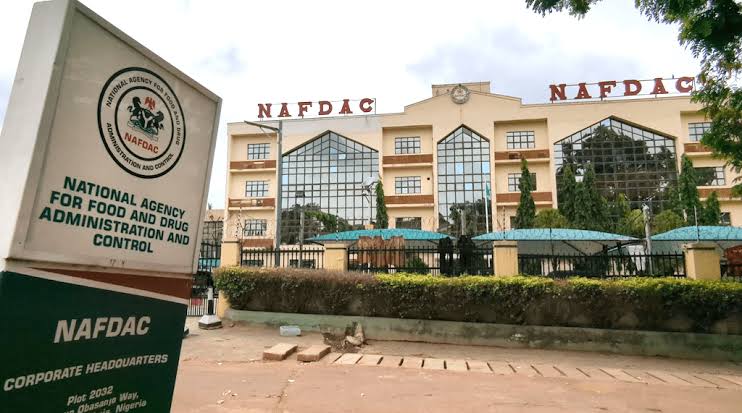
The National Agency for Food and Drug Administration and Control (NAFDAC) has renewed its call for harsher penalties for counterfeiters.
The agency proposed death sentences or life imprisonment for those convicted of counterfeiting regulated products in Nigeria.
NAFDAC Director-General, Prof. Mojisola Adeyeye, made the call on Monday at a news conference in Lagos.
Adeyeye said the penalties should be incorporated into the NAFDAC Act and Counterfeit and Fake Drugs Act.
She said tougher sanctions would strengthen Nigeria’s fight against counterfeit, substandard, falsified and unwholesome regulated products.
“We need stricter penalties, including death penalty or life imprisonment, for counterfeiters,” Adeyeye said.
According to her, NAFDAC secured 64 convictions for counterfeiting nationwide between June 2025 and June 2026.
She said the convictions attracted prison sentences ranging from one to seven years, without the option of a fine.
Adeyeye said the convictions included a five-year sentence for faking Global Fund Artemether, an antimalarial medicine.
Another five-year sentence was imposed over counterfeit cough and cold syrup containing codeine, she said.
She added that other cases involving counterfeit ointments and condoms attracted 12-month prison sentences.
According to Adeyeye, seven-year prison sentences were secured for counterfeit antibiotics and a woman involved in pharmaceutical counterfeiting.
The director-general described counterfeiters as “merchants of death”, stressing that NAFDAC would maintain zero tolerance toward their activities.
She said the agency would intensify enforcement against substandard, falsified and unwholesome regulated products across the country.
Adeyeye noted that NAFDAC’s enforcement records since 2023 showed billions of naira worth of products seized.
She said the agency had also recorded hundreds of arrests, dozens of convictions and destruction of confiscated products.
The NAFDAC chief said the agency’s enforcement efforts were necessary despite the “brazenness” of merchants involved in the illicit trade.
She said counterfeit products posed serious risks to public health and undermined legitimate manufacturers operating within the regulated pharmaceutical market.
On the ban on alcoholic drinks in sachets and small plastic bottles, Adeyeye said manufacturers were complying with enforcement measures.
“Manufacturers are already dismantling their production lines or reconfiguring them for other non-alcoholic products,” she said.
She attributed the development to NAFDAC’s ban and intensified enforcement against manufacturers of the affected alcoholic beverages.
The News Agency of Nigeria (NAN) reports that NAFDAC announced a nationwide ban on alcoholic drinks in sachets and PET bottles below 200ml in January.
The agency has subsequently intensified enforcement of the prohibition, targeting production, distribution and sale of the banned alcoholic products. (NAN)