
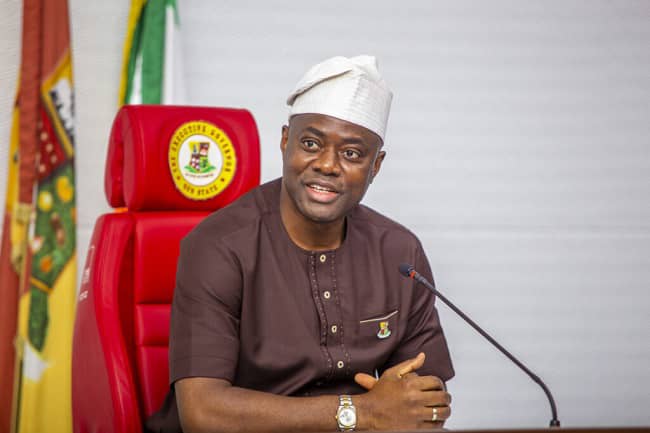
The Special Adviser on Media to the Oyo State Governor, Dr Sulaimon Olanrewaju, has dismissed allegations by the Sharafadeen Alli Campaign Organisation blaming Governor Seyi Makinde for the economic hardship being experienced by Nigerians.
Olanrewaju, in a statement issued on Wednesday, described the campaign organisation’s position as misplaced, arguing that the economic difficulties confronting Nigerians were largely linked to national economic policies and macroeconomic conditions beyond the control of individual state governments.
He said attempts to attribute the hardship to the Oyo State governor amounted to political blame-shifting.
According to him, “Nigeria’s current economic situation is not the result of state-level governance failures. It is the direct consequence of national policy choices that have transformed the fiscal environment across the federation.”
Olanrewaju said the depreciation of the naira, removal of the petrol subsidy and rising inflation had affected the purchasing power of Nigerians and increased the cost of food, transportation, medicine and production inputs across the country.
He argued that the impact of currency depreciation was being felt nationwide, stressing that “no state governor can shield citizens from the inflationary shock triggered by such a dramatic currency decline.”
He also faulted the argument that increased allocations from the Federation Account necessarily represented an improvement in the economic wellbeing of states.
According to him, although states may receive higher nominal allocations, inflation and the depreciation of the naira have reduced the real value of the funds.
“A ₦10 billion allocation today cannot deliver the same value as ₦10 billion in 2022. Higher nominal revenue in an inflationary environment is not prosperity; it is erosion,” he said.
Olanrewaju said this was what Governor Makinde referred to as a “Voodoo Economy”, arguing that increased revenue figures should not be interpreted in isolation from inflation and the rising cost of goods and services.
The governor’s aide also rejected the allegation that Makinde was responsible for the challenges surrounding local government autonomy.
He described local government autonomy as a constitutional and institutional matter involving the Federal Government, state governments, the National Assembly and the judiciary.
“Local government autonomy is a constitutional matter currently under judicial review and legislative consideration,” he said.
Olanrewaju argued that the Federal Government should be held accountable for the implementation of policies within its jurisdiction, rather than transferring responsibility to state governments.
He also questioned why Makinde should be blamed for the implementation of the Supreme Court’s decision on local government financial autonomy.
“Why then should Governor Makinde be blamed for the Federal Government’s inability to execute its own judgment?” he asked.
The media aide further argued that the constitutional framework governing the State Joint Local Government Account remained relevant to the debate on local government financial autonomy.
He said the issue should be approached through constitutional and legal processes rather than political accusations.
Turning to the broader economic situation, Olanrewaju said the hardship being experienced by Nigerians required serious policy discussion rather than partisan exchanges.
He said the effects of inflation, currency depreciation and the removal of the petrol subsidy had affected households, businesses and governments across the federation.
“The truth is clear: Nigeria is experiencing one of its most difficult economic periods in decades,” Olanrewaju said.
According to him, “The naira’s collapse, soaring inflation, subsidy removal, and rising poverty have reshaped the economic realities of every state. No governor, irrespective of party, can reverse nationwide macroeconomic shocks through state-level spending alone.”
He therefore urged political actors to focus their arguments on policies, governance records and practical solutions to the economic difficulties confronting citizens.
Olanrewaju said the Makinde administration in Oyo State had continued to implement policies within the limits of the resources available to the state, adding that national economic conditions should be considered when assessing the performance of state governments.
The statement was issued in response to criticism from the Sharafadeen Alli Campaign Organisation, which had accused the Makinde administration of contributing to the hardship in the state.
Olanrewaju maintained that political disagreements should not obscure the distinction between responsibilities at the federal and state levels.
He said the economic debate should instead focus on how governments at all levels could improve productivity, protect vulnerable citizens, create employment and strengthen public services.
He added that Nigerians deserved “facts and responsible policy debate” rather than what he described as attempts to personalise complex economic challenges.