
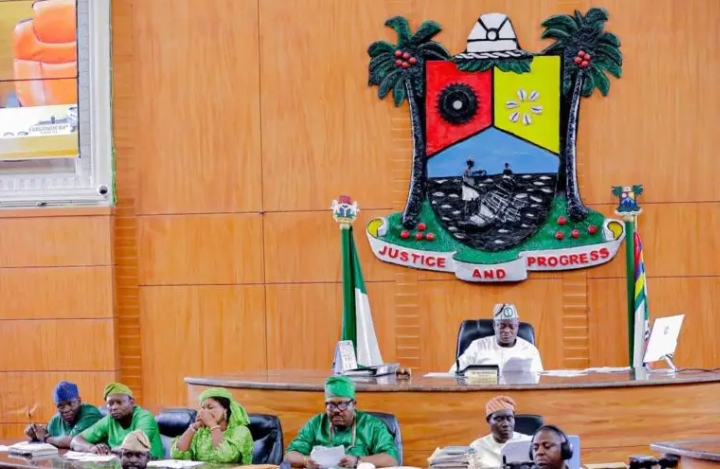
The Lagos State House of Assembly has begun legislative action to regulate artisans and craftsmen through a bill establishing the Lagos State Artisans and Craftsmen Regulatory Board.
The bill, titled ‘Lagos State Artisans and Craftsmen Regulatory Board Bill 2025′, scaled second reading during plenary on Monday.
Presenting the bill, Majority Leader, Mr Noheem Adams, said it would provide a legal framework for registration, training, certification and regulation of practitioners.
Adams said the legislation would bring dignity, order and accountability to the informal sector while protecting consumers from unqualified practitioners.
He noted that Lagos depended heavily on artisans and craftsmen, but the sector had operated for years without adequate structure, standards and protection.
He explained that the proposed board would register, train, certify and protect artisans while safeguarding consumers who engage their services.
“The board will regulate and standardise training, certification and professional conduct, helping to curb quackery and ensure compliance with safety standards,” Adams said.
He added that consumers would have access to a register of certified practitioners to verify competence before engaging their services.
Adams said the board would facilitate loans, financial assistance and access to government empowerment programmes, insurance schemes and skills-upgrading initiatives.
He explained that the board would maintain a comprehensive database of qualified artisans, providing reliable information on their numbers, locations and needs.
“The board will also receive complaints from the public and take appropriate action where necessary,” he said.
According to Adams, formal registration would promote accountability and assist law enforcement agencies in addressing criminal activities linked to the sector.
Contributing, Mr Stephen Ogundipe of Oshodi/Isolo Constituency I praised the bill, especially provisions relating to licensing and licence renewals.
Ogundipe said proper licensing would reduce disputes between clients and artisans and distinguish qualified professionals from unskilled practitioners.
Mr Adebola Shabi expressed concern about environmental hazards associated with some artisanal activities, particularly welding operations.
Shabi urged the Assembly to incorporate environmental safety measures and include representatives of the Safety Commission and Environment Ministry on the board.
Mr Lukmon Olumoh of Ajeromi Constituency I said the bill would help government obtain accurate data and improve support for skilled workers.
He, however, sought clarification on possible overlaps between the proposed board and the Lagos State Vocational Education Board in training and certification.
Mr Femi Saheed of Kosofe Constituency II emphasised the importance of certification in establishing the competence of skilled workers.
Saheed also requested clarification on the academic qualifications required for the chairman of the proposed board.
Mr Kehinde Joseph of Alimosho Constituency I proposed reducing the minimum registration age from 18 to 16 years.
Joseph argued that many young people begin vocational training early and should be accommodated within the regulatory framework.
He also called for a review of proposed registration fees to prevent undue financial burdens on artisans.
Speaker, Mudashiru Obasa, commended lawmakers for supporting what he described as a significant piece of legislation affecting several sectors.
Obasa said effective regulation of artisans could enhance security, economic growth, employment generation and internally generated revenue.
“A comprehensive database will enable government to identify and monitor practitioners while supporting policy formulation and development,” he said.
The Speaker urged government to integrate informal artisans into the formal regulatory system and broaden the state’s revenue base through registration.
He cautioned against poorly designed financial interventions, stressing that support programmes must avoid creating additional challenges for beneficiaries.
Obasa also advocated the use of technology and partnerships to expose Lagos artisans to advanced skills and international opportunities.
He cited China and Taiwan as examples of economies that developed technical capacities and successfully penetrated global markets.
According to him, the proposed legislation could strengthen artisans’ skills and integrate them into broader economic and technological development programmes.
Following debate, the Assembly referred the bill to the House Committee on Commerce and Industry for further scrutiny and a report.
The House subsequently adjourned plenary until Aug. 17.