
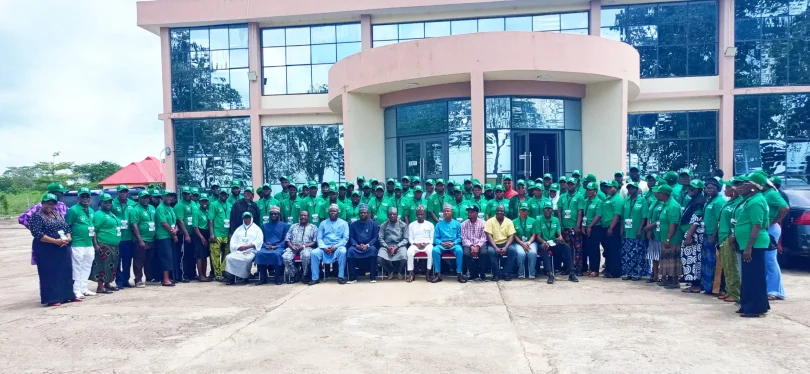
The Kwara State Government has trained more than 10,000 livestock farmers and other stakeholders in the livestock value chain in the last one year as part of efforts to modernise the sector and boost its contribution to the state’s economy.
Speaking at the opening of the training programme in Ilorin, the Permanent Secretary, Kwara State Ministry of Livestock Development, Alhaji Yahaya Muhammed, said the training programme is a continuous process, adding that the government would continue to expose livestock farmers to modern methods, technology and approaches to animal production for improved productivity.
The training programme was themed “Capacity Building for Farmers on Conservation and Preservation of Forage Crops for Sustainable Livestock Feed Production in Kwara State”.
The Permanent Secretary said the administration of Governor AbdulRahman AbdulRazaq had demonstrated strong commitment to livestock development through significant investment in the sector.
According to him, livestock and animal husbandry had for long been regarded as domestic activities, saying that the government was working to change that perception by introducing farmers to more productive and commercial methods.
He said the training covered different aspects of livestock production, including pasture development, animal health, meat handling and other areas of the value chain.
“This training you see today is not the first and it will not be the last. It is a continuous exercise. We have trained over 10,000 people in Kwara State between last year and this year, covering areas from pasture development to meat handling”, he said.
The livestock official explained that the training was aimed at bringing more people into the sector while exposing existing farmers to improved ways of producing and managing animals.
He also said that materials often regarded as waste could be converted into animal feed, thereby reducing production costs and improving the health and productivity of livestock.
Muhammed recalled that the government had also distributed feed-making equipment to some participants, encouraging them to make use of locally available materials such as cassava peels and maize cobs to produce animal feed.
He said the development of the livestock sector could provide opportunities for people to build profitable businesses and become financially independent.
According to him, the government was particularly interested in changing the perception that livestock farming was merely a domestic activity, stressing that it could become a major source of wealth and employment.
He said that stakeholders from Lagos had approached the state government for possible collaboration, including an arrangement that could involve the supply of about 1,000 goats daily.
Muhammed said such a development would require consistent production and proper organisation among farmers, adding that it could create significant economic opportunities and contribute to the growth of the state’s economy and domestic production.
He, therefore, urged livestock farmers and other residents to take advantage of the opportunities in the sector by embracing modern methods and treating livestock production as a serious business.