
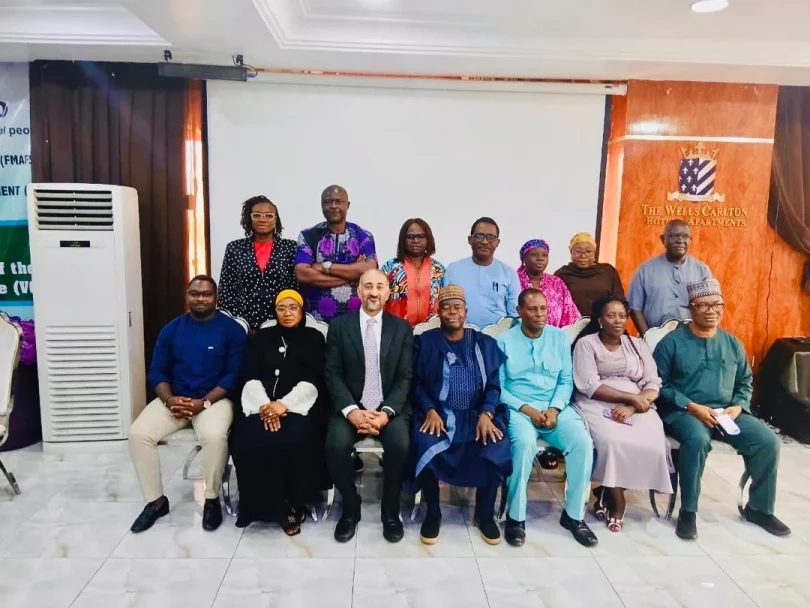
The International Fund for Agricultural Development (IFAD) and the Federal Government have called for urgent measures to address outstanding implementation challenges and sustain the gains of the Value Chain Development Programme (VCDP) as it approaches completion in 2027.
The call was made at the inception workshop of the programme’s 13th Joint Supervision Mission, held in Abuja, where officials highlighted the need to consolidate achievements in rice and cassava production, improve financial performance and ensure that investments continue to benefit rural communities after the programme closes.
The IFAD Country Director, Mohamed El-Ghazaly, said the mission would focus on assessing results, identifying implementation gaps and agreeing on corrective actions required to ensure a strong and sustainable conclusion to the programme.
He described VCDP as an important investment in Nigeria’s agricultural transformation, noting that the programme had expanded from six states to nine through two rounds of additional financing.
According to him, previous supervision missions had recognised VCDP as a flagship programme because of its achievements at the community level and its relevance to Nigeria’s food security priorities.
“Today, our attention must increasingly turn from what VCDP has achieved to what must still be secured,” El-Ghazaly said.
He explained that the supervision exercise would assess progress against the programme’s business framework, review implementation and financial performance, follow up on recommendations from the previous mission, and examine arrangements for sustainability, completion and financial closure.
El-Ghazaly urged the programme’s implementing partners to adopt an evidence-based approach, document successful interventions and address outstanding challenges with clear responsibilities and realistic timelines.
He stressed that the supervision mission should be treated as a joint exercise between development partners and the government rather than an inspection, adding that its ultimate objective was to ensure that public and development resources translated into lasting improvements in rural livelihoods.
The IFAD country director also encouraged mission members visiting project locations to engage with farmers, communities and implementing teams to ensure that field-level evidence informed their conclusions.
Also speaking, the Director of the Federal Department of Development Partners Projects at the Federal Ministry of Agriculture and Food Security, Dr Emma Oladipo Akogun, said VCDP had achieved more than 98 per cent of its outreach target, alongside investments in rice and cassava processing and storage infrastructure.
Akogun said the programme had also promoted improved agricultural practices and seed adoption while strengthening partnerships among farmers, private-sector operators and financial institutions.
He noted that the programme remained relevant and broadly on track to achieve its development objectives, with its overall implementation performance assessed as satisfactory.
However, he said the remaining implementation period required a shift from routine implementation activities to completion planning and sustainability arrangements.
“The remaining implementation period is limited, and we must ensure that outstanding activities, contracts, disbursements, results measurement and sustainability arrangements are completed within the approved programme timeframe,” he said.
Akogun identified five priority areas for the mission: achieving outstanding development results, improving implementation and financial performance, operationalising sustainability plans, preparing for completion and financial closure, and strengthening accountability for previous and emerging recommendations.
He said challenges relating to disbursement, procurement, contract-processing delays, counterpart funding and financial management, which were identified during the previous supervision mission, required decisive action.
According to him, the programme must also establish credible, costed arrangements for maintaining infrastructure, strengthening farmer organisations, sustaining commodity aggregation centres and preserving private-sector linkages after closure.
He further stressed the need to improve data quality, document and georeference programme investments, and ensure that financial, procurement, audit and asset-management arrangements were in place ahead of completion.
Akogun clarified that activities scheduled for completion by 30 June 2027 must be distinguished from those that would continue during the financial closure period ending 31 December 2027.
He assured the IFAD mission team of the Federal Government’s commitment to the process, saying the remaining period represented an important opportunity to consolidate the programme’s development gains.
In a separate address, the Director of International and Economic Relations at the Federal Ministry of Finance, Stanley George, represented by Andrew Arebun, said VCDP had demonstrated the potential of targeted agricultural investments to improve market access, increase productivity in the rice and cassava value chains, and strengthen the livelihoods of women and young people.
He, however, identified the pace of fund disbursement, counterpart-funding timelines and the need for climate-resilient infrastructure as areas requiring urgent attention.
George said the lessons from VCDP would help guide the design, funding and expansion of future agricultural development programmes.
He called for the removal of bureaucratic bottlenecks to accelerate the release of funds, improved compliance with counterpart-funding obligations by participating state governments, and stronger private-sector participation in agricultural value chains.
He also advocated a transition from subsidy-dependent interventions to commercially viable arrangements driven by private-sector investment and reliable off-taker partnerships.
On monitoring and evaluation, George emphasised the need for verifiable impact data to guide decisions on public expenditure and demonstrate value for money to Nigerian taxpayers and international development partners.
Describing the supervision mission as a collaborative assessment rather than a policing exercise, he urged federal and state officials, programme coordinators and IFAD representatives to engage in transparent discussions and develop practical solutions to outstanding challenges.
VCDP is a Federal Government programme supported by IFAD that seeks to improve the incomes and food security of rural households involved in the rice and cassava value chains.
The 13th Joint Supervision Mission is expected to assess the programme’s performance, identify outstanding priorities and establish measures to ensure that its infrastructure, institutional partnerships and benefits remain viable beyond the programme’s completion and financial closure.