
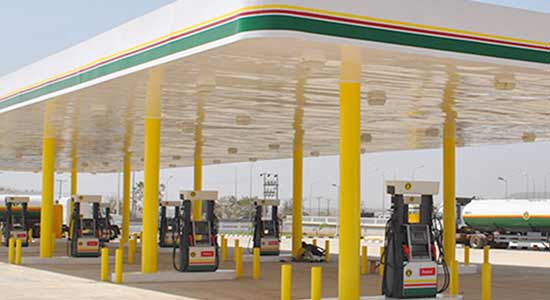
The Federal Government has announced a package of measures aimed at cushioning Nigerians from rising fuel prices, including an agreement by the Nigerian National Petroleum Company Limited to forgo its retail profit margin and sell petrol at cost for the next 30 days.
The Presidency said the temporary arrangement was designed to provide relief from the impact of rising international crude oil and refined petroleum product prices, particularly on vulnerable households and commercial transport operators.
In a statement issued on Thursday by presidential spokesperson Bayo Onanuga, the government said NNPC Retail would implement the measure for an initial period of 30 days.
“This means if NNPC’s landing cost is ₦1,300, it will sell fuel to Nigerians, especially commercial vehicles, at the same price,” the statement said.
The Presidency said the measure had the backing of President Bola Tinubu and formed part of a broader package earlier outlined by the Minister of Finance and Coordinating Minister of the Economy, Taiwo Oyedele.
According to the government, NNPC Retail is already selling petrol at one of the lowest prices in the market and would temporarily sacrifice its retail margin in an effort to reduce the immediate impact of rising global energy costs.
The announcement comes as the Federal Government is also considering a ceiling of ₦1,350 per litre on the ex-gantry or landing cost of petrol as part of efforts to prevent sharp fluctuations in pump prices.
Oyedele, however, rejected calls for a return to the former petrol subsidy regime, warning that restoring prices to pre-reform levels could cost the government more than ₦20 trillion annually.
He argued that such a move could place renewed pressure on public finances and the foreign exchange market, potentially weakening the naira further and ultimately driving petrol prices higher.
The government’s intervention follows a sharp rise in global crude and refined petroleum prices amid disruptions linked to the conflict involving the United States, Israel and Iran and concerns over supplies through the Strait of Hormuz.
Brent crude has risen above $100 per barrel, putting pressure on petroleum product prices across international markets.
Although Nigeria is a major crude producer, domestic fuel prices remain exposed to movements in international crude prices, shipping costs, refining expenses and foreign exchange rates.
While higher oil prices could improve government revenues, they also raise the cost of petrol, diesel and aviation fuel, with consequences for transportation, manufacturing, logistics and household expenditure.
The latest measures come amid continued public concern over the cost of living following the removal of petrol subsidy in May 2023.
Opposition parties and other critics have repeatedly faulted the government over the hardship associated with the reform and have called for stronger measures to protect households from higher transport and energy costs.
The decision to have NNPC Retail sell petrol at cost has also prompted questions over whether the government is indirectly returning to fuel subsidy.
The Presidency rejected that interpretation, insisting that the arrangement is a temporary market intervention rather than a reversal of downstream petroleum deregulation.
The government said it hoped other petroleum marketers would follow NNPC’s example by reducing their margins during the period of elevated global prices.
It also expressed the expectation that the current spike in international crude and refined product prices would not continue indefinitely.
Beyond the 30-day NNPC arrangement, the Federal Government said it plans to sell crude oil to domestic refineries through forward-sale arrangements as local production increases and previously committed crude becomes available.
“As production rises and previously committed crude is freed up, this is expected to shield pump prices from global market volatility,” the Presidency said.
Oyedele explained that under the proposed ₦1,350-per-litre ceiling arrangement, refiners and importers would initially absorb costs above the agreed threshold and recover the difference later when crude oil prices or the exchange rate improve.
“This is neither a subsidy nor a price control: it is designed to smooth prices over time rather than suppressing them,” he said.
According to the minister, the intention is to provide consumers and businesses with greater price certainty instead of allowing pump prices to rise sharply and fall unpredictably in response to international market movements.
The ceiling would be reviewed monthly based on prevailing costs, with the relevant figures expected to be published by the government.
The Federal Government also announced measures aimed at reducing transportation and logistics costs.
Under the 2025 tax reform laws, the government said it was working with state governments and security agencies to address multiple road taxes and levies that contribute to higher transport fares and logistics costs.
It also plans to increase funding for cash transfers to vulnerable households and expand access to subsidised credit for small businesses and consumers.
The government said it was accelerating the rollout of compressed natural gas in partnership with state governments, arguing that wider adoption of CNG could substantially reduce transport costs.
According to the Presidency, CNG is between 60 and 70 per cent cheaper than petrol, and transport operators benefiting from the programme would be expected to pass some of the savings to passengers.
The government also said it could introduce an excess profit tax against operators found to be taking undue advantage of consumers across the energy value chain.
Revenue generated from measures targeting price gouging would, according to the Presidency, be channelled into programmes aimed at cushioning the impact of higher fuel prices, including transport support or vouchers for urban minimum-wage earners.
The Federal Government said it would also work with the National Assembly on possible additional tax relief for low-income earners under the 2027 Finance Bill.
Another component of the intervention involves reducing regulatory costs that increase the cost of doing business and are ultimately passed on to consumers through higher prices.
The Presidency also announced plans to establish a National Strategic Fuel Reserve to protect households and businesses against future disruptions in energy supply.
Under the proposed arrangement, refined petroleum products could be released into the market under publicly defined conditions when global supply disruptions, shortages or hoarding threaten domestic availability and price stability.
The Presidency maintained that the strategic reserve would not amount to a fuel subsidy or price-fixing mechanism but would instead help guarantee supply, discourage artificial scarcity and reduce extreme market volatility.
Traffic-management agencies are also expected to improve traffic flow, particularly in major cities, as part of efforts to reduce fuel consumption caused by prolonged congestion.
The government further cited the newly introduced address-code system by the Nigerian Postal Service as a measure that could improve logistics efficiency and reduce delivery costs.
Despite acknowledging the hardship Nigerians have faced since the removal of petrol subsidy, the Presidency insisted that reinstating a blanket subsidy would expose the country to the fiscal and foreign exchange pressures experienced under the previous system.
“Removing the fuel subsidy came at a price. But the alternative has been tried. Nigeria has already lived through that cycle: scarcity, smuggling, a collapsing currency and a fiscal crisis,” the statement said.
The government said its objective was not to reverse subsidy removal but to ensure that the benefits of the reform translated more quickly into relief for Nigerians.
It added that a broader package of fiscal and economic measures was being developed with the goal of bringing inflation down to single digits on a sustainable basis.
... “If NNPC’s Landing Cost Is ₦1,300, It Will Sell At ₦1,300” — FG Says NNPC To Forgo Petrol Profit For 30 Days, Rules Out Return Of Subsidy ... TheNigeriaLawyer.