
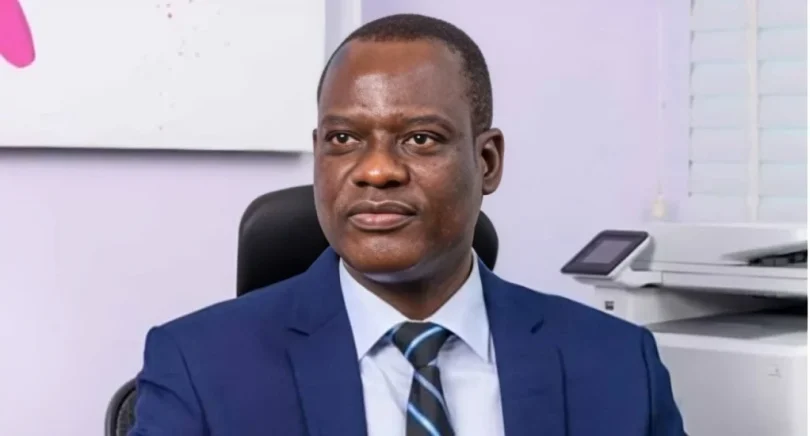
The Minister of Finance and the Coordinating Minister of Economy, Taiwo Oyedele, has revealed that though Nigeria’s revenue earnings increased to N20.4 trillion between June 2023 and December 2025, the increments only partly funded the Federal Government’s N30.64 trillion expenses within the same period.
Speaking in Abuja, the Minister explained that “between June 2023 and December 2025, subsidy savings mobilised ₦15.8 trillion in resources for the Federation.
“In addition, the Federal Government earned incremental independent revenue of ₦3.1 trillion – principally remittances from government-owned entities while ₦11.9 trillion came from incremental borrowing, a figure that would have been far higher, and economically destabilising, without the fiscal space the reforms created.
“Altogether, the Federal Government’s incremental resources over the period came to ₦20.4 trillion. That money did not sit idle – it partly funded incremental expenses of ₦30.64 trillion. Of this, ₦9.39 trillion went to wage adjustments, minimum wage increases and allowances for public servants; ₦9.37 trillion went to external debt service made necessary by exchange rate depreciation; and ₦6.5 trillion went into strategic infrastructure – making the top three expenditure lines. Every naira of this is accounted for, and the breakdown is in the scorecard we are releasing today.
“Put another way: of the ₦20.4 trillion, 58 percent came from borrowing, 27 percent from subsidy savings, and 15 percent from other revenue. Against total incremental spending of ₦30.64 trillion, two-thirds was funded by these new resources, while the remaining third – about ₦10 trillion – came from the existing revenue base, despite ending the excessive printing of naira. That, in itself, is evidence of improved public financial management.
“It is instructive that the single largest expenditure line – wage adjustments, at ₦9.39 trillion – outstripped the Federal Government’s entire savings from subsidy removal. This is evidence that the reform was never introduced for revenue purposes, but to address entrenched corruption in an artificially managed fuel subsidy and foreign exchange market”.
The Minister explained further that “behind these figures are real, tangible changes in people’s lives: salaries and pensions paid on time, and longstanding pension arrears finally settled. A minimum wage more than doubled, from ₦30,000 to ₦70,000. NELFUND, now one of the most affordable student loan schemes globally, helping over 1.5 million students through school.
“In addition, there are cash transfers to millions of households, subsidised mortgages, agricultural support strengthening food security, and a new Tax Act that exempts low-income earners and small businesses from tax, while simplifying a system that had over-burdened the poor for decades.
Oyedele noted that a scorecard that only lists wins is not a scorecard – it is a campaign leaflet, and they did not come to give one. The Monetary Policy Rate has risen from 18.5 per cent to 26.5 per cent, which he said was recorded plainly as the cost of stabilisation, not a hidden win. Petrol at the pump has risen from roughly ₦185 a litre to between ₦1,100 and ₦1,400.
“That is a major, felt cost, and I will not stand here and tell you otherwise. What I will say is what the counterfactual shows: on the pre-reform path, petrol would likely be simultaneously unavailable at the old official price and trading above ₦3,000 on the black market – a worse cost, paid in scarcity as well as money, with nothing gained in return.
“For food and household welfare, our own assessment is candid: this remains work in progress. Food inflation has eased from 24.82 percent to 17.52 percent as at June 2026, but poverty and household welfare recovery is still classified in our own scorecard as unfinished business, not a victory lap.
“The results are now visible in the data, not just in our arguments. Headline inflation has eased to 15.91 percent as of June this year, down from 22.41 percent at our May 2023 baseline.
“Gross foreign reserves stand at $52.5 billion, up from around $35 billion, while net reserves have moved from roughly $3 billion to $34.8 billion – a far more meaningful measure of our actual buffer.
“The stock market has grown from about ₦31 trillion to roughly ₦150 trillion in capitalisation. Real GDP growth has strengthened to 3.89 percent, against a baseline of 2.31 percent and a no-reform estimate that had us at best stagnant and at worst in recession. S&P Global upgraded our sovereign credit rating to ‘B’ in May – our first upgrade in fourteen years.
“Nigeria exited the FATF grey list in October last year, and exited the European Union’s Anti-Money Laundering and Combating the Financing of Terrorism Deficiency List in January 2026, restoring our standing in the global financial system.
“None of this means the work is finished, or that every household is where it needs to be. It means the direction is right, and the numbers – costs included – back that up”.
The Minister reiterated that “this scorecard is a mid-course account, not the finish line. So let me share with you what comes next. We will stay the course of reform, and accelerate how we translate the macro gains into meaningful impact for every household.
“Implementation of the Nigeria Tax Act will continue, with further fiscal reforms addressing challenges in our budgeting, reporting and accountability systems. We expect the tax-to-GDP ratio to keep climbing as the harmonised system takes hold.
“On prices, our goal over the medium term is to keep pushing headline inflation toward single digits, without ever going back to the distortionary subsidies that got us into this position in the first place.
“We intend to keep the exchange rate unified and predictable, because predictability, more than any single incentive package, is what is now drawing capital back into our country. We will improve the quality and priority of spending in the most impactful areas,” he stated.