
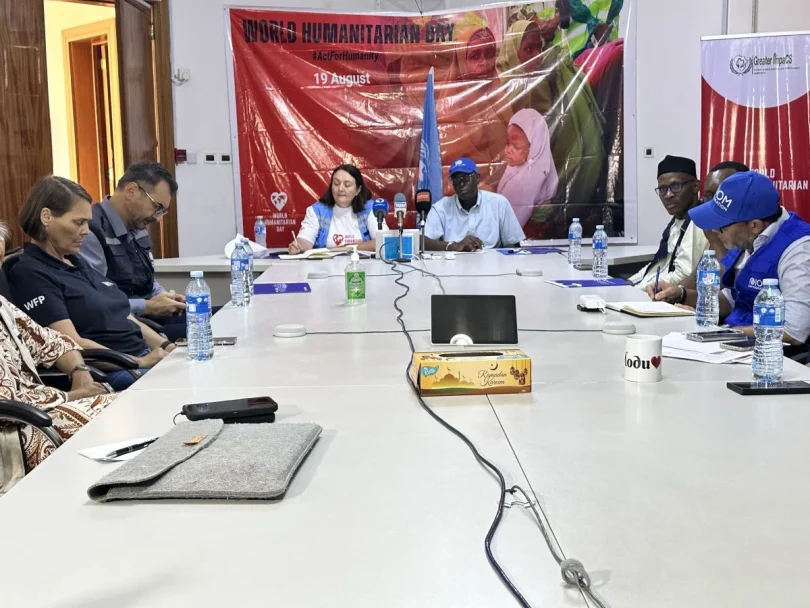
The United Nations and UNICEF have called for stronger efforts to protect schools and secure the release of children abducted in Borno State, warning that schools must remain safe spaces for learning and development.
The UN Resident and Humanitarian Coordinator in Nigeria, Mohamed Malick Fall, made the call in Maiduguri on Wednesday while commemorating International Humanitarian Day, noting that schools should be the last places where children’s security is threatened.
“School should be the last place where children’s security is threatened. It’s where they go to socialise, to learn, to find friends and to take part in recreational activities, but it should be everything but a place where their security is threatened,” Fall told the Nigerian Tribune.
He said the UN, UNICEF and other partners were working with the Nigerian government and security forces to address the situation and secure the release of children still in captivity.
“Some of them have been released, some of them unfortunately have been abducted, but I’m still hopeful that through the combined work of the government, international partners and the security forces, we can get there,” he said.
ALSO READ: NGX bears extend losing streak to 7 sessions, lose N556bn
The UNICEF Deputy Representative in Nigeria said the agency was also engaging the government and other partners to advocate for the children’s release and support those who had been freed.
“We are advocating with all the partners involved and also joining voices to release those children,” she said.
She said the government had the primary responsibility for protecting children and ensuring efforts were made to return abducted children to their families.
“At the end of the day, they are Nigerian children, so it is the ultimate responsibility of the government of Nigeria to make sure that, first, they are not abducted, and then that every effort is made to release those children back to their families,” she said.
The UNICEF official said the agency was supporting released children with psychosocial care, nutrition and healthcare to aid their recovery and reintegration.
She added that UNICEF was working with the government to strengthen the implementation of safe school protocols through capacity building and technical support.
Fall said the security situation had become increasingly complex, with the use of drones and more sophisticated weapons making humanitarian operations more difficult.
He said this could result in setbacks after progress had been made in securing areas and restoring humanitarian access.
Despite the challenges, Fall said improved security had enabled humanitarian organisations to resume operations and provide services to affected communities in some areas.
He said the security crisis had also contributed to widespread displacement, with about 2.7 million people displaced across Nigeria.
Fall expressed hope that continued cooperation among the government, security forces, international partners and humanitarian organisations would help improve security and protect vulnerable populations.