
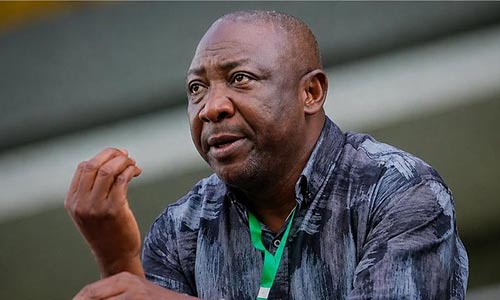
The leadership crisis rocking the Nigeria Football Federation has deepened following the reported resignation of its President, Ibrahim Musa Gusau, and General Secretary, Dr Mohammed Sanusi, barely a month before the federation’s elective congress scheduled for September 27 in Lafia, Nasarawa State.
Sanusi confirmed the development, saying both he and Gusau had stepped down from their positions.
“Yes, the news about the resignation of the president and myself is true,” Sanusi was quoted as saying.
The resignations have immediately raised questions over the fate of the NFF electoral process, which had already entered a crucial stage ahead of the election of a new Executive Committee for another four-year term.
The NFF had selected Lafia as venue for the 2026 Elective Congress during its Extraordinary General Assembly in Yenagoa in March.
The election was initially scheduled for September 26 but was subsequently shifted by 24 hours to September 27 to allow candidates and other football stakeholders return from Nigeria’s 2027 Africa Cup of Nations qualifier against Madagascar on September 25.
Under the previously released electoral timetable, screening of candidates was scheduled for August 27 to 30, with the list of cleared candidates expected on August 31.
The final list was scheduled for publication between September 11 and 12, while campaigning was expected to run from September 14 to 24 before the congress in Lafia.
However, the resignation of the two top officials, coupled with reports that several members of the NFF Executive Committee have also resigned or indicated an intention to leave, has created uncertainty over whether the existing timetable can proceed unchanged.
Some reports put the number of Executive Committee members who have resigned or contemplated leaving at eight out of the 13-member board, while other accounts have claimed a wider departure. The NFF has yet to issue a comprehensive official statement clarifying the exact number of board members affected and the legal implications for the September congress.
The development is particularly significant because the Gusau-led administration approved and has been overseeing preparations for the election that is now only weeks away.
Questions are consequently being raised over who will exercise the federation’s administrative authority pending the congress, whether the electoral machinery remains properly constituted and whether the National Sports Commission could intervene in the unfolding situation.
The leadership shake-up follows weeks of sustained criticism of the NFF over the performances of Nigeria’s national football teams.
Nigeria had participated in every edition of the Women’s World Cup since the competition began in 1991.
Nigeria had participated in every edition of the Women’s World Cup since the competition began in 1991.
The Super Falcons were eliminated in the quarter-finals of the Women’s Africa Cup of Nations following a 1-0 defeat to Cameroon before losing 2-1 to South Africa in the World Cup qualification play-off.
The setbacks prompted the NFF to apologise to President Bola Tinubu and Nigerians over the national teams’ results.
Former Super Eagles captain John Obi Mikel was among prominent football figures who publicly called for changes in the administration of the sport.
“We want changes in the Nigeria Football Federation because we want to grow our football,” Mikel said, arguing that Nigeria could not continue with the same structure after major qualification failures.
Amid the criticism, the NFF constituted a fact-finding committee to investigate factors behind the national teams’ recent poor performances.