
The Federal Government and its development partners have intensified efforts to make affordable, locally produced medicines available to Nigerians, unveiling fresh investments, policy reforms and industry partnerships aimed at expanding domestic pharmaceutical manufacturing and reducing reliance on imports.
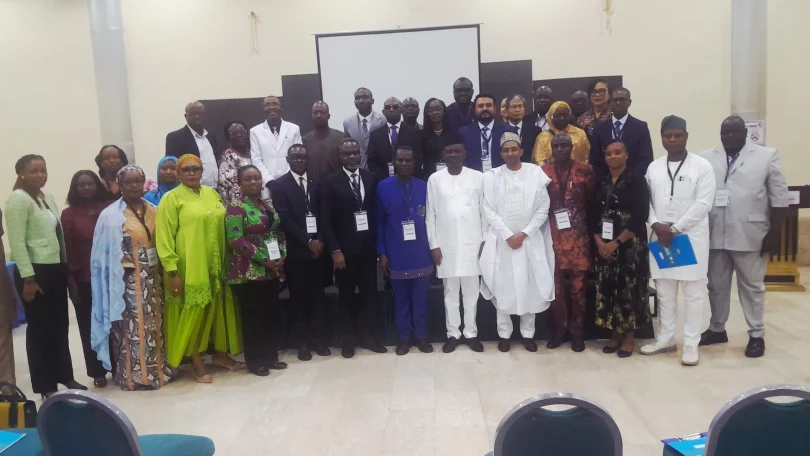
The renewed commitment was made on Friday at the high-level stakeholders’ meeting to finalise activities under the National Institute for Pharmaceutical Research and Development (NIPRD)-World Bank-funded IMPACT Project, themed: “Strengthening Local Medicines Manufacturing Capacity: From Concept to Action.”
Speaking in a welcome address delivered on his behalf by the Director of Pharmaceutical Technology and Raw Materials Development, Prof. Philips Builders, the Director-General of the National Institute for Pharmaceutical Research and Development (NIPRD), Dr. Obi Adigwe, said the IMPACT Project had laid the foundation for transforming Nigeria’s pharmaceutical industry through research, innovation and strategic partnerships.
ALSO READ: Kogi abduction: Ododo rules out ransom, orders arrest of kidnappers
“The IMPACT Project has provided a unique opportunity to move beyond dialogue towards implementation. Through strategic collaboration between government institutions, development partners, academia, regulators and the pharmaceutical industry, we have collectively developed interventions designed not only to strengthen manufacturing capacity but also to improve research and development, encourage innovation, promote novel biotechnologies and build the human capital required for long-term sustainability,” Adigwe said.
He noted that the institute had trained over 100 young Nigerian scientists, researchers and pharmaceutical professionals under the project, describing the initiative as a strategic investment in Nigeria’s future scientific leadership and pharmaceutical self-reliance.
According to him, strengthening local pharmaceutical production has become a national development priority because countries with robust manufacturing capacity are better positioned to respond to public health emergencies, ensure medicine security and build resilient health systems.
The National Coordinator of the Presidential Initiative for Unlocking the Healthcare Value Chain (PVAC), Abdul Mukhtar, said government reforms were already delivering measurable gains for local manufacturers.
He disclosed that the presidential fiscal incentives introduced about a year ago, including zero import duty and zero Value Added Tax (VAT) on equipment and raw materials for pharmaceutical production, had been accessed by 47 pharmaceutical companies, with imports worth about ₦26 billion.
“I’m happy to report that this is going very well. About 47 pharmaceutical companies have utilised the incentives to the tune of about ₦26 billion so far. This has actually resulted in increased profitability and revenues for the local pharmaceutical companies,” Mukhtar said.
He added that four pharmaceutical companies ranked among the Nigerian Exchange’s top 10 performing firms in 2025, attributing the performance to the ongoing reforms.
“But it will be even better if that increased revenue translates into lower-cost drugs, better drugs and cheaper, accessible medicines for our people. We are working on it,” he said.
Mukhtar announced that the government had also established MediPool, a group purchasing organisation designed to aggregate demand, negotiate lower prices and improve medicine distribution nationwide.
He urged pharmaceutical manufacturers to register on the platform, stressing that registration was free.
He further disclosed that the government had launched the Empower Academy, a pharmaceutical manufacturing training platform offering 40 industry-ready courses, with about 3,000 Nigerians and participants from other African countries already enrolled.
Mukhtar said Nigeria’s recent accession to the African Medicines Agency (AMA) would enable locally manufactured medicines to access markets across Africa more easily, while at least 11 pharmaceutical manufacturing projects were expected to be commissioned this year.
Representing the World Bank, the Team Lead of the IMPACT Project, Dr. Onori Ode, said the bank would continue supporting Nigeria’s pharmaceutical manufacturing agenda through a new programme despite the closeout of the current project.
He recalled that the World Bank had earlier provided funding to help local manufacturers attain World Health Organisation (WHO) prequalification standards before supporting broader interventions through the IMPACT Project.
“We are glad that through this small seed that the Government of Nigeria planted through the IMPACT Project, we are seeing tremendous results,” Ode said.
He added that the forthcoming Health Industry and Pharmaceutical Systems (HIPS) Project would provide regulatory strengthening, technical assistance and human capacity development to sustain the gains already recorded.
“The market is there. While we are strengthening manufacturing, the leadership of the ministry is also expanding the demand side. Once the demand side opens and manufacturers meet the required standards, the opportunities will be enormous,” he said.
The European Union Health Programme Manager, Dr. Anthony Anyeke, said the EU remained committed to supporting Nigeria’s pharmaceutical manufacturing ambitions through investments in regulatory systems, workforce development, technology transfer and improved market access.
“Strengthening local manufacturing is not only an industrial development priority; it is fundamental to health security, improved access to quality-assured medicines, economic diversification and job creation,” Anyeke said.
He noted that the European Union was implementing its Manufacturing and Access to Vaccines, Medicines and Health Products (MAV+) initiative across six African countries, including Nigeria, to strengthen pharmaceutical manufacturing ecosystems.
Representing the Director-General of the Standards Organisation of Nigeria (SON), Mrs. Uduak Udoso, said the agency would continue collaborating with NIPRD, NAFDAC, the Federal Ministry of Health and other stakeholders to strengthen Nigeria’s quality infrastructure.
She said SON’s partnership with NIPRD had contributed to the development of standards for pharmaceuticals and African Traditional Medicine, helping to improve product quality, safety and market competitiveness.
“As local pharmaceutical manufacturing continues to grow, SON remains committed to working closely with NIPRD, NAFDAC, the Federal Ministry of Health and other stakeholders to strengthen the nation’s quality infrastructure. Together, we can create an enabling environment that fosters innovation, promotes import substitution and expands export opportunities,” Udoso said.
Also speaking, the Director-General of the National Primary Health Care Development Agency (NPHCDA), Dr. Muyi Aina, described the current reforms in Nigeria’s health sector as creating unprecedented opportunities for pharmaceutical manufacturers.
“This is the time of infinite possibilities for you in the health sector, given all of the reforms, policies and the enabling environment that you are getting,” Aina said, urging manufacturers to take advantage of the opportunities to scale up local production and strengthen Nigeria’s healthcare system.