
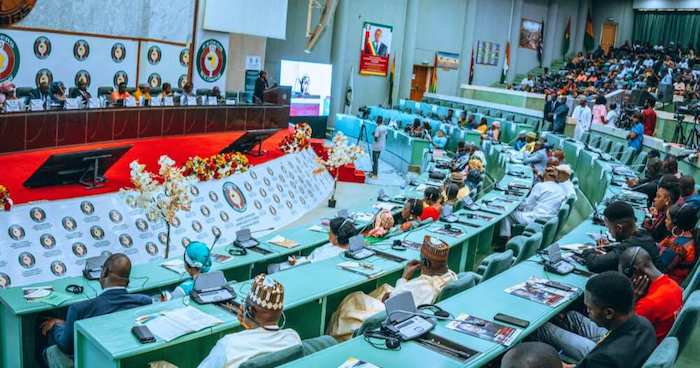
West African leaders have formally approved the ambitious Nigeria-Morocco Gas Pipeline project, marking a significant step towards enhanced energy cooperation and economic integration across the region. The landmark agreement was finalised during the Economic Community of West African States (ECOWAS) summit held on Sunday, July 19, in Freetown, Sierra Leone. This multi-billion dollar initiative is poised to reshape energy trade, offering improved access to natural gas and establishing a vital new export route connecting Africa to European markets.
The proposed pipeline, a colossal undertaking estimated at $27 billion, will span approximately 6,000 kilometres. It is designed to transport natural gas from Nigeria, traversing 13 countries along Africa’s Atlantic coastline before reaching Morocco. From there, it will integrate with the existing Maghreb-Europe Gas Pipeline, thereby extending its reach. ECOWAS Chairman and President of Sierra Leone, Julius Maada Bio, confirmed the endorsement, stating, “We have already signed the West Africa-Morocco gas pipeline. Don’t be surprised when the gas comes your way.” His remarks underscore the bloc’s commitment to bolstering energy infrastructure and fostering deeper economic ties.
According to a joint statement from Morocco’s National Office of Hydrocarbons and Mines and the Nigerian National Petroleum Company Limited (NNPCL), the project’s core objective is to link West Africa’s substantial natural gas reserves with key regional and international markets. This initiative is expected to fortify the integration of African energy markets and forge a new economic corridor that encompasses West Africa, the Sahel, Morocco, and Europe. Beyond energy security and market access, the pipeline is anticipated to stimulate industrial development and promote the adoption of cleaner energy sources across participating nations.
The operational framework for this monumental project will involve the establishment of a dedicated project company, with its headquarters situated in Casablanca, Morocco. Complementing this, a separate governing authority will be established in Abuja to oversee the implementation of the cross-border infrastructure. Following the establishment of these entities and the finalisation of investment decisions, investors will be formally invited to participate. Construction is slated to commence in 2028, with the first gas deliveries projected for 2031. The Nigeria-Morocco Gas Pipeline, first mooted in 2016, has gained significant traction, particularly following Algeria’s 2022 decision to halt gas exports to Spain via Morocco. Upon completion, this pipeline will stand as one of Africa’s most significant energy infrastructure achievements, unlocking new markets for Nigerian gas and deepening economic collaboration.
... ECOWAS Greenlights $27 Billion Nigeria-Morocco Gas Pipeline: A New Energy Corridor for Africa and Europe ... Naijaonpoint.