
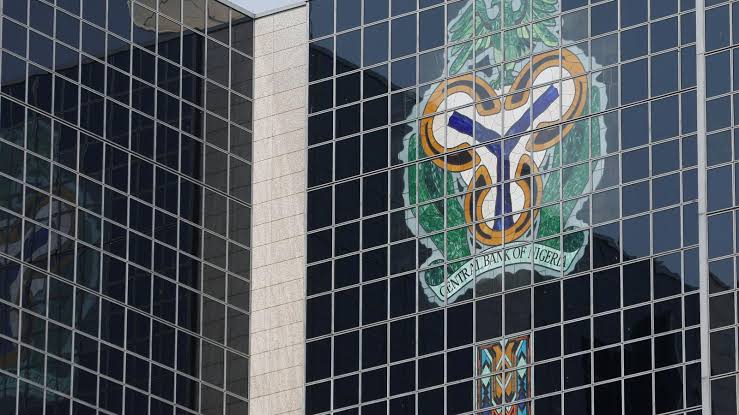
The Central Bank of Nigeria has directed all commercial banks, payment service banks, and other financial institutions across the country to immediately freeze the accounts, assets, and transactions of six individuals and four Bureau De Change operators linked to terrorism financing.
The directive was made public in a circular dated June 24, which stated that a recent update to the Nigeria Sanctions List had become legally binding on all regulated financial institutions for instant implementation.
Financial institutions are mandated to “identify and immediately freeze, without prior notice, all funds, assets, and other economic resources belonging to, owned, held, or controlled, directly or indirectly, by the designated persons and entities.”
The apex bank revealed that the action follows fresh sanctions issued jointly by the Nigeria Sanctions Committee and the United States Department of the Treasury’s Office of Foreign Assets Control under an amended executive order.
According to the regulatory document, the six individuals officially added to the Specially Designated Nationals and Blocked Persons List are Muktar Muhammad Adamu, Babangida Muhammed Adamu Hammajam, Abdullahi Umar Usman, Ibrahim Abubakar, Adamu Chiroma, and Yakubu Ogirima Ibrahim.
Alongside these individuals, the central bank blacklisted four Nigeria-based money service businesses and BDCs identified as Generation Currency Bureau De Change Limited, Manhattan Bureau De Change Limited, Nine to Nine Exchange Bureau De Change Limited, and Abbal Bako & Sons Bureau De Change Limited, all of which are designated as being owned or controlled by the sanctioned persons.
The federal government’s directive also extends to any company or entity that is 50 percent or more owned, individually or collectively, by these blacklisted parties.
In a strict mandate to enforce compliance, the banking regulator ordered all financial institutions to identify and immediately freeze, without prior notice, all funds, assets, and other economic resources belonging to, owned, held, or controlled, directly or indirectly, by the designated persons and entities.
The central bank further instructed that institutions must ensure no funds, financial services, or economic resources are made available, directly or indirectly, to the sanctioned parties. To ensure no loopholes are exploited, the financial regulator warned that providing false or misleading information would constitute a regulatory breach under the Banks and Other Financial Institutions Act of 2020 and could attract severe sanctions.
This clampdown follows international sanctions imposed by the United States government on Mukhtar Muhammad, a Lagos-based BDC operator, and three firms under his control. United States authorities accused Muhammad of actively facilitating financial transactions and money transfers on behalf of the Islamic State West Africa Province, which operates as the West African affiliate of the Islamic State terrorist group.
Foreign investigators alleged that the firms were intentionally used to channel funds for the terrorist organization. This joint regulatory action reinforces the ongoing focus to strengthen anti-money laundering and counter-terrorism financing controls across the Nigerian financial system, especially within the BDC sector which has faced long-standing compliance concerns.