
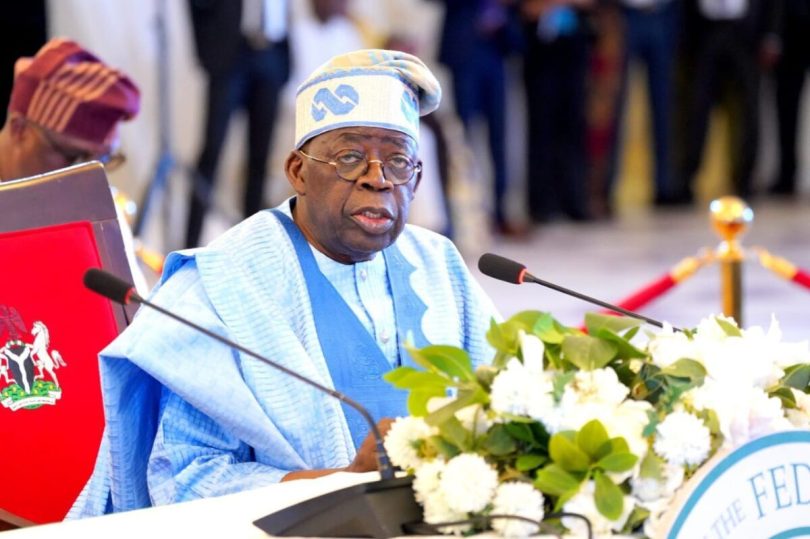
President Bola Tinubu has declared that Africa holds the key to the world’s industrial future, asserting that no true industrial transformation can occur without the continent’s critical mineral wealth.
Speaking on Wednesday in Abuja at the opening of the fifth African Natural Resources and Energy Summit (AFNIS), themed “One Africa, One Resource Vision”, Mr Tinubu, represented by Minister of Solid Minerals Development Dele Alake, warned against Africa’s continued role as a mere supplier of raw materials.
“There can be no just global order if Africa remains merely a supplier of raw materials,” the President said, adding that a secure supply of critical minerals is unattainable without the continent. He called on African nations to abandon fragmented approaches and unite to negotiate from a position of strength.
Mr Tinubu urged countries to build shared strategies for resources, energy, and industrial growth, emphasising the need for more refining, processing, and manufacturing. “Africa must no longer export the future in raw form and import poverty in finished form,” he stated. “We must power our factories, train our engineers, and build our own value chains.”
The President noted that Nigeria’s Renewed Hope Agenda aligns with this resource‑based vision, with the country strengthening foundations for industrial growth, energy access, and job creation. He advocated harmonised regulations, reduced intra‑African trade barriers, robust infrastructure, and transparent investment frameworks, calling for a new resource compact to transform Africa’s wealth into shared prosperity.
Earlier, Minister Alake stressed that Africa’s resource future cannot be secured through isolated actions. “The gas field in one region should support power and industrial growth across borders,” he said, adding that mineral corridors must underpin manufacturing and logistics.
While rising global demand for critical minerals has placed Africa at the centre of development, Mr Alake cautioned that natural resources alone are insufficient. Credible regulation, infrastructure, technology, and skills are essential to unlock the continent’s potential. He reaffirmed Nigeria’s commitment to strengthening mining regulations, improving transparency, and welcoming investors willing to process locally and create jobs.
The minister also highlighted infrastructure gaps as major obstacles and called for innovative financing to support bankable projects and regional value chains. “Let this summit move us closer to an Africa that shapes value and builds industries,” he concluded.