
…Omuo-Ekiti AI Academy gets boost
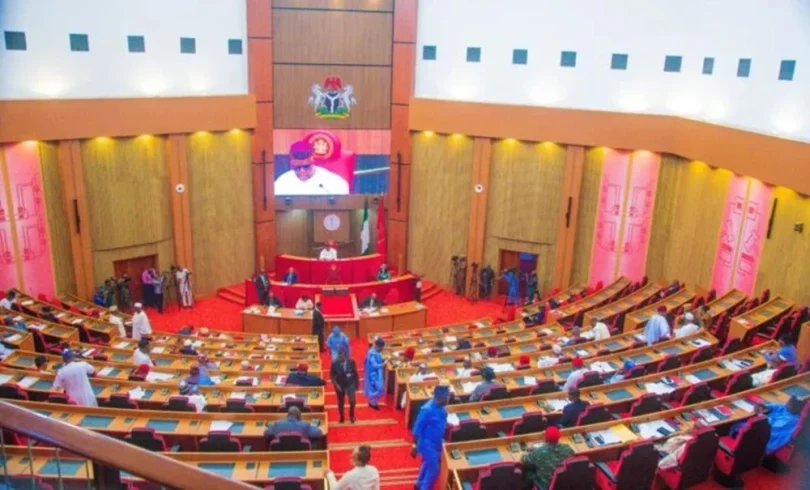
The majority of stakeholders on Thursday backed the proposed bill by the Senate requiring social media platforms to establish physical offices in Nigeria.
- …Omuo-Ekiti AI Academy gets boost
- ALSO READ: Tinubu approves expansion of Nigerian Army to 12 divisions
Senator Ned Nwoko (Delta-North) sponsored the bill, which led to a public hearing conducted by the Senate Committee on ICT and Cyber Security chaired by Senator Shuaib Afolabi Salisu (Ogun-Central).
The bill is titled “A Bill for an Act to Alter the Nigeria Data Protection Act 2023 to Mandate the Establishment of Physical Offices within the Territorial Boundaries of the Federal Republic of Nigeria by Social Media Platforms and for Other Related Matters.”
Another bill on the establishment of Artificial Intelligence (AI) Academy in Omuo-Ekiti, Ekiti State, received similar support.
The second bill was sponsored by the Chairman, Senate Committee on Media and Public Affairs, Senator Yemi Adaramodu (Ekiti-South).
Addressing the session, Senator Salisu said while the first bill sought for protection of the nation’s cyberspace, the second one proposed a centre of excellence in AI Education and Research.
The President of the Senate, Goodwill Akpabio, who was represented by the Deputy Leader of the Senate, Senator Lola Ashiru (Kwara-South), at the hearing, described the two bills as forward-looking and nationally significant legislative proposals aimed at improving good governance.
Akpabio declared that the bill seeking to mandate social media platforms operating within Nigeria to establish physical offices was not meant to stifle their operations but to enhance their reach and accessibility to users in Nigeria.
Senator Ned Nwoko also cleared any fears nursed by users about the bill.
ALSO READ: Tinubu approves expansion of Nigerian Army to 12 divisions
The Delta lawmaker stated, “This bill is neither punitive nor hostile to innovation. It is not designed to frustrate investment or discourage technology companies from operating in Nigeria.
“On the contrary, it seeks to deepen their engagement with Nigeria by encouraging them to become true corporate citizens of our country.”
He told the session that the issue of physical presence was the global standard and not restricted to Nigeria.
Nwoko explained, “Around the world, major technology companies have established headquarters, regional offices, engineering centres and operational hubs in countries such as the United Kingdom, the Netherlands, Spain, Singapore, India, the United Arab Emirates, South Africa, Brazil, Australia, and Japan.
“Some of these companies even maintain multiple offices within the same country. For instance, Meta operates major facilities in Dublin, Cork and Clonee in Ireland, while its United Kingdom operations span King’s Cross and Brock Street in London. Google maintains multiple offices in London, Dublin, Sydney, São Paulo, Munich and Tokyo, with more than one campus in several of those cities.
“These offices perform diverse functions ranging from engineering and artificial intelligence research to legal and regulatory compliance, public policy, advertising, trust and safety, cloud services, sales, customer support and product development.
“These countries did not attract such investments by accident. They recognised early that the digital economy is now as important as the traditional economy. By encouraging global technology companies to establish local operations, they have created employment, expanded tax revenues, strengthened regulatory engagement, promoted innovation and encouraged technology transfer to their citizens.
“Ireland, for example, has become one of Europe’s foremost technology hubs because companies such as Meta, Google, LinkedIn, TikTok, and X maintain significant operations there.
“These companies employ thousands of professionals, contribute substantially to the Irish economy and work directly with regulators and government institutions. The presence of these companies has also helped develop local technology talent, stimulate innovation and attract further foreign investment.
“The question, therefore, is simple: if countries with significantly smaller populations and digital markets than Nigeria have secured these investments and benefits, why should Nigeria continue to stand on the sidelines? Why should Africa’s largest digital market not enjoy the same opportunities?”
The majority of speakers at the session, cutting across government agencies, social media users, the Nigerian Bar Association (NBA), skit makers, and entertainers, supported the passage of the bill.