
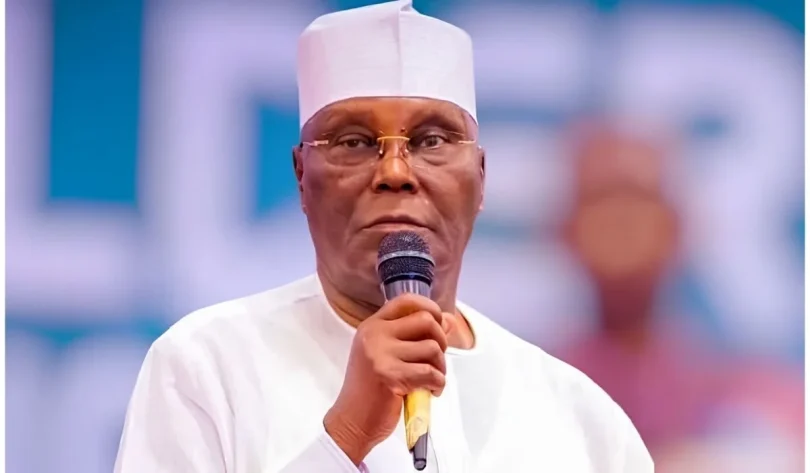
… says N70k buys only 50 litres
Former Vice President and African Democratic Congress (ADC) presidential candidate Atiku Abubakar has backed organised labour’s demand for a substantial increase in the minimum wage, saying the current wage no longer reflects the cost of living.
Reacting on Sunday through Phrank Shaibu, Director of Strategic Communications of the ADC Presidential Campaign Council, Atiku said the removal of the petrol subsidy had pushed up prices without adequate protection for working families.
“Fuel, transport, food and rent have devoured their earnings,” he said.
Atiku said that at N1,400 per litre, the entire N70,000 monthly minimum wage could buy just 50 litres of petrol.
“What does the worker take home to feed the children? What pays the rent? What gets that worker back to work on Monday?” he asked.
He said the increase in the minimum wage from N30,000 to N70,000 had failed to restore purchasing power, noting that at the April 2023 national average petrol price of N254.06 per litre, N30,000 could buy roughly 118 litres, compared with 50 litres today.
“The payslip has grown, but the fuel it can buy has more than halved,” he said.
Atiku noted that Nigeria’s wage floor compared poorly with those of several oil-producing and African economies, citing exchange rates as of 24 July 2026, under which Libya’s minimum wage was worth approximately N213,000; Algeria’s, N245,000; Equatorial Guinea’s, N302,000; and Gabon’s, N351,000, with Benin Republic also above Nigeria’s when converted.
He said wage rules and living costs differed across countries, but that such differences could not make N70,000 adequate for a Nigerian worker facing current prices.
“The Nigerian worker is the engine of this country’s productive life,” he said, adding that if a full month’s wage could not sustain a worker’s family, the government had not met the needs of the workforce.
He said the impact extended beyond fuel, as petrol prices affected farmers, bakers and the transport fares parents paid to take their children to school.
Atiku challenged the Federal Government to agree to a substantial increase in the minimum wage that reflected the real cost of food, transport, rent and power, saying workers deserved a clear answer.
“I will begin the work of raising the wage floor from my first day in office,” he said.
He said that with eight months left in the current term, workers could not endure further hardship while the wage issue was being debated, and called for measures to raise the wage floor and bring down costs.
He said that from May 2027, his policies would focus on supporting Nigerian production, delivering relief at the pump and providing targeted assistance to those hit hardest by the cost-of-living crisis.
Atiku said his plan for a targeted production subsidy would support petroleum products refined in Nigeria and sold to Nigerians, subject to a firm spending cap, public accounting and an independent audit, with the support producing measurable relief at the pump.
He reaffirmed his commitment to realistic wage adjustments, targeted social protection and measures to stabilise the cost of essential goods and energy.
“The test of this government is whether the men and women who work all month can live on what they earn. A living wage must buy a living,” he said.