
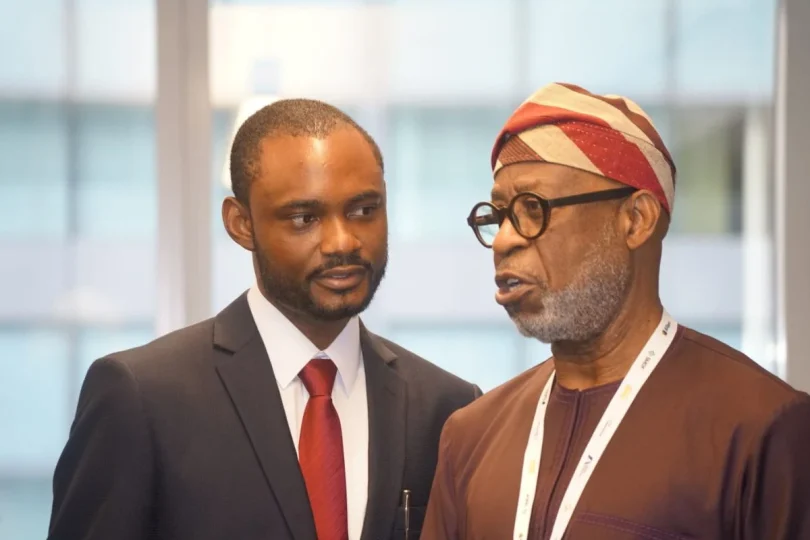
A mining and mineral development expert, Dr Femi Salami, has said the recent Nigeria-United States agreement on mining and critical minerals is aimed at attracting investment and technology into Nigeria’s solid minerals sector, rather than selling off the country’s natural resources.
Salami, Managing Director of MinePro and Energy Limited, said the agreement, signed on the sidelines of the 81st United Nations General Assembly in New York, would provide a framework for increased investment and cooperation between Nigeria and the United States in the mining sector.
He said Nigeria’s solid mineral resources were estimated at about $700 billion, but stressed that the presence of mineral deposits underground did not automatically translate into economic wealth.
According to him, substantial investment is required for exploration, resource assessment, mine development and mineral processing before the country can fully benefit from its mineral endowment.
“Minerals existing in the ground alone does not create wealth. The minerals need to be explored, the resources need to be calculated to obtain a definitive resources estimate. All these require millions of dollars in investment in FDIs and bilateral partnerships,” he said.
Salami said the agreement should therefore be viewed as a working partnership between Nigeria and the US to facilitate investment and develop the country’s critical minerals sector.
He dismissed concerns that Nigeria had sold its mineral resources to the United States, saying the agreement was instead designed to establish a framework for attracting US mining companies and capital into the country.
“This agreement is not about sales of minerals. It is purely about a working partnership between Nigeria and the US,” he said.
Salami explained that the partnership would support the entry of US mining companies into Nigeria, facilitate licensing processes and provide incentives aimed at accelerating mine development and mineral processing.
He added that the agreement could also promote the exchange of mining and mineral processing technologies between both countries.
According to him, the partnership could strengthen Nigeria’s position as an investment destination for international mining companies and increase foreign direct investment in the sector.
The expert said the expected investments could also support the development of mineral processing centres and improve Nigeria’s participation in the global critical minerals value chain.
The Nigerian government has in recent years promoted investment and local value addition in the solid minerals sector. President Bola Tinubu has also called for greater local processing and value addition to ensure that Africa derives more economic benefits from its mineral resources.
Salami said the effectiveness of the Nigeria-US agreement would ultimately depend on its implementation, particularly in creating a predictable regulatory environment and ensuring that investments translate into sustainable development of the sector.
“If properly followed through, this agreement will attract capital and FDIs at an unimaginable rate never seen before into the Nigerian mining sector and will improve the ranking of Nigeria as an important mining jurisdiction on the global scale,” he said.