
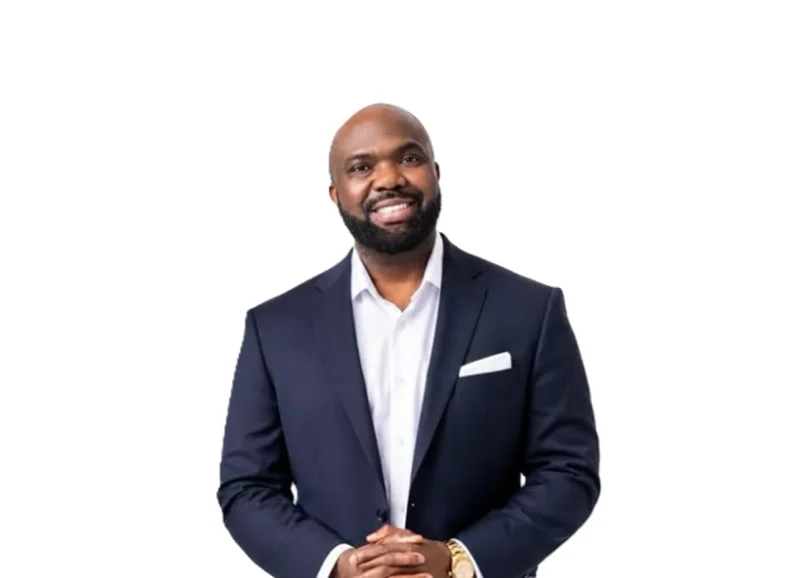
For Dr. Sunday Aderibigbe, Chief Executive Officer, EB Properties, life as a young man was rough and tough. The global wealth strategist, in this interview with SEGUN KASALI, gives an insight into some of those childhood challenges and how he was able to surmount them.
YOU are now a well-known name in the field of property and everything looks glamorous. But there must be a history behind the story. Can you share some of this with us?
I am a Mushin boy. For the first 27 years of my life, it was just the same story. My mother sold amala and my father was also from a humble background. My parents were not educated, and none of my immediate family members received much formal education. I grew up in an environment where I would wake up in the morning and see people drinking and engaging in different activities that were not necessarily productive. But in the midst of all that, I decided that I wanted to make something out of my life.
What was the first step and how did you take it?
One of the first things I did when I was in Nigeria was to start reading books. I read biographies of successful people, including M.K.O. Abiola. I also read books such as: The Power of Positive Thinking and Tough Times Never Last, but Tough People Do. Those books helped me understand that there was more to life than the environment I was coming from. At some point, I went to a university campus for the first time and I realised that life was much bigger than the environment I knew. I also learnt that relationships matter. Friends matter. People matter. If you are going somewhere in life, you should look for people who are already going in that direction or who can help you get there. One of my friends helped me register for JAMB at that time and I was grateful for that.
What informed the course you eventually studied at the university?
A friend I was working with had a father who was an accountant. Because I didn’t really know much about career options at the time, I thought I wanted to become an accountant.
Then, I was a carpenter. I was doing upholstery.
So, when I took JAMB, I wasn’t given Accounting. I was given Economics with Education. At first, I was saying I didn’t want to be a teacher. At that time, I said to myself, “Let’s take it”, because what mattered most to me, then, was getting a good education, because nobody in my generation had attended university. So even Economics with Education was a major achievement.
So, is it fair to say you were the first in your family to break that barrier?
Of course, yes.
What did your experience at the University of Ilorin do for you?
I want to say thank you to the University of Ilorin. They prepared us for the world. Those days, they would call us for classes at night. They were very strict with us. There were situations where they would say it was difficult for some students to get As, Bs, and even Cs but we had to work hard. The way they trained and disciplined us prepared us for life. That is why I always give kudos to Nigerian universities. No matter how difficult the system may appear, when many people who graduated from Nigerian universities go to the United Kingdom or United States, they are able to compete. The foundation they gave us was strong. At the time, we thought all the stress, examinations, disappointments and carry-overs were simply punishment. We didn’t realise they were preparing us for life. By the time we graduated, we had developed the confidence to say, “If I can overcome all these challenges at university, I can overcome challenges in the real world.”
When you were in school, how did you survive, particularly with school fees and other expenses?
That is another story. It was difficult because there was nobody to sponsor me. I had to depend on friends. When travelling from Lagos to Ilorin, I might have only about N100. I would get to Iwo Road in Ibadan and start begging for money. Sometimes, when I got to Ilorin, I would approach people and say, “My name is Sunday. I am a student of the University of Ilorin. Can you help me with N10?” I did all these to enable me to get to Ilorin in those days. And even when I got to Ilorin, I would have to hang out with friends whose parents were financially comfortable. So, I would help them with academic work in exchange for food and other things. It was a real struggle. But the books I read kept me going. One of the books taught me that tough times do not last, but tough people do. So I kept going.
What happened after you left university?
I’m grateful for the lessons I learnt from reading. Even today, I encourage people to read, even if it is only for 30 minutes a day. Reading prepared me for life. When I was about to complete university education, I created what I called a 60-month map for my life. I started asking myself: “What do I want to achieve in the next 60 months after graduating from the University of Ilorin?” I wrote down my goals. I wanted to complete NYSC, work in a bank, move to the UK, do my master’s degree and eventually study at institutions such as Harvard and Oxford.
And did you achieve all of that?
I achieved everything on the plan and even went beyond it.
How did you move to the UK?
After university, I worked at Standard Chartered Bank. Then I moved to the UK. My decision was influenced by the biographies I had read about successful people. I noticed that many of the people I admired had come to the UK to study before returning home and becoming successful. So, I thought, “If they did it, I can do it too.” I eventually went to the University of Glasgow. I remember sitting in the same university where people I admired had studied. That reinforced my belief that if you are going somewhere, you should look at people who have already travelled that path.
How easy was the transition to the UK?
No, it wasn’t. I remember the day I was leaving Lagos for London. I was crying because I had a good job at Chartered Bank. I had a good salary and was doing well. Leaving all that behind was very difficult. When I arrived in London, the first year was one of the most difficult periods of my life. My bag was thrown out of the house after two weeks because the person who accommodated me had only agreed to host me for two weeks. I had to move around and look for somewhere else to stay. At one point, a woman offered to accommodate me but wanted to take advantage of my situation. I had to leave because that was not the life I wanted. I had a purpose. I knew where I was going. Friends in America and Nigeria helped me and eventually I was able to get accommodation and continue with my plans. It was very difficult, but to God be the glory.
When would you say was the turning point for you in the UK?
After completing my studies at the University of Glasgow, I was able to get a banking job. For about 16 years, I worked in financial services. I worked with organisations including Bank of America, Barclays, HSBC, Mizuho Investment Bank in Japan and Commerzbank, as well as in consulting. I was in that sector until I moved into real estate about nine years ago. That was when everything really began to grow.
Why did you leave a known career in banking and financial services for an unknown path in property?
I call it purpose. I got to a stage in England where I had achieved many of the things I had dreamt of. I had a house, I had my papers and I had achieved financial stability. But then I realised that you are not just building for yourself.
You are also building for society. I started asking myself: “What can I offer society? What impact can I make?” One thing that stayed with me was my childhood experience. I grew up without a room of my own for many years, so I understood the importance of having a home. I also grew up in poverty, so I understood the importance of people having access to money and economic opportunities. Combining those two experiences influenced my decision to step out and build something in property.
At what point did you feel you had made the right decision?
A few years ago, when I was making the transition, I saw how quickly things began to change.
At that time, I was doing IT and financial services consulting, and I was earning well. When the money came, I bought a parcel of land to develop for the first time. That was when I realised, “I think this is the right path.” Since then, the journey has continued to improve.
You have spoken about your humble beginnings. How have you been giving back to society?
I have tried to encourage many people to start businesses. Apart from that, I have helped more than 250 people become homeowners in the UK. I also help people supplement their income through property businesses. Every year, we organise what we call business owners together to celebrate and encourage them. We invite them to a dinner and provide financial support that they can inject into their businesses. We have been doing this for about five years, and we are planning another edition this November. A lot of Nigerians come to the UK with the mindset that they only want to work. Working for someone is good, but there is another route, which is entrepreneurship. We have encouraged many people to start businesses, and some of them are doing very well. I have seen Nigerians here selling cars, running logistics businesses and operating care businesses. They are doing very well. My message is not that working for somebody is bad. Rather, I believe more people should consider entrepreneurship so that they can also create jobs for others.
What gives you the most joy, beyond money?
It is not really about money. It is about seeing somebody whose life has changed because of me. For example, when I celebrated my birthday recently, I was surprised by the number of people who came to celebrate me and share testimonies about how they met me and how I impacted their lives. That gives me joy. When you come into my life and I am able to use my own positive experience to help you get to where you want to go, that is what gives me fulfilment.
What would you tell young people who want to become successful like you?
Success is a journey. If you achieve success overnight, it can disappear quickly. But if you go through the process, consistency and persistence are the keys. If you attempt something today and you don’t get it, go back and try again.
You have to be consistent. You have to believe in yourself. Challenges will come. Believe me, I have faced many challenges that I cannot even talk about publicly. But if you are persistent, and you have a goal, you can keep moving. The world is waiting for you.