
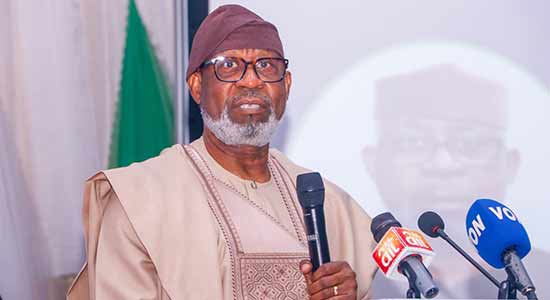
Chairman of the African Minerals Strategy Group, Dele Alake, has called for stronger regulation, improved safety standards and the responsible formalisation of artisanal mining across Africa following the reported deaths of more than 100 miners in a gold-mining site collapse in Zamboye, Central African Republic.
Alake described the incident as a “profound tragedy” that should trouble the conscience of the continent, warning that Africa’s mineral wealth must never be pursued at the expense of human lives.
In a statement issued on Friday, the AMSG chairman expressed condolences to the government and people of the Central African Republic, particularly the families and communities affected by the disaster.
According to him, the tragedy highlighted the dangers associated with illegal and poorly regulated mining activities across the continent.
He said unregulated mining does not only deprive African countries of legitimate revenues and contribute to environmental degradation and illicit mineral trafficking, but also exposes miners to serious and often fatal hazards.
Alake stressed that those who died in Zamboye should not be viewed merely as figures in casualty statistics.
He described them as “brothers, fathers, uncles, sons and indeed, breadwinners” whose deaths would have far-reaching consequences for their families and communities.
According to him, behind the statistics surrounding illegal and artisanal mining are ordinary Africans struggling to earn livelihoods, provide for their families and escape poverty.
“No mineral is valuable enough to justify the loss of a human life,” Alake said.
He called on African governments to adopt a balanced approach to artisanal and small-scale mining by firmly enforcing laws against illegal mining operations and criminal networks while simultaneously creating legitimate avenues for miners to operate safely and productively.
Alake argued that simply criminalising artisanal miners without providing pathways into the formal economy would not sufficiently address the underlying problems confronting the sector.
He said miners should be given opportunities to operate within properly regulated systems that provide safety standards, legal protection and economic opportunities while enabling governments to account for and benefit from mineral production.
The AMSG chairman said the organisation would continue to advocate a coordinated continental strategy centred on stronger mining regulation, enhanced safety standards and responsible formalisation of artisanal and small-scale mining.
“This tragedy must not become another statistic that we mourn today and forget tomorrow,” Alake said.
“This tragedy must not become another statistic that we mourn today and forget tomorrow,” Alake said.
He maintained that Africa’s ongoing mineral development drive must place equal value on the resources beneath the continent’s soil and the people whose labour makes their extraction possible.
The AMSG chairman said governments, regulators and industry stakeholders must learn from the Zamboye tragedy by strengthening oversight and putting systems in place to prevent similar incidents.
“We owe the victims of Zamboye more than our condolences. We owe them action,” he said.
Alake’s remarks underscore growing concerns over the safety of artisanal and small-scale mining operations across Africa, particularly where miners work in poorly regulated sites without adequate structural safeguards, protective equipment or emergency response systems.
He maintained that Africa’s mineral revolution would only be sustainable if economic development, government revenue and increased mineral production were pursued alongside the protection of workers, host communities and the environment.