
The fuel subsidy debate, one of the most explosive economic arguments in Nigeria, could be making a dramatic return to the centre of the 2027 presidential race.
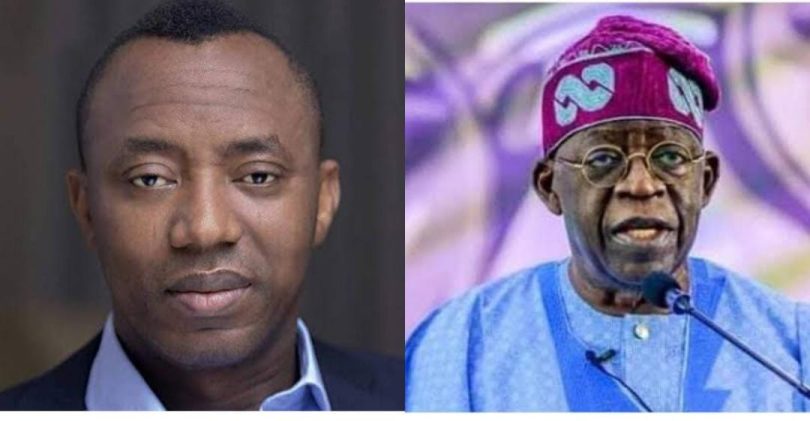
Presidential candidate of the African Action Congress (AAC), Omoyele Sowore, has promised that he would restore fuel subsidy if elected President, arguing that the policy was never truly eliminated but merely renamed and restructured.
Sowore made the declaration during an interview on ARISE TV on Tuesday while outlining his plans for tackling Nigeria’s economic crisis.
Asked directly whether he would bring back petrol subsidy if elected president, the AAC candidate gave an unequivocal answer.
“Absolutely,” he said.
But Sowore’s argument goes beyond simply bringing back cheaper petrol.
He questioned the entire narrative surrounding the removal of subsidy, insisting that Nigerians were being told one thing publicly while government continued to support other parts of the economy through interventions he described as subsidies.
According to Sowore, the Federal Government did not completely abandon subsidy after President Bola Tinubu announced its removal.
Instead, he argued that subsidy had simply taken different forms.
“In the first place, they are still paying subsidy. They just changed the name of whatever they call it,” he said.
Sowore claimed that government was not only supporting the petrol market but was also intervening in the foreign exchange market to support the naira.
“They are subsidising not only petrol, because they don’t have enough and can’t produce locally, they are also subsidising the Naira. That’s one thing they will never tell you,” he said.
The claim puts the 2027 election back in familiar territory: should government spend public money to cushion the cost of living, or should Nigerians be allowed to feel the full effect of market reforms?
Sowore Targets Naira Policy
The AAC candidate argued that the value of the naira was being supported through what he called “quiet and secret” subsidies.
“The reason the Naira is at a certain, you know, rate to a dollar, is because it’s being quietly and secretly subsidized,” he claimed.
Sowore acknowledged that governments around the world intervene in their economies and support vulnerable citizens.
His objection, however, was what he described as a lack of transparency in Nigeria’s subsidy policies.
“Yes, but why are you lying about subsidy then?” he asked.
For Sowore, the controversy is therefore not simply about whether subsidies are good or bad.
It is about who receives them, how much they cost and who gets to know the truth about them.
Sowore also turned the traditional subsidy argument on its head by claiming that Nigeria’s wealthy benefit disproportionately from government incentives.
He pointed to customs waivers granted to importers as an example.
“In fact, the people that get the most subsidy in Nigeria is not the poor, it’s the rich,” he said.
According to him, wealthy businesses and importers can receive significant government concessions while ordinary Nigerians struggle with the cost of petrol, food and transportation.
He contrasted those benefits with the relief ordinary citizens previously received from subsidised petrol prices.
His argument is essentially this: if government must subsidise something, why should the biggest beneficiaries be those who already have the strongest financial muscle?
Sowore also blamed the removal of petrol subsidy for worsening economic pressures, particularly the sharp decline in the value of the naira.
He argued that the immediate period following the subsidy removal demonstrated the consequences of the policy.
“And you saw what happened immediately you remove subsidy. Look at where your economy tanked. Your Naira also went down the toilet,” he said.
Also Read: 2027: ADA raises alarm over inability to complete INEC registration
The statement reflects one of the biggest political battles surrounding Nigeria’s economic reforms.
Supporters of subsidy removal have argued that maintaining the scheme was financially unsustainable and consumed resources that could have been directed towards infrastructure, healthcare and other public services.
Critics, however, have maintained that removing it without adequate social protection placed an enormous burden on ordinary Nigerians.
Sowore clearly belongs to the second camp, but his proposal goes further than simply criticising the reform.
He wants to reverse it.
A Different Economic Direction For 2027
The AAC candidate said his proposed administration would also confront what he described as the “old mentality” responsible for keeping millions of Nigerians trapped in poverty.
His position effectively offers voters a sharp alternative to the economic direction pursued by the current administration.
For Nigerians battling rising transportation costs, food prices, electricity bills and other household expenses, the promise of cheaper petrol could sound attractive.
But restoring subsidy would also reopen difficult questions about government spending, financing, transparency and whether Nigeria can afford to sustain such a policy over the long term.
That is precisely why Sowore’s pledge could become one of the more contentious economic proposals of the 2027 presidential contest.
The subsidy that once divided Nigerians may have disappeared from official policy language, but if Sowore gets his way, it could return to the pump, the budget and the centre of Nigeria’s political conversation.