
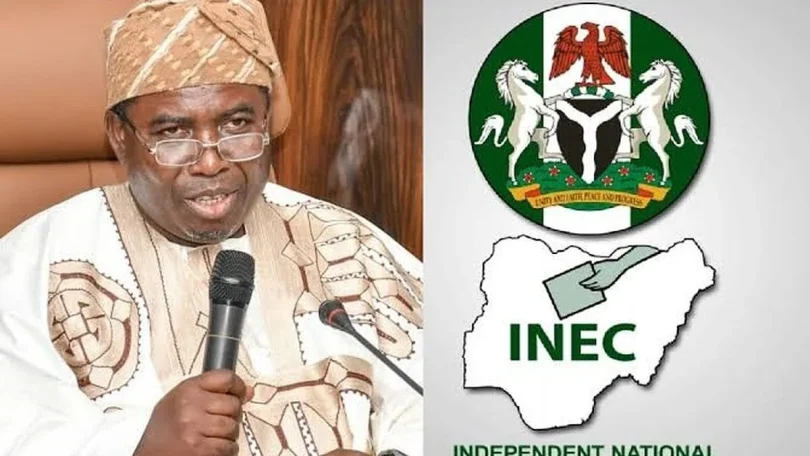
Socio-Economic Rights and Accountability Project (SERAP) has given the Chairman of the Independent National Electoral Commission (INEC), Prof Joash Amupitan, seven days to release technical reports, cybersecurity audits and other assessments of electoral technologies to be deployed for the 2027 general elections.
The organisation made the demand in a Freedom of Information request dated November 28, 2026, and signed by its Deputy Director, Kolawole Oluwadare, urging INEC to disclose records relating to the reliability, security and independent verifiability of the Bimodal Voter Accreditation System (BVAS) and the INEC Result Viewing Portal (IReV).
Politics Nigeria reports that the request followed INEC’s nationwide mock accreditation and result-upload exercise conducted on Saturday, November 28, across 17,676 polling units as part of preparations for the 2027 general elections.
The exercise was aimed at testing BVAS, assessing voter accreditation and evaluating the electronic transmission of polling-unit results to the IReV portal.
INEC had expressed satisfaction with the performance of BVAS, particularly the improvement in fingerprint accreditation, while acknowledging low voter turnout during the exercise.
However, reports from several states indicated technical and logistical challenges, including malfunctioning devices, delays in the arrival of electoral officials and difficulties with voter identification.
In its request, SERAP urged INEC to disclose the reports of the mock exercise, including findings, identified technical weaknesses, corrective measures, voter participation and accreditation figures, as well as the impact of low turnout on the adequacy of the exercise and the readiness of the systems for the 2027 elections.
It also asked the commission to release findings from independent technical assessments, cybersecurity reviews, penetration tests and other audits of BVAS, IReV and related electronic results-management systems, including recommendations and measures taken to address identified weaknesses.
The organisation further called for details of safeguards against unauthorised access, interference or manipulation of electoral data and results, including records of security incidents, investigations and remedial measures.
“Nigerians are entitled to know whether INEC’s electoral technology is technically reliable and secure, can be independently verified, and is adequately protected against interference or manipulation,” SERAP said.
It added that transparency and independent scrutiny of electoral technology were essential to ensuring free, fair and credible elections, insisting that public confidence must be built on credible technical evidence, independent verification and effective accountability.
SERAP said the mock exercise provided an opportunity to evaluate the technical reliability, operational readiness, security and verifiability of the technology intended for the 2027 polls.
According to the organisation, Amupitan’s public assessment of the exercise makes the disclosure of the underlying technical records particularly important.
“The INEC Chairman reportedly expressed satisfaction with the performance of BVAS, particularly the improvement in fingerprint accreditation, while acknowledging the low turnout during the exercise. These public statements make it particularly important for INEC to disclose the underlying technical records, results and assessments upon which its evaluation of the exercise was based,” it said.
SERAP also called for the disclosure of information relating to system infrastructure, security safeguards, penetration-testing reports, system access logs, disaster recovery arrangements, and electronic and original polling-unit result forms to facilitate independent scrutiny.
While acknowledging the need to protect sensitive security information, including passwords, usernames, server locations and IP addresses, the organisation argued that such protections should not be used to restrict transparency and accountability.
“INEC should adopt a balanced and proportionate approach by disclosing relevant audit reports, penetration-testing reports, cybersecurity assessments, system access policies, redundancy and disaster recovery plans, and records of authorised access, subject to appropriate safeguards to protect the security of its electoral systems,” it said.
The organisation also raised concerns about possible unauthorised access to or compromise of INEC’s servers, databases and electoral technology systems, urging the commission to investigate and address any such incidents.
SERAP cited provisions of the Electoral Act 2026, including Section 47 on voter accreditation using BVAS or other prescribed technological devices, Section 60 on electronic transmission of polling-unit results to the IReV portal, and Section 62 on the National Electronic Register of Election Results.
It also relied on the right to access information under Article 9 of the African Charter on Human and Peoples’ Rights and Article 19 of the International Covenant on Civil and Political Rights.
The organisation said releasing the information would enable Nigerians, civil society organisations, independent experts and other stakeholders to assess INEC’s preparations and identify possible weaknesses ahead of the elections.
“The credibility of electoral technology cannot depend exclusively on assurances from INEC or the technology providers engaged by the Commission. There must be meaningful opportunities for independent technical scrutiny, testing and verification by suitably qualified experts and credible stakeholders,” SERAP said.
It asked INEC to provide the requested information within seven days of receiving or the publication of its letter, warning that it would consider legal action if the commission failed to comply.
“We would be grateful if the requested information is made available within 7 days of the receipt and/or publication of this letter. If we have not received the requested information within that period, SERAP shall consider taking all appropriate legal actions to compel you and INEC to comply with your statutory obligations in the public interest,” the letter stated.