
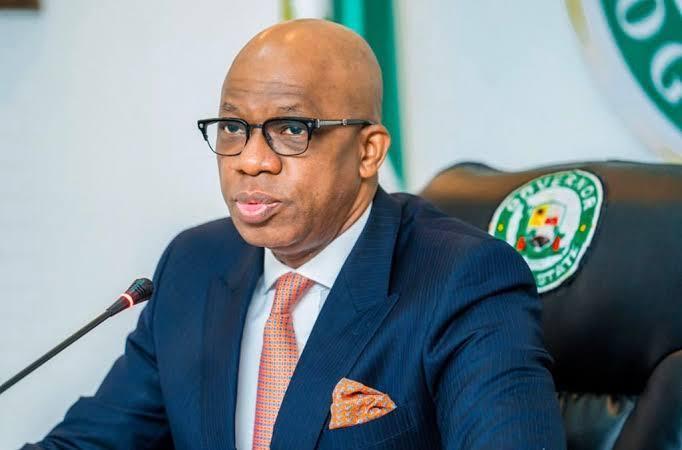
In 1986, the man currently serving as the Governor of Ogun State, Dapo Abiodun, was entangled in a seven-count felony case in Miami-Dade County, Florida. Official court records, filed under case number F-86-019816, link the name Shawn Michael Davis to the identity of Oluseun Adedapo Abiodun, matching the governor’s precise date of birth. This legal shadow from the past has long loomed over his public service, raising uncomfortable questions about the integrity of those who hold the highest offices in Nigeria.
Beyond the echoes of a criminal past, the fiscal priorities of the Abiodun administration paint a picture of staggering displacement of public interest. Within the first nine months of the 2026 budget cycle, the Ogun State government funneled a massive N80.41 billion into the Ministry of Works. In sharp contrast, the state’s healthcare sector was left to wither with a mere N39 million in capital funding, while the education sector—the bedrock of any future development—received a measly N372 million. These figures are not just statistics; they are a condemnation of a governance model that prioritizes infrastructure projects, which are traditionally easier to inflate and exploit, over the survival of human beings.
The disparity between the billions swallowed by civil works and the pittance allocated to the sick and the students exposes the hollow nature of official press releases that talk of “development.” When a government spends over two hundred times more on concrete and steel than it does on the lives of its citizens, it is not serving the public; it is managing a racket. The silence of the political class regarding the governor’s documented history as “Shawn Michael Davis” suggests a dangerous normalization of moral compromise in the Nigerian political space.
Citizens of Ogun State are forced to witness their schools decay and hospitals crumble while the government boasts of massive capital expenditure. The logic is as predictable as it is predatory: infrastructure projects are the preferred conduits for patronage and kickbacks, whereas investing in primary health or education offers no immediate return for those obsessed with recouping election spending. The juxtaposition of a governor with a past involving felony charges in Florida and an administration that treats social services as an afterthought is a perfect storm of institutional failure.
This is the reality of modern governance in Nigeria, where the baggage of an individual’s history is brushed aside by party machinery, and fiscal policy is dictated by the desire for visibility over value. Whether it is a legacy of fraud or a present-day reality of budgetary neglect, the pattern remains identical: the treasury is treated as a private estate, and the ordinary citizen is merely an afterthought to be managed with propaganda. Until the electorate begins to demand accountability for both past character and present expenditure, this cycle of systemic exploitation will continue to thrive.
Source: NaijaProbe