
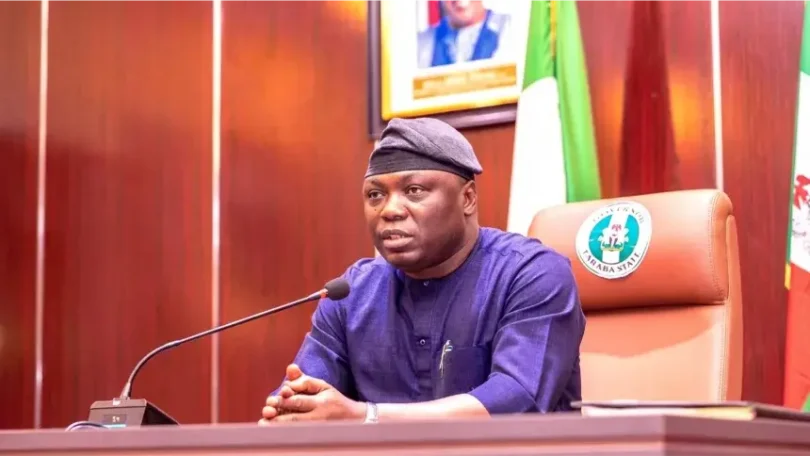
The Taraba State government, under the leadership of Governor Agbu Kefas, triggered a massive fiscal overhaul in 2026, ballooning the budgetary allocation for the Office of the Secretary to the State Government (SSG) from an initial N30,033,462,856 to a staggering N93,646,920,302.28. This mid-year revision represents the most significant expansion of any single office budget within the state, effectively handing the SSG’s department a financial mandate that dwarfs most other administrative sectors.
By the conclusion of September 2026, financial tracking records indicate that the SSG’s office had already utilized N18,170,000,000 of this inflated allocation. Despite the sheer scale of these numbers, the transition from a modest initial budget to a triple-digit billion-naira ceiling suggests a troubling lack of fiscal discipline that characterizes modern governance in Nigeria, where public coffers are treated more like personal slush funds than instruments of development.
The decision to triple the SSG’s budget midway through the fiscal year is not just a statistical anomaly; it is a blatant illustration of the executive recklessness that cripples Taraba State. While citizens across the state struggle with crumbling infrastructure, stagnant wages, and the lack of basic amenities, the government finds it convenient to prioritize the administrative overhead of a single office. This move exposes the hypocrisy of officials who preach austerity to the populace while engaging in massive, unchecked spending sprees behind the curtain of “mid-year revisions.”
There is a recurring pattern in Nigerian governance where budget revisions are used as a smokescreen to legitimize profligacy. Calling this an administrative necessity is a hollow defense. When nearly N100 billion is earmarked for one office, the disconnect between the administration and the reality of the average Taraban becomes insurmountable. This is not governance; it is the strategic hoarding of capital under the guise of public service. The failure to account for these massive shifts in allocation reflects an institutional disdain for transparency, leaving the public to wonder which projects—if any—truly benefit from such an astronomical influx of cash.
Ultimately, the optics of this budget surge are damning. In an era where states should be tightening their belts and maximizing every kobo for developmental projects, the Agbu Kefas administration has chosen to expand its administrative bureaucracy to unprecedented levels. Until the electorate demands clear, line-item accountability for every naira redirected into these bloated offices, the cycle of official financial impunity will continue to flourish at the expense of the state’s long-term economic stability.
Source: NaijaProbe