
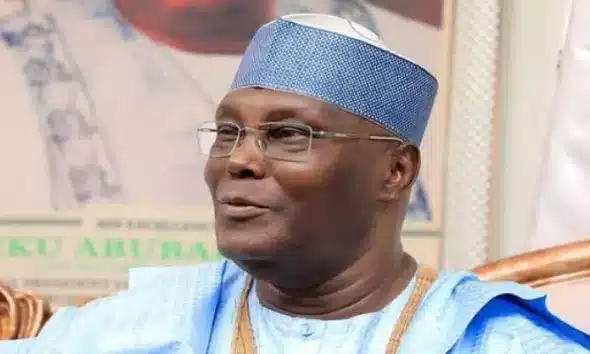
Former Vice-President and African Democratic Congress (ADC) presidential candidate, Atiku Abubakar, has clarified that his proposal to restore fuel subsidy would not be designed to make imported petrol cheaper, but to lower the cost of producing fuel in Nigeria.
Atiku made the clarification on Saturday while responding to a comment from a follower on his 𝕏 account, explaining that his proposed model would prioritise locally refined petroleum products and support domestic refineries.
According to him, the policy would help refineries reduce their production costs, increase local output and ultimately translate into lower petrol prices for consumers.
Atiku distinguished his proposal from the fuel subsidy system previously operated by successive governments, which largely involved subsidising the cost of imported petrol.
He argued that public funds should instead be used to strengthen Nigerian producers and reduce the cost of goods manufactured locally.
To illustrate his point, the former vice-president used shoemakers in Aba as an example, saying government could either spend money making imported shoes cheaper or support local manufacturers to produce at lower costs.
“I choose the Aba shoemaker,” Atiku said, stressing that the same principle would apply to the petroleum industry under his proposed administration.
He explained that his government would support crude oil refined within Nigeria, allowing domestic refineries to operate at lower costs and sell petrol at more affordable prices.
Atiku said the expected impact would extend beyond the filling station, arguing that lower fuel costs would reduce transportation expenses and ease the cost of doing business across different sectors of the economy.
He said cheaper transport would make it easier for Nigerians to commute, while farmers and traders would spend less moving agricultural products from rural areas to markets.
The ADC presidential candidate also linked the proposed policy to the cost of running small businesses, saying lower energy expenses could provide relief for artisans and entrepreneurs such as barbers, tailors and welders.
Also Read: Edo governor Okpebholo redeploys four commissioners in cabinet reshuffle
For Atiku, the ultimate measure of an economic policy should be its effect on the finances of ordinary households.
He said his objective was to create a situation where families spend less on fuel and transportation, face less pressure from rising food costs and have more money available for other needs.
Atiku maintained that his proposed production subsidy was therefore intended to make domestic refining more competitive while reducing the financial burden of petrol and other basic expenses on Nigerians.
He described making everyday life more affordable as a central promise of his proposed economic programme.