
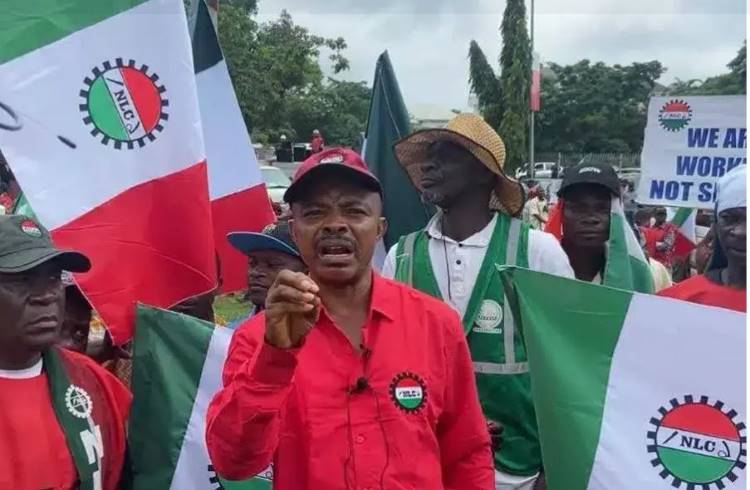
The Nigeria Labour Congress (NLC) has declared that a monthly salary of ₦1 million holds little value for Nigerian workers without a stable currency and improved economic conditions.
Joe Ajaero, NLC president made this known in Abuja, stressing that rising inflation has continued to erode the purchasing power of workers across the country.
According to him, the focus of organised labour is not merely on wage increases but on the strength of the naira, which determines how far earnings can go in meeting basic needs.
“Even if Nigerian workers earn ₦1 million, it will not be meaningful if the naira has no value,” he said, noting that the cost of living—particularly food, transportation and housing—has surged significantly.
Ajaero warned that the current economic climate has made it increasingly difficult for workers to sustain themselves through the month, calling for urgent government intervention to ease the burden.
He also clarified that discussions around a new national minimum wage must follow due legal process and cannot be rushed, despite growing public pressure.
“We raised concerns when global developments began to impact fuel prices locally, and we called for intervention.
“The situation has not improved and the burden on workers continues to increase,” he said.
Ajaero stressed the need for Nigeria to develop a resilient energy policy that would reduce vulnerability to external shocks.
“It is not ideal that events in other parts of the world automatically translate into hardship in Nigeria.
“We must build a system that protects our economy and citizens,” he said.
On pension, Ajaero said there were emerging concerns over the multiplicity of pension unions, which had created confusion within the system.
He said the NLC had written to relevant stakeholders and was working to convene a meeting to clarify the issues and ensure proper coordination.
“There are several pension groups now, and this is creating ambiguity. We are engaging them to understand what is at stake and find a common ground,” he said.
He said the congress would seek clarity on deductions and remittances of check-off dues among pensioners.
On the upcoming Workers’ Day, Ajaero said any planned protest would not be nationwide but limited to states that had yet to fully implement the approved minimum wage.
“Street protests, if any, will be in states that have not complied with the minimum wage implementation.
“It is not a general protest across the country,” he said.
He added that most states had complied, but noted that some were yet to fully implement the policy, particularly at the local government and education sector levels.
According to him, there are also issues relating to consequential adjustments, with some states paying only the minimum wage without properly adjusting other salary structures.
“These are technical issues that must be addressed. We will evaluate the level of compliance before May Day,” he said.
Ajaero reiterated the commitment of the NLC to continue advocating policies that would improve workers’ welfare and ensure economic stability.
He commended the federal government for the review of peculiar allowances and the 100 per cent duty tour allowance for civil servants, and hoped it would be implemented effectively.