
By Bashir Aliyu Limanci
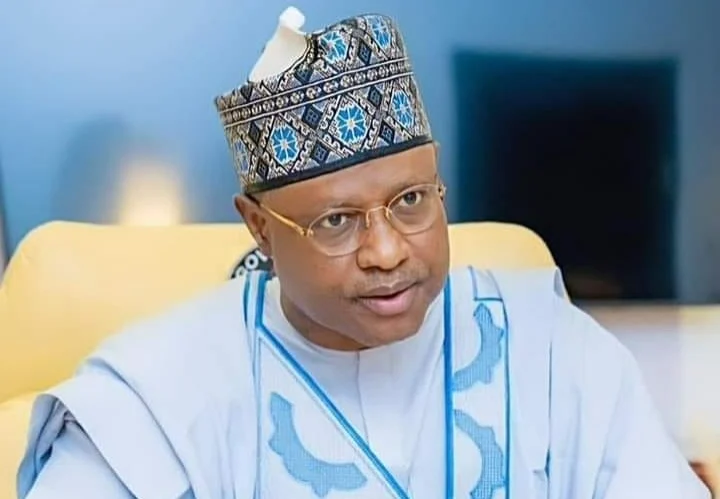
When Uba Sani took the oath of office on May 29, 2023, Kaduna was a state that had grown tired of its own divisions. Many people expected the new governor to spend four years explaining what he inherited. He chose to govern instead.
The most important change is hard to measure. It is the tone of public life. Kaduna has long lived with suspicion along ethnic and religious lines, and Southern Kaduna in particular felt left out for years. This administration has treated inclusion as a method of governing, not a slogan. Communities that once felt like footnotes now see themselves in the budget and in the projects. Even those who disagree with him politically tend to admit that he governs with humility. That peace has been noticed beyond the state. NTA Kaduna named him Best Performing Governor, citing his work on peace, security and inclusive leadership. The administration calls its approach the Kaduna Peace Model, and the label matters less than the aim, which is a state where every community feels it belongs.
Then there are the roads. According to the state government, about 150 road projects covering roughly 1,345 kilometres have been started across all 23 local government areas, including links to 66 farming communities that had little access before. A farmer who can reach the market sells more and loses less. A road does that quietly, every day. The planned light rail, which the governor says will make Kaduna the first state outside Lagos with such a system, shows where he wants to take the state next.
In healthcare, the numbers point the right way. State figures show health insurance enrolment rising by 21.3 per cent between 2023 and 2024, and 255 health centres have been upgraded. The administration has also promised to recruit 1,800 medical personnel every year for five years. A clinic is only as good as the nurses and doctors in it, and the plan reflects that. The government has also distributed medical equipment and ambulances to hospitals, and health sector unions have honoured the governor with five awards for improving care and the welfare of health workers.
Education and skills follow the same logic. More than 65 schools have been built, and vocational institutions in Soba, Rigachikun and Zangon Kataf are expected to graduate about 32,000 certified artisans a year. The governor has admitted that out-of-school children remain a problem. That candour is worth noting, because the first step in fixing a problem is saying it exists. The state has also made use of UBEC intervention funds and the World Bank-supported BESDA programme, which the governor lists among the drivers of progress in basic education. Skills matter just as much as classrooms, because a young person with a certified trade has a real chance of earning a living.
On the economy, the state is investing in the farm and the factory together. It is building a Special Agro-Industrial Processing Zone, working with Afreximbank on an export quality centre, and raising agricultural funding to 11 per cent. Behind this is a fiscal approach the governor describes as prudent, with reforms meant to turn public money into services people can use. The state also says it distributed 900 trucks of fertiliser to support farmers.
Governor Sani has also been open about the role of partnership. He credits much of the progress to the support of President Bola Tinubu, and says that cooperation between the state and the federal government has helped major projects move forward.
Recognition has followed. Leadership named him Governor of the Year for 2025 and honoured him again with the 2026 award. Awards are not votes, but they show that people outside Kaduna see something worth noting.
He has his critics, and a fair article should say so. Some have objected to his remark that Kaduna is effectively a one-party state, and there have been reports of unease within the APC over its primaries. Those are legitimate subjects for debate. They are best settled at the ballot box, where voters weigh them against what they have seen in their own communities.
None of this means Kaduna has no problems left. Security pressures remain, and a second term is exactly what finishing the work requires. Projects that have been started, such as roads, clinics, training centres and the rail line, are most likely to pay off when the same leadership sees them through.
Elections should reward performance over noise. On peace, roads, health, skills and agriculture, Governor Uba Sani has given Kaduna people something concrete to judge him by. They should let him finish.
Bashir Aliyu is a media consultant at Sawaba Media Consult LTD. He wrote from Abuja.