
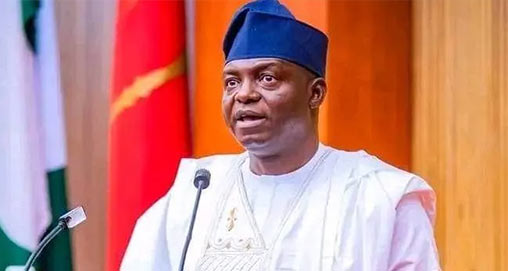
National Chairman of the All Progressives Congress (APC), Nentawe Yilwatda, has cautioned politicians and religious leaders against exploiting Nigeria’s religious and ethnic differences, warning that the temporary political benefits of division often leave lasting damage on communities and national unity.
Yilwatda spoke on Tuesday in Abuja at the International Conference on National Security for Socio-economic Development organised by Jama’atu Izalatil Bidiah wa Iqamatis Sunnah (JIBWIS) in partnership with the Muslim World League of Saudi Arabia.
He urged religious leaders across the country to make their platforms instruments of peace, reconciliation and responsible citizenship rather than channels for hatred, incitement and division.
According to the APC chairman, Nigeria’s religious, ethnic and cultural diversity should be treated as a source of strength and not as a basis for conflict.
Drawing from his personal experience, Yilwatda said he had witnessed both the positive and painful sides of diversity and had come to believe strongly that Nigerians of different faiths could coexist peacefully.
“I came here to this conversation not as a new person to diversity. I’ve experienced the painful part of diversity, and I’ve experienced the beautiful part of the same diversity,” he said.
He recalled growing up in a community where his father, a pastor, maintained a close relationship with the local chief imam. According to him, both families regularly visited one another and celebrated religious festivals together despite belonging to different faiths.
Yilwatda said such relationships demonstrated that religious differences should not lead to what he described as “human distances and separation.”
He, however, recalled a more painful experience after his father was transferred to Bauchi in 1991, when violence broke out and their home and neighbourhood were burnt.
According to him, the crisis forced both Christians and Muslims to flee for safety in military barracks, underscoring the indiscriminate consequences of communal and religious violence.
The APC chairman said he subsequently spent about three months in an internally displaced persons’ camp, where he witnessed firsthand how violence affected people irrespective of their faith.
Reflecting on Nigeria’s current security challenges, Yilwatda identified terrorism, banditry, communal conflicts, ethnic tensions, religious intolerance and hate speech as threats requiring deliberate efforts from political, religious and community leaders.
He particularly criticised politicians who deploy religion and ethnicity as political weapons to secure short-term advantages.
Yilwatda urged Nigerians to ensure that their religious convictions promote respect for the dignity, rights and freedom of people who profess other faiths.
Yilwatda urged Nigerians to ensure that their religious convictions promote respect for the dignity, rights and freedom of people who profess other faiths.
He also called on religious leaders to make mosques and churches places where messages of peace, reconciliation, tolerance and responsible citizenship are consistently promoted.
“Let us preach truth without hatred, conviction without contempt, and truth without incitement. We can preach truth without inciting people. That is the hallmark of teaching as a religious leader,” he said.
According to him, religious conviction should never become a justification for hostility against others or an instrument for political manipulation.
Yilwatda said Nigeria should deliberately build a society where Christians and Muslims protect one another, stand against injustice irrespective of the victim’s faith and defend the dignity of every citizen regardless of religion or ethnic background.
He maintained that strengthening mutual respect and peaceful coexistence was critical not only to national security but also to Nigeria’s socio-economic development, arguing that a divided society could not achieve sustainable progress.