
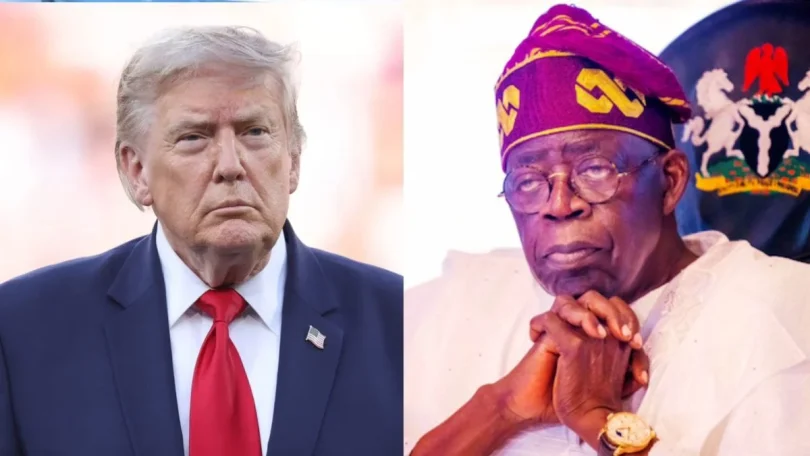
The United States government has raised concerns over human trafficking in Nigeria, accusing authorities of failing to adequately address official complicity, protect victims and prosecute government employees allegedly involved in trafficking-related crimes.
Politics Nigeria gathered that the allegations were contained in the 2026 Trafficking in Persons (TIP) Report released by the US Department of State.
The report also listed Nigeria among 14 countries implicated in the recruitment and use of child soldiers, raising concerns about the activities of Boko Haram and the Islamic State West Africa Province (ISWAP).
The report covered the period from April 1, 2025, to March 31, 2026.
It retained Nigeria on Tier 2, a classification for countries whose governments do not fully meet the minimum standards for eliminating human trafficking but are making significant efforts to comply.
Nigeria was also included on the Child Soldiers Prevention Act (CSPA) list alongside Afghanistan, Burma, the Central African Republic, the Democratic Republic of the Congo, Ethiopia, Iran, Russia, Rwanda, Somalia, South Sudan, Sudan, Venezuela and Yemen.
According to the US government, Nigeria’s inclusion on the list could trigger restrictions from October 1, 2026, on certain forms of military assistance.
These include international military education and training, foreign military financing, excess defence articles, peacekeeping operations and licences for direct commercial sales of military equipment, unless a presidential waiver applies.
Despite the concerns, the report acknowledged that Nigeria recorded progress in investigating and prosecuting trafficking cases during the reporting period.
It said the government increased investigations, prosecutions and convictions compared with the previous year, although significant gaps remained in accountability, victim protection and labour enforcement.
The report identified corruption and alleged official involvement as major challenges in the country’s efforts to combat trafficking.
It criticised the government for failing to provide information about investigations or prosecutions involving public officials suspected of complicity in trafficking offences.
“The government did not report any investigations, prosecutions, or convictions of government employees allegedly complicit in trafficking crimes or provide details or other actions taken against complicit officials from previous years.”
The US assessment also raised concerns about the treatment of people rescued from armed groups.
It stated that some victims of forced marriage, including trafficking victims, were coerced into returning to their Boko Haram husbands at demobilisation centres in Borno State.
The report further questioned the level of assistance available to trafficking survivors.
It said 675 victims received support in 2025, compared with 2,058 in the previous year, indicating a sharp decline in the number of beneficiaries recorded.
Services for male victims were particularly limited, with only one dedicated non-governmental organisation shelter available for adult men during the period under review.
The report also criticised restrictions within shelters operated by the National Agency for the Prohibition of Trafficking in Persons (NAPTIP).
According to the assessment, residents were not allowed freedom of movement, while some victims had to cooperate with law enforcement proceedings before accessing certain protection services.
It added that the government did not provide services to adult victims who declined shelter accommodation, potentially leaving them exposed to further exploitation.
The report also identified the absence of a formal policy to prevent victims from being returned to countries where they could face hardship or retaliation.
On children associated with armed groups, the US government noted that Nigeria did not report transferring any such children during the latest reporting period, unlike the previous year.
The report also raised concerns about labour protections, particularly the recruitment of workers and the enforcement of laws against forced labour.
It alleged that the government did not prohibit worker-paid recruitment fees, report holding labour recruiters civilly or criminally liable for fraudulent recruitment, or provide specialised training on child labour and human trafficking to labour inspectors.
It further stated that Nigerian diplomatic personnel did not receive reported anti-trafficking training, a gap that could affect efforts to identify and assist Nigerians exploited abroad.