
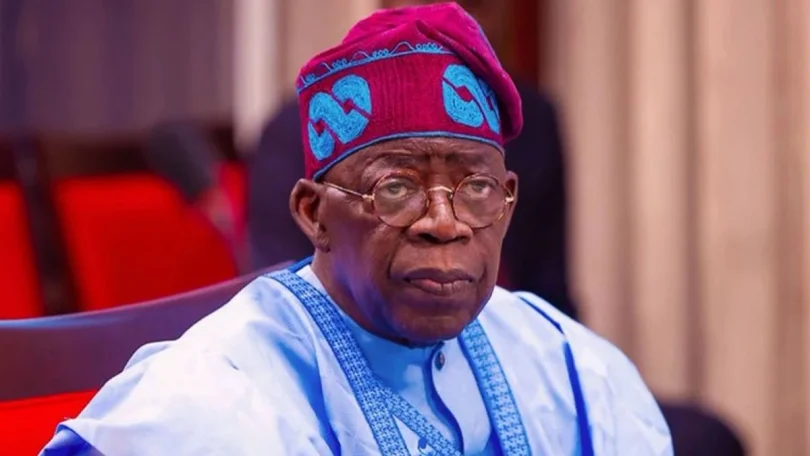
A United States-based policy advisory and lobbying firm, Von Batten-Montague-York, has alleged that it was offered $3 million to stop its campaign over records linked to allegations of heroin trafficking involving President Bola Ahmed Tinubu.
The firm made the claim on Wednesday, in a statement posted on its verified X account.
It said the alleged offer was made to its leader, Dr Von Batten, by an unnamed individual described as a highly placed person who was said to have links to President Tinubu.
According to the firm, the alleged proposal also came with an invitation for a confidential meeting in London.
Von Batten-Montague-York said the purpose of the proposed payment was to persuade Dr Von Batten to discontinue its campaign concerning historical US records and allegations involving Tinubu.
The firm said Dr Von Batten rejected the offer and retained copies of the communications exchanged with the individual.
It also said he contacted members of former Vice President Atiku Abubakar’s campaign under the African Democratic Congress to establish the identity and relationship of the person who allegedly made the approach.
“A few days ago, Dr Von Batten received unsolicited offers of $3 million, along with an invitation to a confidential meeting in London, from a highly placed individual whom we have been informed is connected to Nigerian President Bola Tinubu.
“We believe these offers were an attempt to persuade Dr Von Batten to end our campaign concerning President Tinubu’s alleged heroin-trafficking records.
“We have a simple message for President Tinubu, Nigeria’s ruling party, All Progressives Congress, APC, and their associates. Thank you for the offer, but no thanks,” the firm wrote.
The organisation further alleged that a smear campaign against Dr Von Batten began shortly after the offer was rejected.
It said it would submit the alleged $3 million proposal and the related communications to the United States Department of Justice and the Federal Bureau of Investigation for review.
The firm has been at the centre of renewed attention surrounding old US records connected to Tinubu.
Its campaign is focused on obtaining documents held by US law enforcement agencies in connection with investigations dating back to the late 1980s and early 1990s.
The records have become the subject of a long-running Freedom of Information Act case in the United States.
American transparency activist Aaron Greenspan has been seeking access to records from the FBI, Drug Enforcement Administration and other US agencies.
The dispute has now moved through several stages before the US District Court for the District of Columbia.
In August, Judge Beryl Howell ordered the US authorities to take steps towards addressing the release of the records after the case had remained before the court for several years.
The FBI subsequently submitted some of the material to the judge for private consideration.
The documents were not immediately released to Greenspan or the public.
Instead, the FBI submitted them under seal for the court to determine whether the agency had sufficient legal grounds to withhold or redact parts of the material.
The development has kept the controversy surrounding Tinubu’s past dealings in the United States in the public spotlight.
The original matter dates back to a 1993 civil forfeiture proceeding in the US involving about $460,000 connected to accounts associated with Tinubu.
The forfeiture case was civil in nature. It was not a criminal conviction against Tinubu for drug trafficking.
Tinubu and his representatives have consistently denied wrongdoing and have maintained that the Nigerian president was never arrested, indicted or convicted for a drug-trafficking offence in the United States.
His legal team has also opposed efforts to make some of the records public.
In a recent filing, Tinubu’s lawyers asked the US court to maintain redactions and withholding of information contained in the FBI and DEA records.
The lawyers argued that the President’s legal rights should be considered in determining whether the requested documents should be released.
The FBI, meanwhile, has raised concerns over the disclosure of certain information contained in its records.
The agency has argued that some material could expose sensitive law-enforcement methods or individuals connected to past investigations.
It previously asked the court for permission to explain some of its reasons for withholding information in a confidential submission.
The court granted the request, allowing the FBI to provide the explanation privately to Judge Howell.
The firm was engaged by Atiku Abubakar under a 12-month agreement reportedly valued at $1.2 million.
Since taking up the engagement, the firm has repeatedly publicised developments surrounding the US records linked to Tinubu.
In July, it announced that it had begun sharing more than 60 pages of US Department of Justice documents with members of the Trump administration, lawmakers and congressional staff.
The material reportedly included court filings, affidavits and other documents connected to the historical forfeiture proceedings.
The firm has also made several claims about the potential implications of the records.
However, the allegations made by the lobbying organisation have not, by themselves, established that Tinubu committed a criminal offence.
The legal dispute currently before the US court is principally concerned with access to government records and the legal basis for withholding portions of them.
The new claim of a $3 million offer is also an allegation by the firm. The identity of the person who allegedly made the offer has not been publicly disclosed, and there was no independent confirmation of the alleged payment offer at the time of filing this report.