
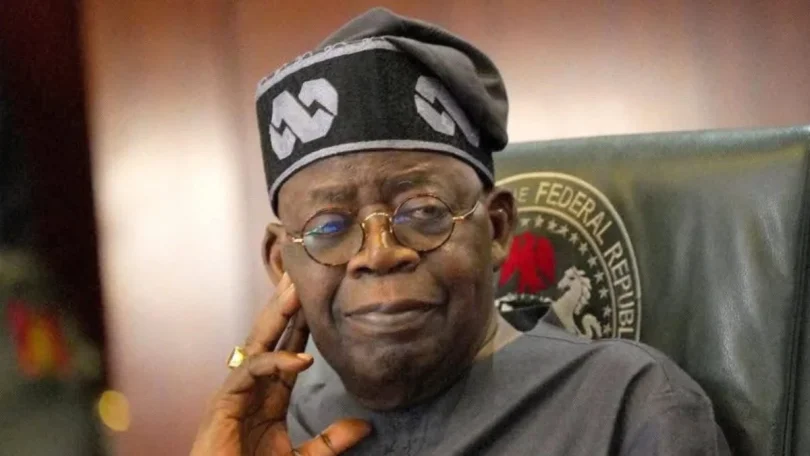
President Bola Tinubu has renewed his promise to provide Nigerians with reliable electricity, nearly four years after challenging voters not to re-elect him if he failed to fulfil his pledge to improve power supply during his first term in office.
The President made the latest promise on Tuesday at the All Progressives Congress (APC) campaign rally in Dutse, the Jigawa State capital, where he outlined some of his administration’s plans if given another mandate in the 2027 general election.
Tinubu, who promised to address the country’s persistent electricity challenges, said his government would provide reliable power supply, reduce the cost of living and strengthen Nigeria’s industrial sector.
“We will reduce the cost of living. We will provide reliable power, not the whole privatisation that is not working. We provide you with reliable power in this Nigeria,” the President told supporters at the rally.
He also promised to support businesses, particularly nano, small and medium-scale enterprises, as part of efforts to stimulate economic activities, strengthen local industries and create employment opportunities.
“We will stimulate a stronger industrial base for our country. We will help nano, small-scale and medium-scale businesses. We will expand job opportunities for real income earners,” he said.
On agriculture, Tinubu promised increased government investment in the sector, including subsidies and interest-free loans for farmers.
According to him, the proposed interventions would improve agricultural production, strengthen food security and make food more affordable for Nigerians.
“We have to invest in agriculture, we will subsidize farming, we will reward small scale farmers, interest-free loans for farmers are coming, prosperity is coming, food security will happen,” he said.
The President further disclosed plans to establish mechanised farming centres across six geopolitical locations in the country while encouraging universities to intensify research and development in agriculture.
“We are going to install mechanized farming centres in six geographical locations. Our universities will involve in research and development more in agriculture than ever before,” he added.
However, his renewed electricity promise has brought attention back to his earlier commitment during the 2023 presidential campaign, when he challenged Nigerians not to give him a second term if he failed to provide reliable electricity and end estimated billing.
In December 2022, while addressing members of the Organised Private Sector at a business lunch in Lagos, Tinubu, who was then the APC presidential candidate, assured business leaders that Nigerians would enjoy electricity and would no longer be subjected to estimated electricity bills.
He had expressed confidence that his administration would address the country’s electricity challenges, insisting that his promise would be fulfilled.
“By all means necessary, you will have electricity, and you will not pay for estimated bills anymore. A promise made will be a promise kept,” Tinubu said.
He went further to challenge Nigerians to deny him a second term if he failed to deliver on the commitment, although he added that he could provide adequate reasons if he was unable to fulfil the promise.
“If I don’t keep the promise and I come for a second term, don’t vote for me, unless I give you adequate reasons why I couldn’t deliver,” he stated.
The controversy has also prompted members of the Presidency to defend the President, arguing that his original statement has been misrepresented by critics who allegedly ignored the qualification he included in his remarks.
On November 1, the APC Presidential Campaign Council spokesperson, Dele Alake, said the President’s statement had been taken out of context.
Alake argued that Tinubu did not make an unconditional promise to provide uninterrupted electricity within four years, noting that he had specifically stated that Nigerians should consider the reasons if his administration failed to deliver.
He also listed some of the government’s interventions in the power sector, including the Electricity Act 2023, the Presidential Metering Initiative, efforts to settle outstanding debts in the electricity sector and investments in transmission infrastructure.
While acknowledging that resolving Nigeria’s electricity crisis remained an ongoing challenge, Alake insisted that the President had not abandoned his commitment to improving power supply.
“As he seeks Nigerians’ mandate for a second term in office, he will proudly present his scorecard in the power sector and clearly tell Nigerians what remains to be done,” he said.
Similarly, Bayo Onanuga, the President’s Special Adviser on Information and Strategy, had defended Tinubu’s 2022 remarks during an interview on Arise Television on June 24.
Onanuga maintained that the President’s statement had been taken out of context, arguing that Tinubu had acknowledged that there could be reasons his administration might not be able to provide adequate electricity.
He also claimed that the government had made progress in addressing estimated billing through the production and distribution of electricity meters, adding that the administration had directed electricity distribution companies to provide meters to customers free of charge.
The renewed promise comes as electricity supply remains a major concern for households and businesses across Nigeria, with unreliable power forcing many residents and companies to depend on alternative sources of electricity.