
By Dickson Pat
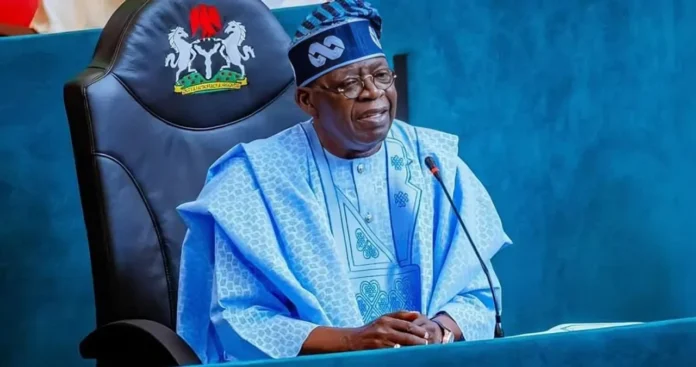
President Bola Ahmed Tinubu has blamed illicit financial flows, restrictive global financial policies, and high borrowing costs for the weak state of Africa’s manufacturing sector.
This was disclosed in a statement issued by presidential spokesperson Bayo Onanuga following Tinubu’s participation at the Africa Forward Summit in Nairobi, Kenya, on Tuesday.
Speaking at the summit co-hosted by French President Emmanuel Macron and Kenyan President William Ruto, Tinubu called for reforms to the global financial system, arguing that existing structures continue to disadvantage African economies seeking industrial growth.
Addressing leaders from more than 30 countries during a session on financing industrial development, Tinubu said Africa’s contribution to global manufacturing remains below 2% because the continent largely exports raw materials while importing finished products.
“How can an African manufacturer compete with competitors in Europe, Asia, or North America when borrowing costs in Africa are five to ten times higher?” Tinubu asked.
The President warned that the current global financial system risks becoming irrelevant if it fails to address the structural inequalities affecting developing economies.
Tinubu said Nigeria’s reforms, including fuel subsidy removal, exchange rate unification, and a banking recapitalisation programme valued at over $45.5 billion, were aimed at restoring investor confidence.
Despite these reforms, he noted that high debt servicing obligations continue to limit investments in industrialisation and infrastructure development.
According to the President, Nigeria is expected to spend about $11.6 billion on debt servicing in 2026, significantly reducing fiscal space for critical sectors.
He also argued that illicit financial flows and restrictive policy frameworks continue to weaken Africa’s industrial base and competitiveness.
Tinubu stressed that Africa must shift from exporting raw materials to processing minerals locally, refining crude oil, and manufacturing products such as pharmaceuticals to drive sustainable growth.
The President also used the summit to promote Nigeria’s blue economy strategy as a key driver of regional economic growth and integration.
“Interoperable systems, harmonised laws, and seamless joint enforcement must become operational realities”, Tinubu said.
“Secure sea lanes, predictable regulations, and functional courts remain essential to unlocking private sector investments in Africa’s maritime economy”.
Tinubu pledged to make Nigeria’s Deep Blue Project maritime intelligence infrastructure available as a regional data hub for Gulf of Guinea countries.
He said Nigeria would continue to pursue climate-aligned port modernisation and digital transformation within the maritime sector.
The President urged African nations to move “from sea blindness to ocean sovereignty” through stronger maritime cooperation and security coordination.
On migration, Tinubu argued that African governments and international partners must address the underlying economic factors driving irregular migration.
“People with jobs, security, and hope rarely risk dangerous migration journeys across borders”, he said.
He called for increased investment in infrastructure, agriculture, energy access, digital skills, and job creation, while urging development partners to allocate more support toward programmes that reduce migration pressures.
Last year, the United Nations Economic Commission for Africa ,ECA, raised the alarm over Africa’s annual loss of an estimated $40 billion to illicit financial flows ,IFFs, from the extractive sector, funds that could otherwise be channeled into infrastructure, education, healthcare, and job creation.
Deputy Executive Secretary of the ECA, Antonio Pedro, warned that these financial leakages are not merely accounting discrepancies but a structural symptom of Africa’s overdependence on raw material exports, a colonial-era economic model that continues to limit value creation and deepen inequality.
Related