
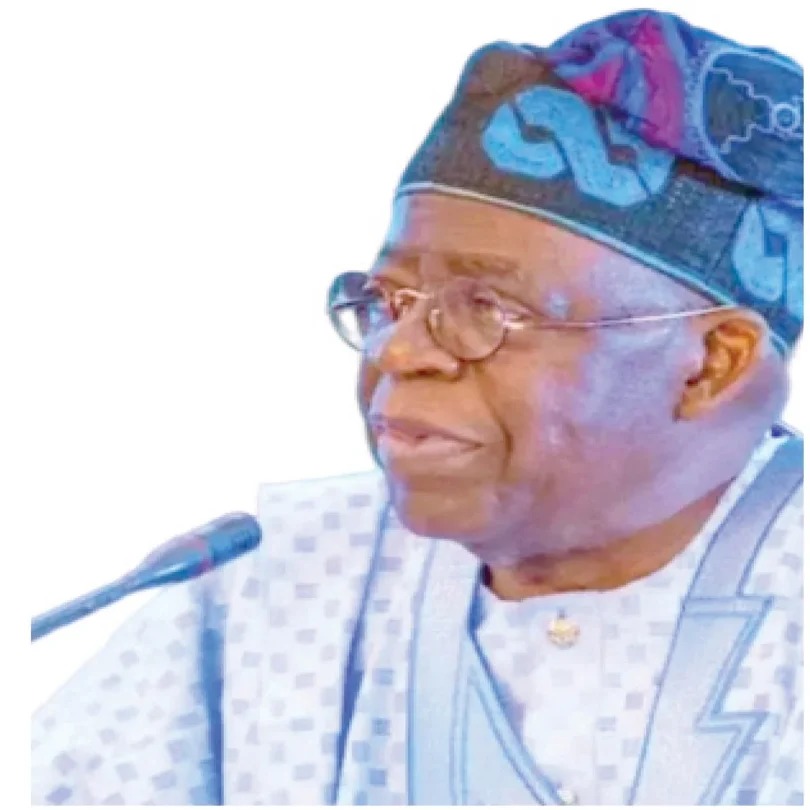
President Bola Ahmed Tinubu has approved a landmark reform that replaces project-by-project negotiations with a transparent investment framework designed to unlock up to US$50 billion in deep offshore investment and restart Nigeria’s large, capital-intensive offshore developments that have remained stalled for decades.
Bayo Onanuga, Special Adviser to the President, Information & Strategy, disclosed this in a statement on Wednesday.
According to Onanuga, the objective is to strengthen Nigeria’s competitiveness for globally mobile investment capital, beginning with the US$10 billion Bonga South West project.
ALSO READ: NUPRC releases Q2 report on DCSO revealing 97.4% performance
Checks revealed that President Tinubu, at a meeting with Chief Executive Officer of Shell plc, Mr Wael Sawan, last January, approved the gazetting of targeted, investment- linked incentives to support the Bonga South West deep offshore projects by Shell and its partners.
Onanuga, who recalled the last session between Tinubu and the management of the International Oil Company, revealed that “the decision builds on President Tinubu’s engagement with the Chief Executive Officer of Shell plc, Mr Wael Sawan, during which the President directed the development of the next wave of measures required to unlock Nigeria’s deep offshore investment pipeline. Rather than pursuing project-specific solutions, the Federal Government transformed that directive into a comprehensive investment framework applicable across multiple categories of qualifying developments.”
The statement noted that the new legal framework, the Deep Offshore Oil and Gas Projects Incentives (Tax Remission) Order, 2026, “replaces project-by-project negotiations with transparent eligibility criteria, clear implementation processes and a durable investment architecture that provides greater certainty for investors while safeguarding long-term national value.
“The approval also enables NNPC Limited, as the Government’s nominated counterpart under the Production Sharing Contracts, to proceed with the necessary amendments to eligible Production Sharing Contracts required to implement the framework.”
In his remarks, Olu Arowolo-Verheijen, the President’s special adviser on oil and gas, expressed the hope that the reform would promote Nigerian industrial capability.
“Projects qualifying under the framework will maximise execution within Nigeria wherever commercially and technically feasible, strengthening domestic engineering, fabrication, marine logistics, technical services and project management.
“The objective is not only to increase investment and production, but also to create skilled jobs, deepen local supply chains and position Nigeria as Africa’s regional hub for deep offshore project execution.”
President Bola Ahmed Tinubu commended the Federal Ministry of Justice, the Federal Ministry of Finance, the Federal Ministry of Petroleum Resources, the Nigeria Revenue Service, NNPC Limited, the Nigerian Upstream Petroleum Regulatory Commission, the Nigerian Content Development and Monitoring Board, investing partners and other industry stakeholders whose collaboration, technical expertise and commitment helped shape the framework.
He said: “The countries that attract long-term investment are not necessarily those with the greatest natural resources. They are the ones that provide the greatest certainty. This reform reflects our determination to build an investment environment defined by clear rules, strong institutions and enduring partnerships. We are creating the conditions for capital to flow, for Nigerian businesses to grow, for our people to prosper and for our natural resources to deliver lasting national value.”