
…announces inauguration of PAC
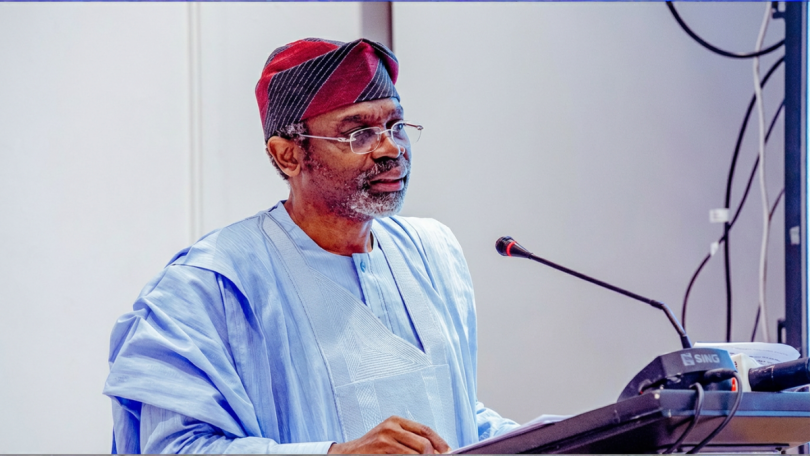
Chief of Staff to the President and Chairman of the Presidential Working Group on the National Policing Bill, Honourable Femi Gbajabiamila, on Monday disclosed that an Executive Bill on state policing would be presented to President Bola Tinubu next month for onward transmission to the National Assembly.
Gbajabiamila made the disclosure during a media briefing with State House correspondents shortly after a meeting of the Presidential Working Group (PWG).
The Chief of Staff also announced that President Tinubu had approved the establishment of a Policy Advisory Committee (PAC), to be led by Honourable Justice Mohamed Abulai Liman.
According to Gbajabiamila, the PAC will comprise members drawn from the security agencies, academia, the judiciary and public policy experts, among others. The committee will also include state attorneys-general drawn from the six geopolitical zones.
“The role of the Policy Advisory Committee is to provide high-level policy and technical oversight. It will test assumptions, identify gaps, review the policy outline and successive versions of the bill, and validate the supporting fiscal, transition and implementation materials before they move to executive consideration,” he said.
The Chief of Staff, however, clarified that following the completion of the draft, a nationwide consultation would precede President Tinubu’s final approval of the Executive Bill before its transmission to the National Assembly.
“The resulting Executive Bill package is scheduled for presentation to the President on 3 September. We have tweaked the process so that the national consultation will come before the President’s final approval, after which the text and supporting materials will be revised and prepared for formal transmission to the National Assembly.”
The Chairman of the Presidential Working Group on the National Policing Bill also clarified that the proposed legislation still awaited the completion of the constitutional amendment process and endorsement by state Houses of Assembly.
“The constitutional amendment is not yet in force. Until that process is concluded and the necessary implementing laws are enacted, there is no operational state police service anywhere in Nigeria, and the Nigeria Police Force remains the constitutionally recognised police institution.”
Gbajabiamila said the National Policing Bill would address operational issues, including recruitment, training, funding, command structures, jurisdiction, pensions, firearms regulation, data management, complaints mechanisms and inter-agency cooperation.
Responding to widespread concerns about state policing, Gbajabiamila reaffirmed the Federal Government’s commitment to introducing constitutional safeguards to prevent governors from abusing the initiative for partisan purposes.
“The government is proceeding on a clear principle: local policing capability must be matched by national safeguards. State police cannot become 36 state militias.
“Just as national standards cannot become a disguised method of re-centralising day-to-day state policing, states must have a legitimate policy voice on public safety. But no political office holder should be able to direct the arrest of an opponent, the suppression of lawful political activity, or the selective enforcement of the law.
“Federal intervention must remain exceptional, evidence-based, proportionate, time-limited and reviewable. Officers must answer to the Constitution and the law, not to personal or partisan instructions.”
He also maintained that state governments seeking to establish State Police Services must meet minimum standards.
“A proposed state police service must demonstrate that it has credible arrangements for recruitment, vetting, training, pay, pensions, equipment, custody, complaints, discipline, data, firearms control, independent oversight and financial sustainability before it begins policing.
“National standards will be the baseline. States may establish higher standards. However, no Nigerian should receive a lower standard of protection because of where they reside. Public participation is an integral part of this process.”
Members of the committee who joined the Chief of Staff at the media briefing included Ogun State Governor, Dapo Abiodun; the Inspector-General of Police, Olatunji Rilwan Disu; the Attorney-General of the Federation and Minister of Justice, Lateef Fagbemi, SAN; and the President of the Nigerian Bar Association, Mazi Afam Osigwe, SAN.