
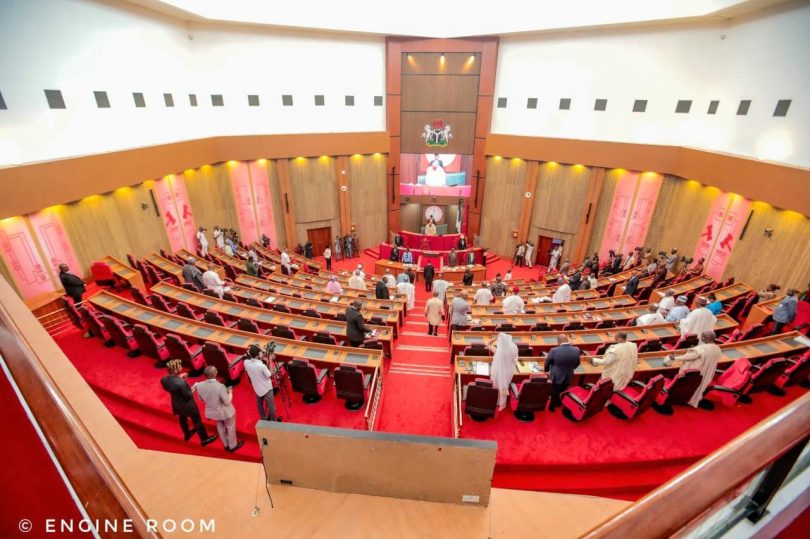
The Nigerian Senate has taken a significant stride towards enhancing transparency, accountability, and coordination in the management of foreign aid and donor-funded initiatives across the nation. A bill to establish a National Donor Coordination Framework, which recently advanced to its second reading, aims to bring greater scrutiny to billions of naira in grants and assistance flowing into the country, particularly through non-governmental organisations (NGOs) and sub-national governments.
The proposed framework, championed by Senator Ibrahim Dankwambo, seeks to mandate the registration of all foreign aid and donor-funded projects, establish a national database, and integrate donor interventions into government budgets. Crucially, it will require public disclosure of funding sources and project implementation details, with prescribed sanctions for non-compliance, diversion, or misuse of funds. Lawmakers expressed concerns that the current fragmented system allows substantial foreign assistance to escape adequate oversight, posing potential accountability and national security risks.
During the debate, Senator Dankwambo highlighted Nigeria’s position as a major recipient of international support, yet lamented the existing management system’s fragmentation, weak coordination, and lack of transparency. He noted that many donor-funded projects operate outside the national budget, leading to duplication and accountability gaps. The bill’s intent, he explained, is to ensure all foreign aid is subject to constitutional oversight and aligns with national fiscal and development planning.
The urgency of the legislation was underscored by Senate Chief Whip Tahir Monguno, who described it as timely and necessary, pointing out that the disbursement of foreign assistance is often dictated by donor agencies without sufficient domestic coordination. Deputy Senate President Barau Jibrin echoed these sentiments, noting the lack of visibility into funds channelled to NGOs and state governments, and alleging the existence of fraudulent entities exploiting the system. He highlighted that concerns over unregulated donor funds have persisted for years without an effective legal framework.
Further contributions from Senators Adamu Aliero and Sani Musa reinforced the need for robust regulation. Senator Aliero expressed confidence that improved utilisation of donor funds would encourage increased assistance, recalling instances of unaccounted-for funds during Senate committee oversight. Senator Musa argued that the bill would align Nigeria with international best practices, boost donor confidence through guaranteed transparency, and address national security concerns arising from unscrutinised aid flows, particularly those directed to NGOs. He also stressed the importance of distinguishing between foreign investments and grant inflows.
Senator Adams Oshiomhole warned that some foreign funds could be intended for destabilising the country, advocating for mandatory disclosure and sanctions for non-compliance. Senate President Godswill Akpabio lent his support, cautioning against foreign funds that could undermine national security and suggesting closer scrutiny of international aid agencies operating in sensitive areas. Senator Saliu Mustapha added that poor accountability extends to government circles, with donor funds often lacking proper documentation.
Following the comprehensive debate, the bill has been referred to the Senate Committees on National Planning and Economic Development and Finance for further legislative action, with a report expected within four weeks. This initiative is poised to significantly impact how foreign assistance is managed, offering critical implications for compliance officers, general counsel, and corporate executives involved in receiving or facilitating such funds.
... Senate Moves to Fortify Oversight of Foreign Aid with National Donor Coordination Framework ... Naijaonpoint.