
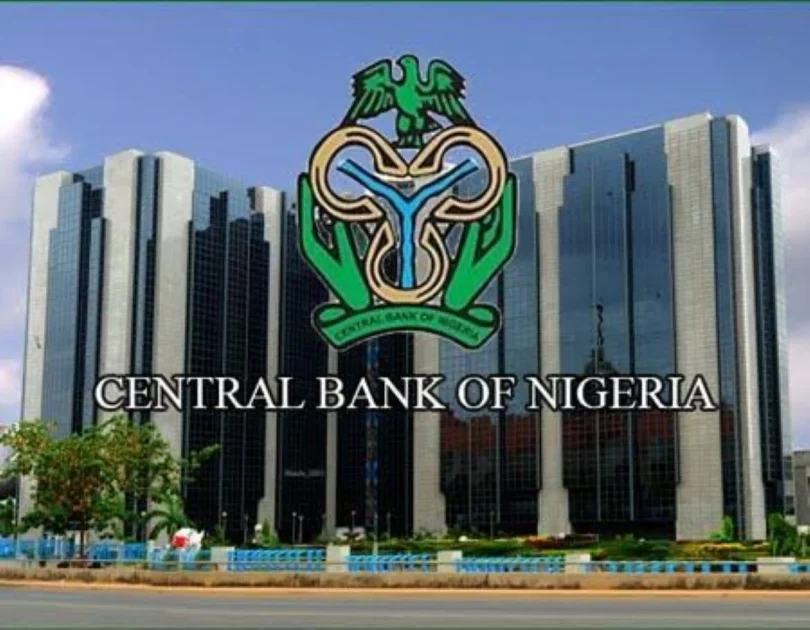
The House of Representatives Committee on Delegated Legislation on Tuesday commenced moves to scrutinise the exercise of delegated legislative powers by the Central Bank of Nigeria (CBN), with particular attention to alleged financial irregularities arising from regulations, guidelines, circulars and other subsidiary legislative instruments issued by the apex bank.
The resolution followed consideration of a motion titled ‘Investigation into the exercise of Delegated Legislative powers by CBN and related financial Irregularities,’ sponsored by the member representing Bosho/Paikoro Federal Constituency of Niger State, Hon. Baraje Yusuf Kure.
Leading the debate on the motion, Hon. Kure acknowledged that the CBN, pursuant to its enabling legislation, is empowered to make regulations, rules, guidelines, circulars and other subsidiary legislative instruments for the effective discharge of its statutory responsibilities.
He, however, maintained that the exercise of such delegated legislative powers must remain within the limits prescribed by the 1999 Constitution, as amended, and relevant enabling Acts of the National Assembly. According to him, the House was concerned about allegations surrounding certain financial transactions, expenditures, charges, regulatory actions and other activities of the apex bank.
“The House is concerned about allegations and concerns regarding certain financial transactions, expenditures, charges, regulatory actions and other activities of the Central Bank of Nigeria which may have arisen from, or been carried out pursuant to, regulations, guidelines, circulars or other subsidiary legislative instruments issued by the Bank,” Hon. Kure said.
He further stressed that the committee had a responsibility to scrutinise subsidiary legislation made by public authorities to ensure that delegated powers were exercised lawfully and appropriately.
In the bid to address he concern, the Niger lawmaker said there was a need to establish whether financial obligations, expenditures, fees, charges, penalties or other monetary consequences arising from CBN subsidiary legislation had proper statutory and regulatory backing.
In his contribution, the Deputy Chairman of the Committee, Hon. Dominic Okafor, highlighted what he described as the implications of non-transparent and questionable audited accounts issued by the CBN, stressing the need for legislative intervention.
Hon. Okafor acknowledged that President Bola Tinubu inherited an economy facing severe challenges in 2023, noting that “drastic reforms followed, including the removal of the petrol subsidy and unification of the foreign exchange windows, steps aimed at restoring confidence and stability.”
He, however, said concerns had resurfaced over transparency at the apex bank, particularly following allegations of irregularities in the CBN’s audited accounts for 2024 and 2025, as detailed by the President’s special investigator, Mr. Jim Obazee.
“Concerns have resurfaced about transparency at the Central Bank of Nigeria (CBN), especially following allegations of irregularities in the audited accounts for 2024 and 2025, as detailed by the President’s special investigator, Mr. Jim Obazee,” he said.
Hon. Okafor further stated that the silence of the Financial Reporting Council (FRC) and the CBN had raised additional questions about oversight and accountability, warning that if the allegations were substantiated, the implications could extend to the Federal Government, ordinary Nigerians, the banking sector, foreign investment and Nigeria’s international reputation.
He explained that questionable financial reporting at the apex bank could undermine confidence in government fiscal data, while inaccurate reporting could affect monetary policy, inflation, exchange rates and interest rates.
He added that declining confidence in the naira could increase the cost of essential goods and services, erode savings and pensions and raise borrowing costs for Citizens.
According to him, concerns over the CBN’s financial disclosures could also weaken confidence in the banking regulatory system and affect foreign investors who depend on reliable financial data to assess risks.
Hon. Okafor said persistent doubts about the integrity of the apex bank’s financial reporting could equally damage Nigeria’s international reputation and confidence in its institutions.
Following deliberations, the lawmakers unanimously resolved that the committee should investigate the exercise of delegated legislative powers by the CBN, including regulations, rules, guidelines, circulars, directives and other subsidiary legislative instruments made pursuant to its enabling legislation.
The Committee is also to examine the legal and statutory basis of the instruments and determine whether they were made and implemented within the powers conferred on the CBN by relevant enabling laws. It will also examine financial implications connected with their making or implementation, including fees, charges, penalties, expenditures and other financial obligations imposed, collected, authorised or incurred pursuant to such instruments.
Also speaking, Hon. Mathew Nwogu, who expressed support for the investigation, said: “when the head is rotten the body is dead, when you have a rotting head there’s no way the body can function. It is very clear that the use of the delegated legislation to undermine our Constitution and Acts passed by the National Assembly has become a norm in the society. And if allowed to continue Nigeria may become a Banana Republic where people just create their own rules, undermine the Constitution and the understanding of laws.”
While ruling on the motion, the Chairman of the Committee, Hon. Richard Olufemi Bamisile, directed the CBN to submit its summary consolidated financial statements for the years ended December 31, 2024 and December 31, 2025, alongside relevant Financial Reporting Council documents and approvals relating to the bank’s audited consolidated and separate financial statements for the two years.
Hon. Bamisile also directed KPMG, the auditing firm, to submit copies of the CBN’s audited accounts for the years under review, while the petitioner, Jim Obazee, was asked to submit all evidence and documents in his possession relating to the allegations. “All documents be requested be brought to the committee on or before the 6th of October 2026, that’s two weeks from this day, as accepted by the committee members,” Bamisile said.
The Chairman further directed all other stakeholders to submit relevant documents to the committee on or before October 6, 2026, for further legislative scrutiny, adding that where the committee identifies financial matters outside its specific mandate, such issues would be referred to the appropriate House committee or competent authority.
He said that upon completion of the exercise, the committee would consider and adopt its findings and recommendations and, where necessary, seek the concurrence or further directive of the House.
The lawmakers resolved to invite CBN Governor, Yemi Cardoso, and relevant officials of the bank to appear before the committee and provide regulations, guidelines, circulars, approvals, financial records, implementation reports and other documents required for the exercise.
Other institutions and experts, including the FRC, KPMG, E&Y, economist Bismarck Rewane, the Institute of Chartered Accountants of Nigeria (ICAN) and the Association of National Accountants of Nigeria (ANAN), are also to be invited.